
Decentralized finance promised to democratize access to financial services by eliminating intermediaries and creating permissionless systems available to anyone globally. Despite explosive growth and billions in total value locked, DeFi remains constrained by infrastructure limitations preventing it from achieving genuine mainstream viability. Plasma Network addresses this gap by engineering blockchain infrastructure purpose-built for financial applications rather than adapting general-purpose platforms designed without finance-specific requirements in mind.
The problems hampering DeFi adoption aren’t abstract technical concerns but tangible barriers affecting everyday users. Transaction fees during network congestion often exceed the value being transferred, making smaller positions economically irrational. Confirmation delays create uncertainty around execution prices and liquidation timing in lending protocols. Cross-chain operations require navigating complex bridge protocols that have proven vulnerable to exploits costing billions. These friction points prevent DeFi expansion beyond crypto-native users willing to tolerate significant complexity and cost.
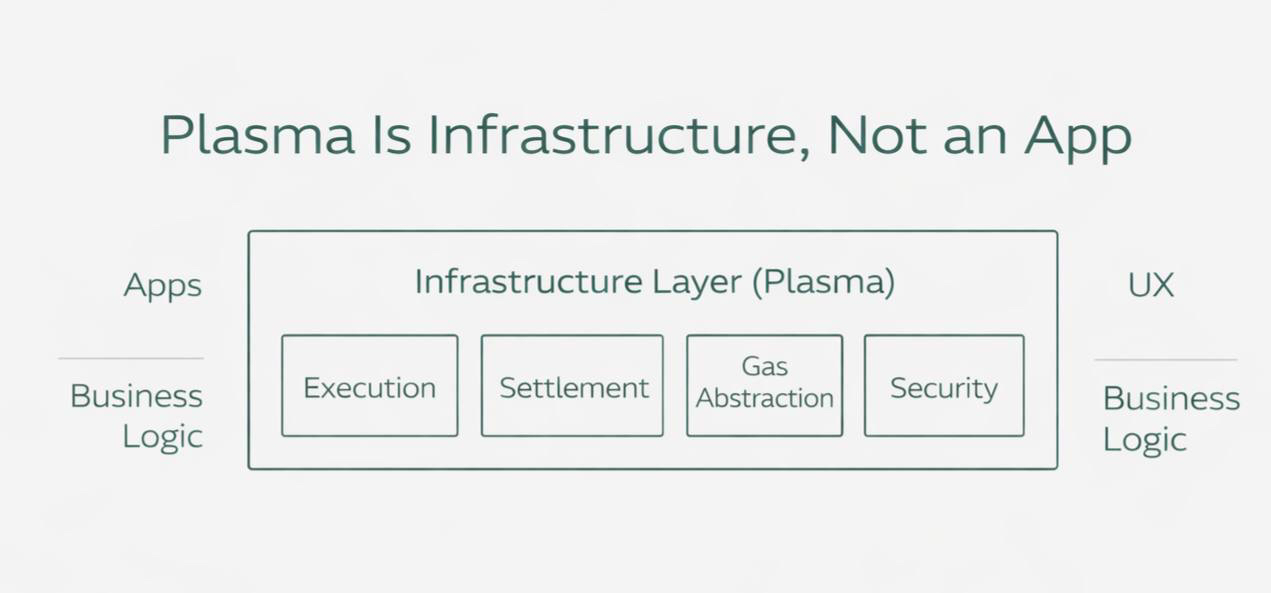
Plasma’s architecture delivers transaction finality in approximately two seconds through optimized proof-of-stake consensus, addressing timing-critical operations where delays determine profitability. Arbitrage opportunities disappear within moments as prices equilibrate. Automated strategies depend on rapid execution to capture intended price points. Lending liquidations must execute promptly during adverse movements to protect lenders. Network throughput reaches thousands of transactions per second, maintaining consistent performance through market volatility spikes when transaction demand peaks precisely when users most need reliable execution.
Transaction costs operate at scales enabling new strategy categories. Fees measured in cents make frequent adjustments economically viable and allow micro-strategies impossible when each transaction costs multiple dollars. Financial applications inherently involve numerous operations as users enter positions, adjust exposure, claim yields, and exit. When transaction costs become economically significant, only large-capital participants can engage profitably. Plasma’s fee structure democratizes access by making sophisticated approaches viable regardless of portfolio size.
Cross-chain infrastructure solves liquidity fragmentation harming users and limiting DeFi potential. Identical assets trade at different prices across chains. Yield opportunities exist on networks where users don’t maintain positions. Plasma’s cross-chain architecture employs cryptographic verification and specialized validation designed specifically for multi-chain operations. Rather than trusting bridge protocols secured by small validator sets vulnerable to compromise, cross-chain security inherits from broader network decentralization. Liquidity aggregation enables applications to access opportunities wherever they exist, abstracting complexity from users who execute swaps receiving best pricing regardless of underlying networks providing liquidity.
The XPL token coordinates economic incentives across participants. Validators stake XPL to participate in consensus, earning rewards while facing penalties for malicious behavior or poor performance. Transaction fees create utilization-driven demand correlating with network activity as protocols handling significant volume generate substantial consumption. Governance enables community participation in protocol evolution, with parameters directly impacting strategy economics including liquidation thresholds and fee structures.
Security receives paramount emphasis given DeFi’s history of costly exploits. Plasma invested in formal verification, rigorous auditing, and continuous monitoring. Architecture employs layered security where multiple mechanisms protect against different attack vectors. Validator network decentralization provides security through economic incentives and distributed trust rather than relying on trusted parties. Smart contract security tooling helps developers avoid common vulnerability patterns through automated scanning and formal verification options.
If traditional financial institutions begin incorporating DeFi protocols, infrastructure like Plasma provides necessary bridges meeting institutional reliability and performance standards. This positioning could accelerate mainstream adoption as traditional finance discovers DeFi meeting their requirements. The journey from vision to mature infrastructure spans years navigating challenges, but Plasma’s clarity about solving DeFi’s infrastructure limitations provides strategic direction. They’re building technology making decentralized finance genuinely competitive with centralized alternatives, enabling powerful financial tools to become accessible globally regardless of geography or wealth through infrastructure robust enough to support that transformative vision at scale.