

The real design choice inside Fogo isn’t speed. It’s the removal of environmental randomness.
Most networks allow heterogeneous validator setups. That sounds decentralized, but it quietly introduces performance asymmetry. Different hardware, different network routes, different physical distances the result is latency dispersion. Blocks propagate unevenly. Builders adapt defensively.
Fogo takes the opposite route. By running on a custom Firedancer client and encouraging validators to operate in high-performance infrastructure centers, it compresses that dispersion. The goal isn’t just higher throughput; it’s tighter variance bands.
When latency becomes consistent, coordination costs drop. MEV strategies become more predictable. Order flow stabilizes. Builders can co-locate near validators, not for advantage over others, but for deterministic interaction with the system. Performance becomes geography-aware but fairness-preserving.
This is subtle. Many chains chase peak TPS headlines. But markets don’t reward theoretical ceilings; they reward execution reliability. A validator set that behaves like synchronized hardware instead of scattered hobby machines changes how applications are architected.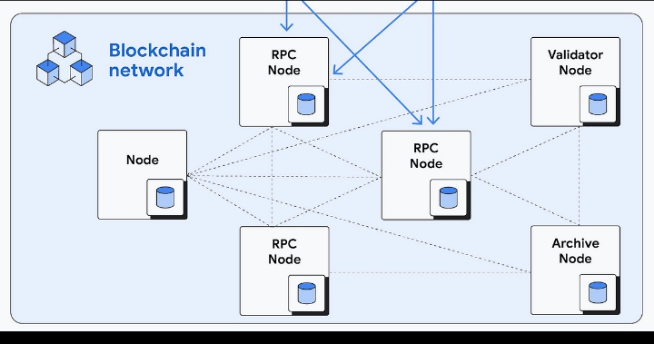
Over time, the chain that minimizes environmental randomness becomes the chain where serious capital settles. Not because it is louder, but because it is predictable. In distributed systems, predictability is power.
