
Fogo is one of those projects that makes a strong first impression. The interface feels modern. The trading experience is noticeably smoother than what most early-stage chains manage to deliver. On the surface, it feels like someone actually thought about the user, not just the whitepaper. That alone puts Fogo ahead of many technically impressive but painfully unusable blockchains.
But crypto is full of projects that feel good before they age well.
When you step back from the UI and look at the structure underneath, Fogo starts to feel less like a clean innovation story and more like a familiar early-stage infrastructure experiment with very real distribution risk. The technology may work. The question is whether the economic design will work for people who arrive late.
Technology Solves Friction Not Incentives
Fogo’s core strength is execution on performance. Transactions feel fast. The network experience is smooth. For traders and power users, the difference is tangible. That matters. UX is still one of crypto’s biggest adoption barriers, and Fogo clearly understands this.
But good UX does not fix incentive design.
A blockchain can be fast, cheap, and elegant while still being economically fragile. History is full of technically strong chains that struggled because the token model rewarded insiders disproportionately or flooded the market with emissions before real demand existed. Technology attracts users. Tokenomics determines whether they stay or quietly become exit liquidity.
The Ownership Structure Still Dominates the Narrative
At the moment, only around 38% of FOGO’s total supply is circulating. That means the majority of the asset’s future market supply is still locked in vesting schedules for core contributors, investors, advisors, and the foundation. In practical terms, retail traders are participating in price discovery inside a relatively thin slice of what this market will eventually become.
This is not hidden information. Fogo has been transparent. But transparency does not neutralize risk. It simply makes the risk visible.
The core contributor allocation alone represents a massive future overhang, with a multi-year vesting schedule and a cliff that begins unlocking in early 2027. Advisors and institutional backers unlock earlier. These dates are not abstract. They are economic events. Every unlock introduces new supply into the market, and the market has to absorb it.
Retail holders are betting on growth happening faster than dilution.
That can work. It can also fail quietly.
Staking Yields Feel Good Until Inflation Catches Up
Fogo’s staking system works. The rewards arrive. The interface shows yields clearly. On paper, it feels productive to stake. But the source of those rewards matters. Staking emissions are inflationary. New tokens are printed to compensate participants.
If the ecosystem does not generate organic demand for FOGO through real usage, fees, applications, or economic activity, then staking rewards become cosmetic. You earn more tokens, but the market absorbs more supply. Your wallet grows while the price struggles.
This is one of crypto’s oldest illusions: “passive income” that slowly dilutes itself.
The staking interface also reflects Fogo’s deeper challenge. It feels like a terminal designed for experienced operators. Epoch mechanics, delegation weights, validator incentives all logical, but intimidating. This is not mass adoption UX. This is professional infrastructure UX. That’s fine, but it conflicts with the narrative of onboarding mainstream users.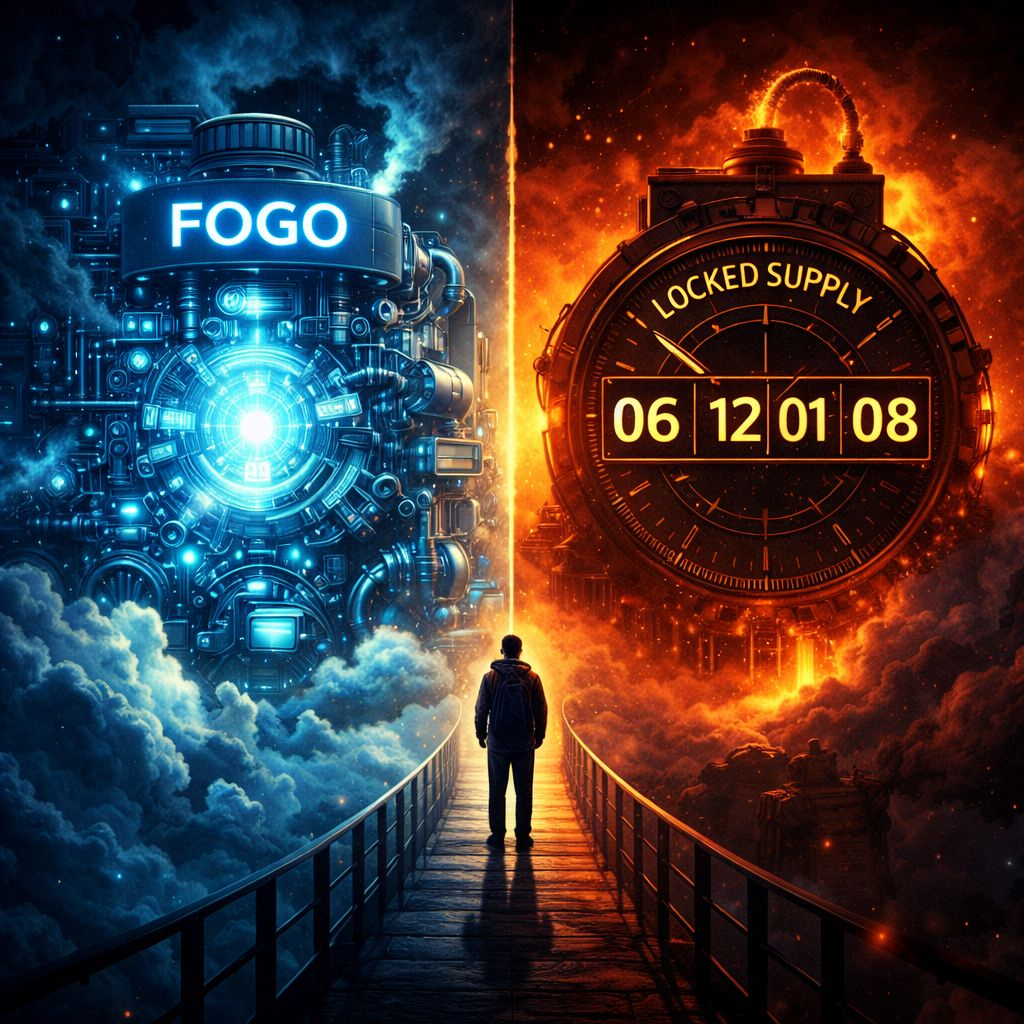
Governance Exists But Power Is Not Evenly Distributed
Fogo presents itself as partially decentralized through DAO mechanics. In theory, anyone can vote. In practice, governance weight follows capital and validator control. Large stakeholders and operators dominate outcomes. A small retail holder’s vote exists, but it does not influence direction in any meaningful way.
This is not unique to Fogo. It is structural in most proof-of-stake systems. But early-stage chains amplify this imbalance because ownership is still concentrated. Governance becomes more legitimate only after years of natural distribution. Fogo is too young for that process to have played out.
Decentralization is not a switch. It is a long, uneven distribution curve.
Early-Stage Chains Always Start Concentrated The Question Is the Exit Velocity
Defenders of Fogo’s distribution will point to Ethereum and Solana. They are not wrong. Early concentration is normal. What matters is how quickly insiders distribute, how responsibly foundations deploy tokens, and whether real users replace speculative holders over time.
Fogo’s decision to cancel a presale, expand airdrops, and burn a portion of genesis supply signals awareness of this problem. These are positive signals. They suggest the team understands that community distribution matters. But awareness does not erase structural gravity. The vesting schedule still exists. The unlocks are still coming.
Between now and 2027, every holder is implicitly betting that usage, liquidity, and ecosystem growth outpace dilution.
That is not a technical bet. That is a behavioral bet.
Market Structure Feels Mechanical Not Organic (Yet)
One subtle signal in early charts is how price moves. Fogo’s price action currently feels structured, controlled, and thinly distributed. That is normal for young chains, but it highlights how little organic retail flow exists. Organic markets are messy. They overshoot. They panic. They form ugly patterns. Fogo’s current behavior looks more like early infrastructure being tested than a widely adopted asset being discovered.
This can change. But it has not changed yet.
The Real Bet Isn’t on Speed It’s on Absorption
Fogo’s technology deserves respect. It works. The UX is ahead of many competitors. The team appears competent. None of that is fake.
But technology answers “can this chain function?”
Tokenomics answers “who benefits when it does?”
Right now, Fogo is asking retail participants to believe that future growth will absorb future supply. That belief may prove correct. But it is a bet against time, dilution, and insider unlock schedules. Speed and performance do not cancel those forces. They only buy the project an opportunity window.
Final Thoughts: Admire the Engineering, Respect the Risk
Fogo is not a bad project. It is a young infrastructure bet with impressive engineering and unresolved economic tension. The tech may age well. The token design still has to prove that it can age gracefully.
Smart participants will not just watch the performance dashboard. They will track unlock schedules, emissions, governance concentration, and how real usage evolves beyond early adopters. The chain might win technically. The token will only win if demand grows faster than supply.
That difference is where most crypto investments quietly succeed or fail.