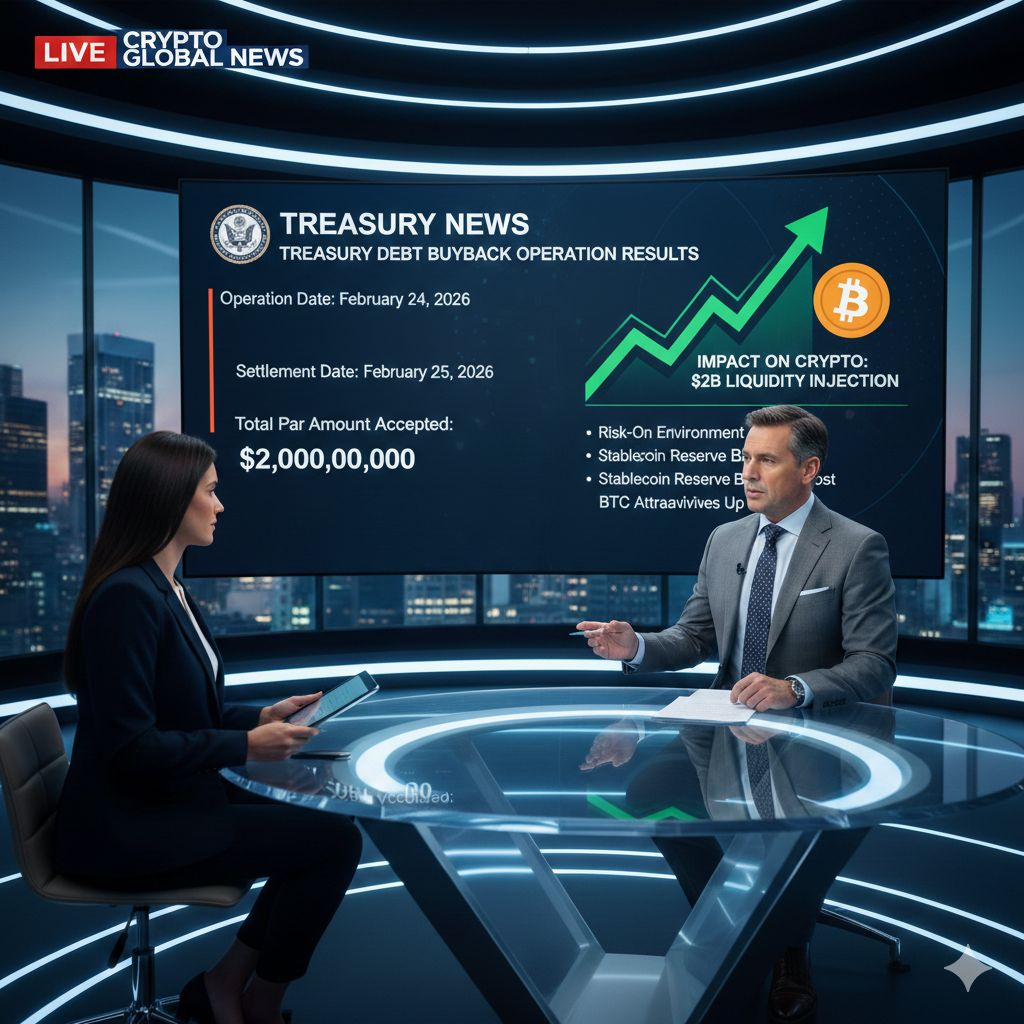
In a move that has sent ripples through both Wall Street and decentralized finance, the U.S. Treasury recently executed a $2,000,000,000 ($2B) buyback of its own debt. This operation, part of a strategic program reintroduced in 2024 and expanded throughout 2025, marks a critical pivot in how the government manages national liquidity.
While a debt buyback might sound like a purely "legacy finance" event, its impact on the crypto market is more direct than many realize. Here is how this multi-billion dollar move is shaping the digital asset landscape.
1. Liquidity Injection: Greasing the Wheels
The primary goal of a Treasury buyback is to improve market liquidity. By purchasing "off-the-run" (older, less liquid) securities from primary dealers, the Treasury puts cash back into the hands of major financial institutions.
The Crypto Connection: When the traditional system is "flushed" with liquidity, volatility in the bond market tends to subside. For crypto, this creates a "Risk-On" environment. As the stability of the Treasury market improves, investors are more willing to move further out on the risk curve—often leading to capital inflows into Bitcoin (BTC) and Ethereum (ETH).
2. The Stablecoin Feedback Loop
Perhaps the most significant impact is on the stablecoin ecosystem. Under current 2026 regulations (such as the GENIUS Act), regulated stablecoins like USDC and USDT are required to back their tokens 1:1 with cash or short-term Treasuries.
The Mechanism: As the Treasury buys back older debt, it often issues newer, short-term "bills" to manage its cash flow. Stablecoin issuers are the hungriest buyers of these short-term bills.
The Result: This buyback program essentially "cleans up" the bond market, making it easier for stablecoin issuers to manage their reserves. This strengthens the peg of the digital dollars that power 90% of crypto trading volume.
3. Yield Shifts and the "Digital Gold" Narrative
By buying back its own debt, the Treasury can influence the Yield Curve. If the buyback leads to lower yields on government bonds, the "opportunity cost" of holding non-yielding assets like Bitcoin decreases.
"When the Treasury becomes a buyer of its own debt, it signals a desire for stability. In the eyes of crypto investors, this is often seen as a subtle form of 'stealth QE' (Quantitative Easing), reinforcing the narrative that Bitcoin is the ultimate hedge against sovereign debt management." — Market Analyst, February 2026
Impact Summary: What to Watch
Factor Short-Term Effect Long-Term Crypto Impact
Market Liquidity Lower volatility in Bonds Increased "Risk-On" capital for BTC
Stablecoin Reserves Easier reserve management Increased trust in digital dollar pegs
Bond Yields Downward pressure on yields Bitcoin becomes more attractive vs. Bonds
The Bottom Line
The $2 billion buyback is a drop in the bucket of the $30+ trillion U.S. debt, but it is a powerful symbolic signal. It shows a Treasury Department actively managing liquidity to prevent a systemic "freeze." For the crypto market—which thrives on liquidity and fears systemic instability—the Treasury's move provides a psychological "floor," ensuring that the pipes of the global financial system remain open for the next leg of the digital asset cycle.