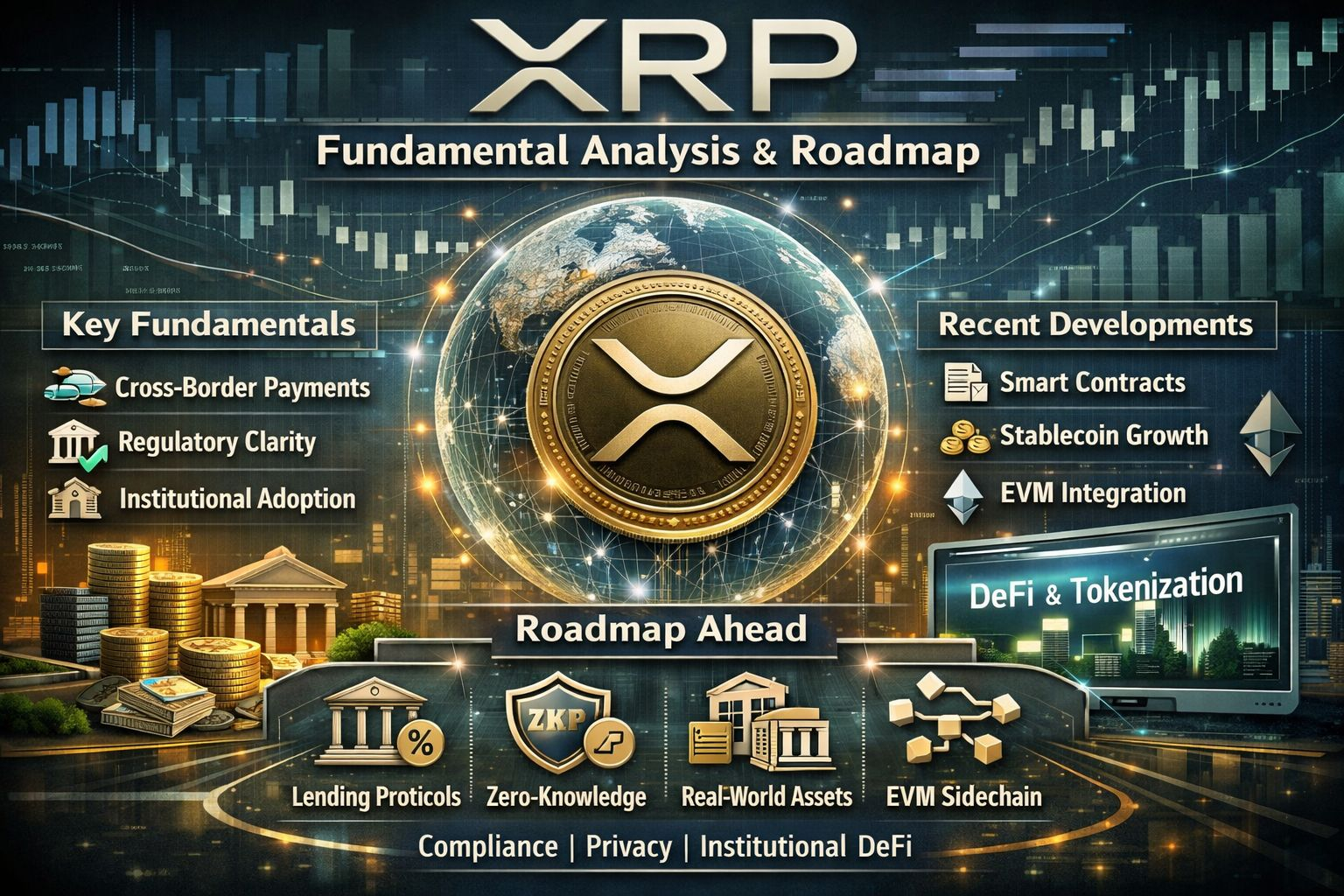
XRP Overview
XRP is the native digital asset of the XRP Ledger (XRPL) — a blockchain designed for fast, low-cost settlement and financial infrastructure. Originally launched for cross-border liquidity, the project has evolved toward institutional finance, decentralized finance (DeFi), tokenization, and compliance-ready blockchain services.
Core Fundamentals
1) Utility & Network Purpose
XRP is engineered to be a bridge asset and liquidity rail that facilitates instant value transfer between different currencies. It stands out for transaction throughput, low fees, and efficient settlement — making it attractive for cross-border payments and institutional settlement infrastructure.
2) Regulatory Progress & Market Position
Clear regulatory actions in 2025, including the U.S. Securities and Exchange Commission (SEC) dropping a major case against Ripple, reduced legal uncertainty around XRP and opened doors for broader institutional participation. �
AP News
Additionally, major industry players like CME Group planning XRP futures contracts further signal market maturation and trading sophistication. �
Reuters
3) Liquidity & Ecosystem Growth
XRPL has seen growing throughput of stablecoins and institutional assets. Monthly stablecoin volume exceeded $1B+, indicating demand from real-world finance use cases beyond speculative trading. �
Major Developments & Network Enhancements
1) XRPL Protocol Upgrades
Recent core updates, such as TokenEscrow, Batch Transactions, and Permissioned DEXs, improve liquidity management, group transaction flow, and compliant trading environments — crucial for institutions operating under AML/KYC frameworks. �
CoinDesk
2) Expanded Programmability
XRPL is integrating advanced programmability through:
Native smart contract capabilities under development
XRPL EVM Sidechain (expected Q2 2025) for Ethereum-compatible dApps
Cross-chain bridges to other ecosystems via protocols like Axelar
This bridges XRPL’s performance with the widely adopted Ethereum ecosystem and draws developer interest and tooling familiarity. �
3) Compliance & Institutional Tools
Ripple’s roadmap places heavy emphasis on features that meet regulatory standards:
Credentials (DIDs) for verified identities
Deep Freeze & Permissioned Features controlling asset operations
Zero-Knowledge Proofs (ZKP) for privacy with auditability
Multi-Purpose Tokens (MPTs) enabling richer token utility like bonds or structured instruments
These are aimed at large financial institutions that require data privacy, regulatory adherence, and robust compliance infrastructure on a blockchain. �
CryptoSlate
Roadmap Highlights
Institutional DeFi & Compliance Stack (2025–2026)
Ripple’s 2025–2026 roadmap breaks new ground beyond payments:
🔹 Native Lending Protocol
Expected in XRPL Version 3.0+, this allows on-chain credit markets where institutions can pool liquidity, issue credit, and manage lending directly on the ledger — a foundational DeFi primitive. �
crypto-newstoday.com
🔹 Privacy Enhancements with ZKP
Zero-knowledge proofs will allow verification of compliance (e.g., KYC) without exposing sensitive data — essential for institutional transparency balanced with privacy. �
CryptoSlate
🔹 Expanded Tokenization & RWAs
Multi-Purpose Tokens will unlock real-world asset tokenization — such as bonds, commercial paper, and structured finance — directly on XRPL. This positions XRP as an infrastructure token beyond pure settlement role. �
CryptoSlate
🔹 EVM & Developer Ecosystem Expansion
The upcoming EVM sidechain invites a broader development community, enabling Ethereum smart contract standards on XRPL. �
🔹 Ongoing Performance & Governance Upgrades
Continuous upgrades to validator logic, consensus enhancements, and optimized transaction mechanics strengthen XRPL’s long-term scalability and security.
Why This Matters for XRP
1) Institutional Adoption Narrative —
XRP is being positioned as a compliance-friendly, high-performance infrastructure for regulated financial markets, stablecoins, and tokenized assets.
2) Strong Regulatory Tailwinds —
Improved legal clarity and futures markets development enhance investor confidence and liquidity infrastructure.
3) Developer & Ecosystem Growth —
With programmability upgrades and cross-chain connectivity, XRPL is expanding beyond simple payment rails into full DeFi and asset tokenization ecosystems.
Conclusion
XRP’s fundamental landscape is evolving from being primarily a cross-border liquidity token to becoming a comprehensive blockchain ecosystem for institutional finance and DeFi. The strategic roadmap — covering compliance, lending protocols, privacy tools, tokenization standards, and developer-friendly upgrades — makes XRPL one of the most technically robust projects for regulated applications in crypto today. However, like all crypto assets, it still faces volatility and should be researched independently before investment decisions.
#BlockAILayoffs #JaneStreet10AMDump #MarketRebound #AxiomMisconductInvestigation #STBinancePreTGE