
MIRA Protocol: Building a New Standard for Decentralized Applications?
The cryptocurrency market is a dynamic and fast-paced environment, constantly evolving with new projects and technologies. Among the multitude of emerging cryptocurrencies, MIRA Protocol (MIRA) has been attracting attention due to its ambitious goals and unique approach to blockchain scalability and usability. In this article, we'll dive into a fundamental analysis of MIRA Protocol, examining its core features, developments, and roadmap to evaluate its potential as a long-term investment.
What is MIRA Protocol?
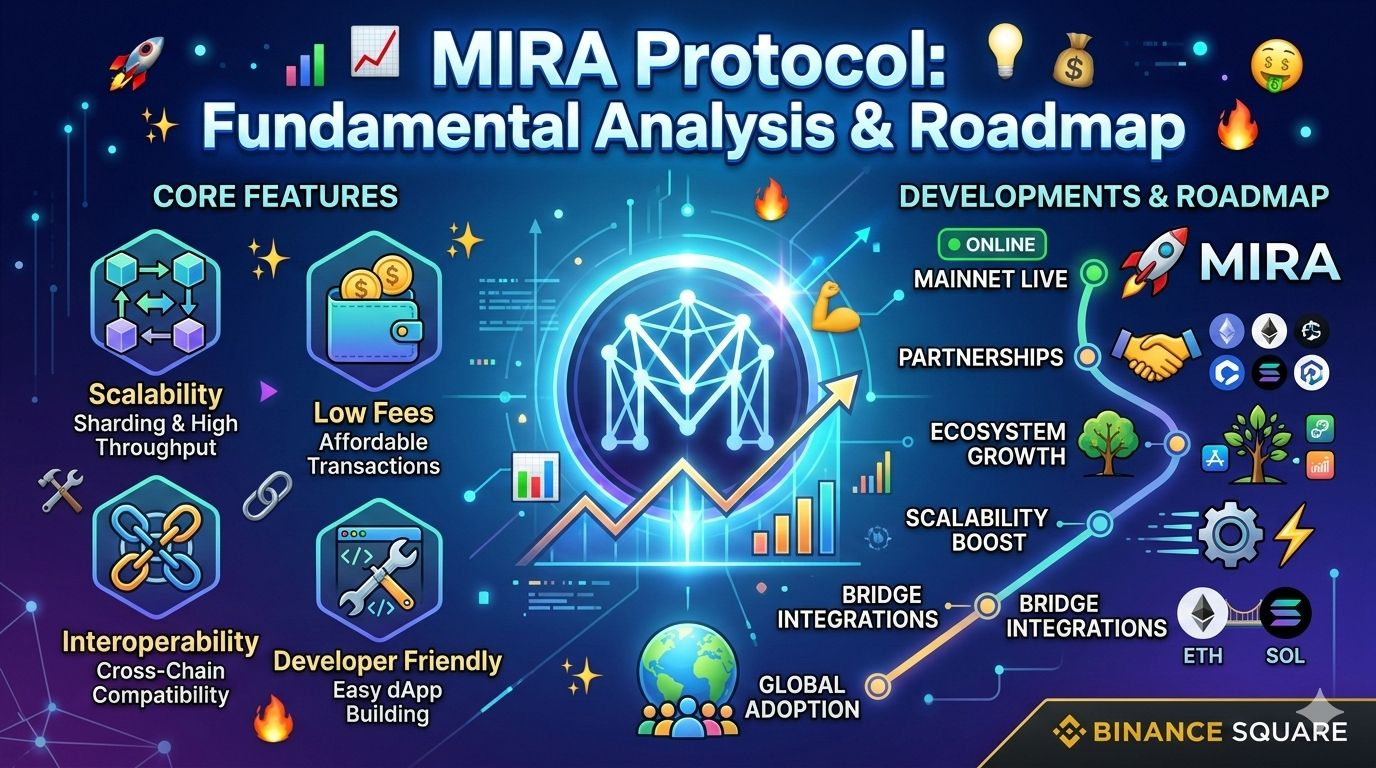
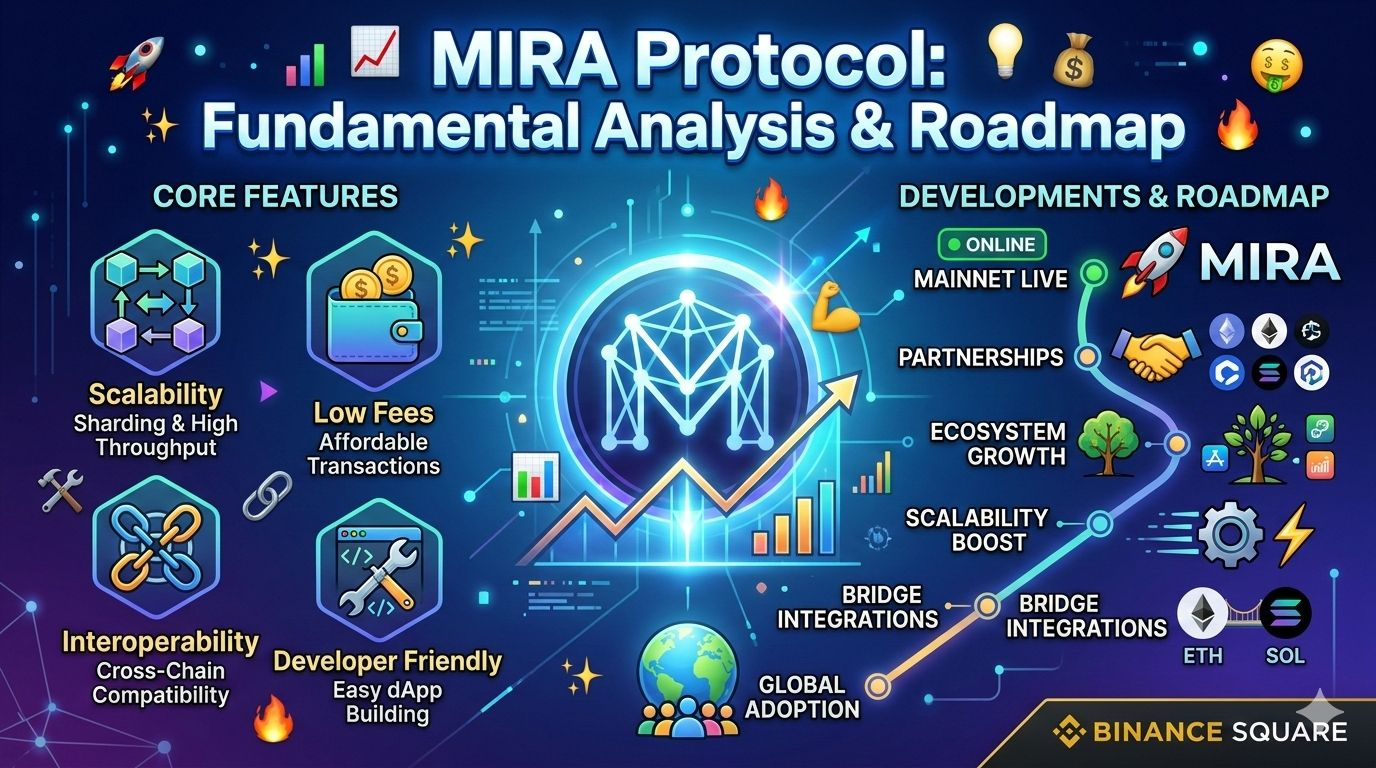
MIRA Protocol is a layer-1 blockchain designed to address the scalability and usability challenges faced by existing blockchain networks. It aims to create a more efficient and user-friendly platform for building and deploying decentralized applications (dApps). At its core, MIRA utilizes a unique consensus mechanism and a sharding-based architecture to achieve high throughput and low transaction fees.
Key Features and Technology:
* Scalability: MIRA's sharding-based architecture enables horizontal scaling, meaning it can handle a significantly higher number of transactions per second compared to traditional blockchains. This is crucial for mass adoption and supporting complex dApps.
* Low Transaction Fees: By increasing network capacity, MIRA aims to keep transaction fees low, making it more affordable for users and developers.
* Interoperability: $MIRA A aims to foster interoperability with other blockchain networks, enabling seamless asset transfers and data exchange between different ecosystems.
* Developer-Friendly: @Mira - Trust Layer of AI provides developers with a suite of tools and resources to build and deploy dApps efficiently. It also supports popular programming languages, making it accessible to a wider pool of developers.
Recent Developments and Achievements:
* Mainnet Launch: MIRA successfully launched its mainnet, marking a significant milestone in its development. This enabled the network to support real-world applications and transactions.
* Partnerships: MIRA has established partnerships with several prominent organizations in the blockchain industry. These partnerships aim to foster collaboration, expand the ecosystem, and drive adoption.
* Ecosystem Growth: The MIRA ecosystem has been growing steadily, with a number of dApps being built on the platform. This demonstrates the potential of MIRA as a foundation for a vibrant and active decentralized ecosystem.
Roadmap and Future Plans:
MIRA Protocol has an ambitious roadmap that outlines its future plans for growth and development. Key areas of focus include:
* Enhancing Scalability: MIRA plans to continue optimizing its sharding architecture to further increase network capacity and performance.
* Expanding Interoperability: MIRA aims to develop bridges and protocols to facilitate seamless interoperability with other major blockchain networks.
* Driving Adoption: MIRA plans to launch marketing campaigns and initiatives to attract developers and users to the platform.
* Building a Thriving Ecosystem: MIRA is committed to supporting the development of a diverse range of dApps and services on its platform.
Investment Potential and Considerations:
While MIRA Protocol shows promise, it's essential to carefully evaluate its investment potential. Several factors to consider include:
* Competition: The blockchain space is highly competitive, with many projects addressing similar challenges. MIRA faces competition from established players like Ethereum, Solana, and Avalanche, as well as new projects emerging regularly.
* Market Conditions: The overall cryptocurrency market is volatile and susceptible to sudden price fluctuations. Changes in market sentiment, regulatory clarity, and macroeconomic factors can significantly impact the price of #Mira .
* Team and Community: The strength of the development team and the engagement of the community are crucial factors for long-term success. Evaluate the team's experience, the community's activity, and the overall governance structure.
* Adoption: The success of MIRA ultimately depends on its adoption by developers and users. Track the growth of the ecosystem, the number of dApps being built, and the level of user activity on the platform.
Conclusion:
MIRA Protocol presents an intriguing opportunity in the evolving blockchain landscape. Its focus on scalability, usability, and interoperability addresses critical challenges that hinder the widespread adoption of decentralized applications. However, it's crucial to acknowledge the inherent risks and uncertainties associated with any early-stage cryptocurrency project. Conduct thorough research, consider your risk tolerance, and make informed investment decisions based on a comprehensive understanding of MIRA's fundamentals, recent devel
opments, and future plans.