
AI is rapidly evolving from assistive software into autonomous agents that execute trades, route customer support, underwrite risk, and initiate on-chain transactions. Yet a persistent bottleneck remains: reliability. When models hallucinate, misread context, or produce inconsistent outputs, enterprises respond with human oversight, audits, and strict guardrails. That verification layer is costly, slow, and often undermines the efficiency automation is meant to deliver.
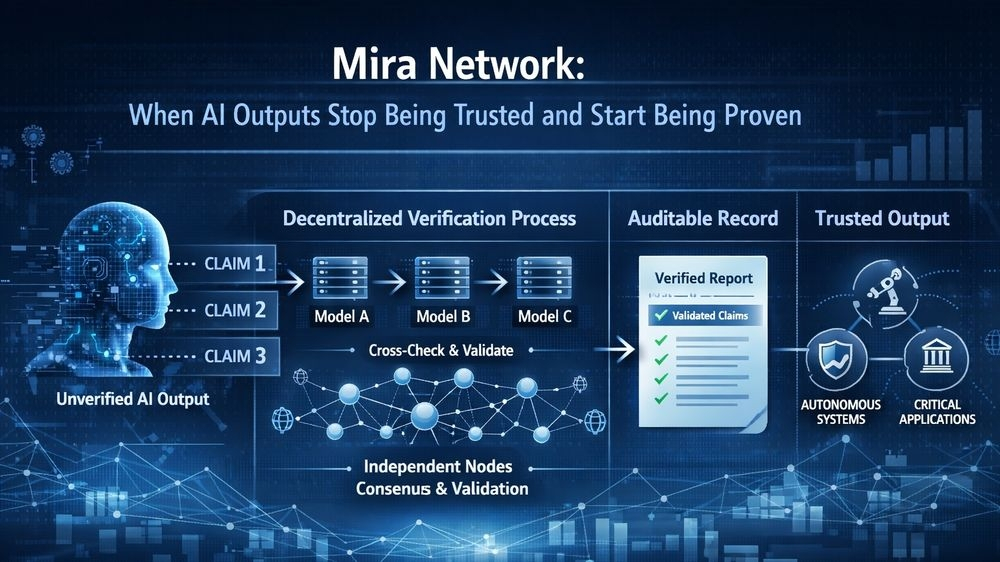
Mira’s adoption story centers on addressing this gap: verifiable AI outputs. Rather than relying on a single model, Mira coordinates multiple models and applies crypto-economic incentives and consensus mechanisms to validate results. It positions itself as a trust layer for high-stakes AI use cases. As Binance Research notes, multi-model consensus can push verified accuracy beyond typical single-model baselines—shifting AI from “useful” to “deployable” in regulated or high-cost error environments.
Adoption Driver #1: Solving an Urgent Buyer Problem
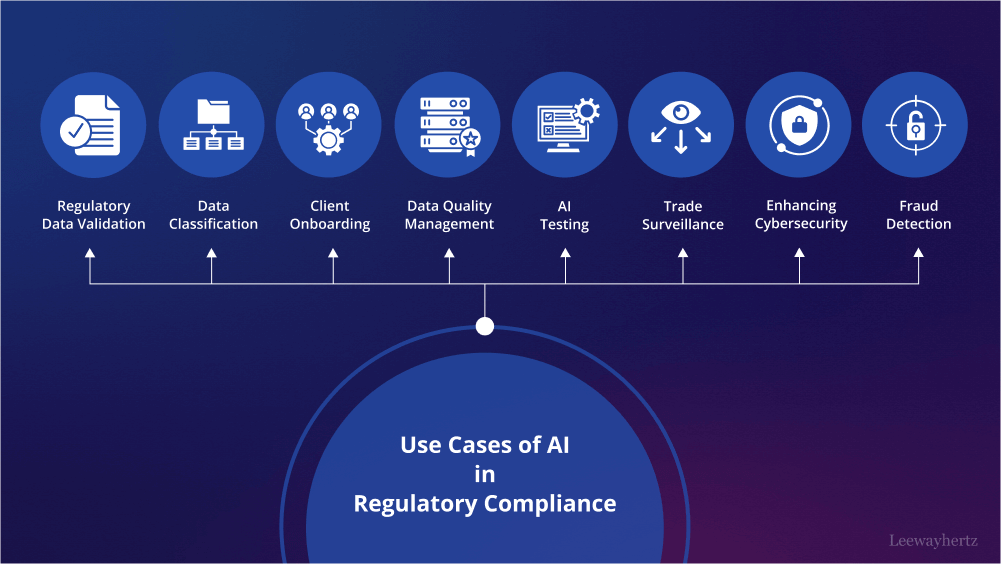
Mira’s value proposition is best framed as risk reduction—not “AI + blockchain.” In finance, compliance, healthcare operations, and legal workflows, errors carry real liability. Mira externalizes verification to a decentralized network, reducing the need for costly internal review. This reframes technical performance as measurable ROI: fewer escalations, fewer manual checks, and greater automation efficiency. Infrastructure winners are often those that remove operational friction—not those with the flashiest features.
Adoption Driver #2: Ecosystem-Led Growth
Infrastructure projects face a classic chicken-and-egg problem. Mira addresses this by building both end-user applications and developer APIs. Products like “Verified Generate” demonstrate product-market fit while seeding developer adoption. At mainnet launch, ecosystem applications reported millions of users—a signal of early demand, even accounting for varying Web3 user definitions.
Distribution reinforces this strategy. Binance’s integration across Simple Earn, Buy Crypto, Convert, Margin, and Futures lowers onboarding friction and embeds the token into broader trading workflows. Initiatives like Binance Square’s CreatorPad campaign (Feb 26–Mar 11, 2026) further sustain engagement and visibility.
Adoption Driver #3: Partnerships That Accelerate Deployment
Mira’s partnerships focus on removing production bottlenecks. Collaborations with decentralized GPU providers such as io.net aim to reduce cost and latency for verification workloads. Aethir contributes enterprise-grade GPU supply to support scalable operations. Mira also positions itself as an “AI coprocessor” within blockchain ecosystems, enabling verification to function as composable middleware across protocols and applications.
These partnerships are less about branding and more about reducing compute constraints, integration complexity, and developer friction.
What to Watch
Adoption quality will matter more than volume. Three factors are critical:
Verification economics: Can costs remain competitive as usage scales?
Interoperability: Is integration seamless across chains and tech stacks?
Security and incentives: Are validator diversity and crypto-economic design robust enough to sustain trust?
Bottom Line
Mira’s adoption narrative is compelling because it targets a structural challenge the AI industry cannot solve through model improvements alone: trust. By combining multi-model verification with blockchain incentives, Mira positions reliability as core infrastructure—amplified through ecosystem growth, exchange distribution, and strategic partnerships.
If successful, Mira’s impact extends beyond token traction. It offers a blueprint for AI-native middleware: not replacing models, but making them reliable enough to act.