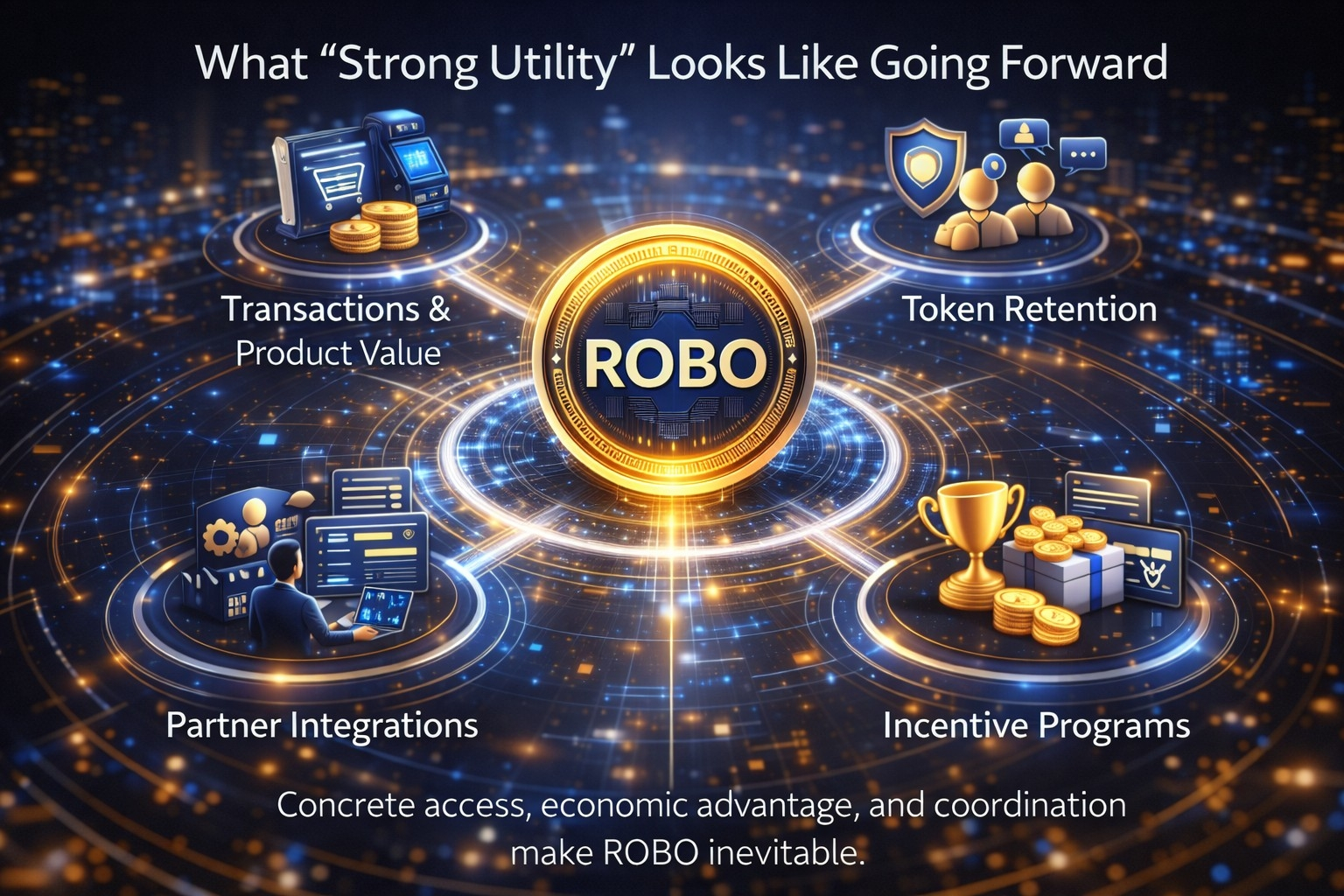
In a market that’s grown up fast, “utility” is no longer a buzzword you can sprinkle into a whitepaper and call it a day. Tokens that survive multiple cycles tend to do one thing exceptionally well: they make a network measurably more useful to real participants. ROBO is positioning itself in that category—less as a speculative ticker and more as a functional asset designed to coordinate behavior, align incentives, and unlock product experiences that don’t work as cleanly with fiat rails.
Below is a clear-eyed look at ROBO token utility, where adoption typically comes from, and how real-world applications can compound value over time.
Utility as a System, Not a Slogan
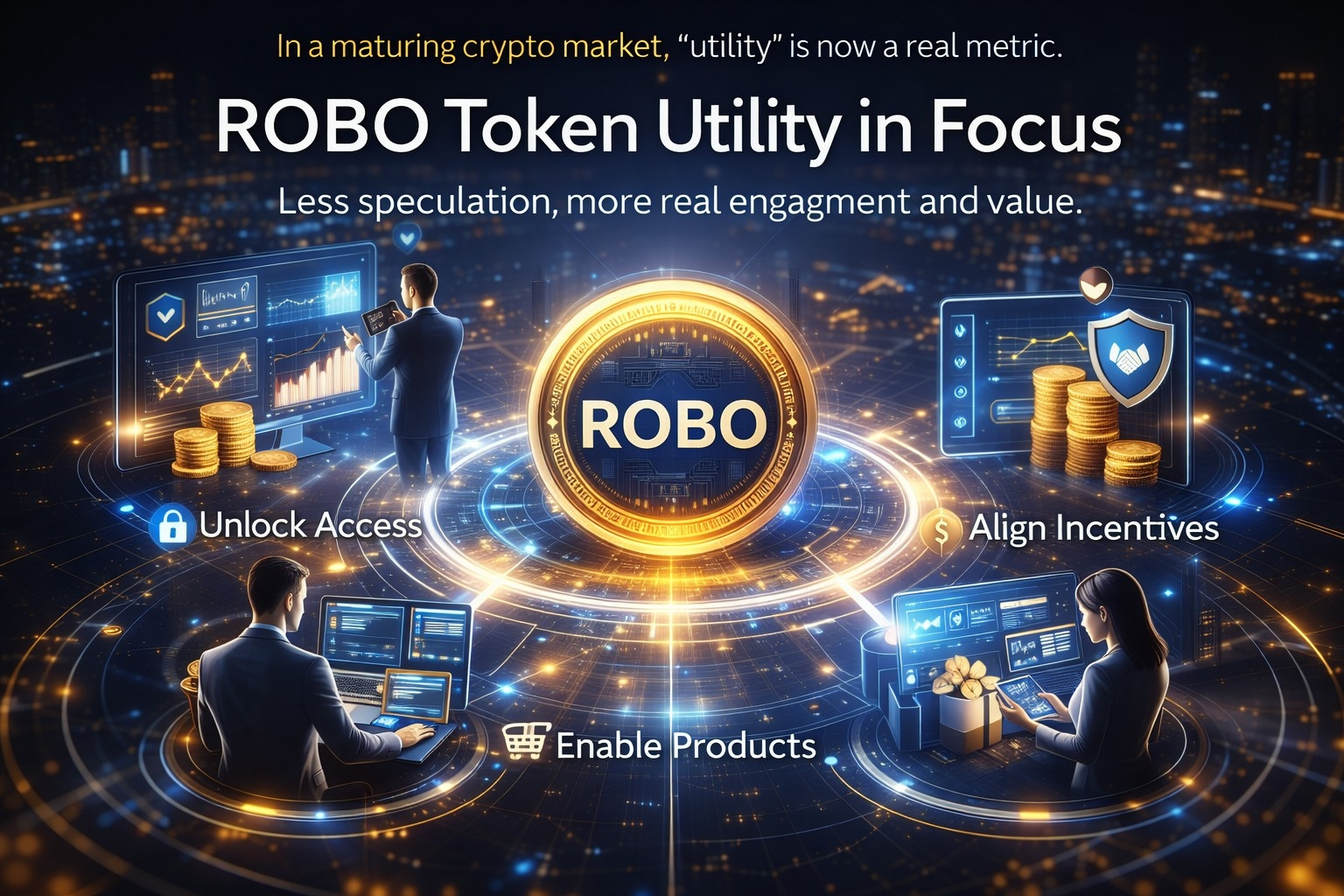
The strongest token models aren’t built around a single feature. They operate as an integrated system: access, incentives, and governance (formal or informal) working together. In practical terms, ROBO’s utility should be evaluated through three lenses:
Access Utility: What can you do with ROBO that you can’t do without it?
Economic Utility: Does ROBO reduce costs, increase efficiency, or improve outcomes for users and partners?
Coordination Utility: Does ROBO help a community or ecosystem make decisions, allocate resources, and scale participation?
A token that meaningfully improves even one of these categories can earn organic demand. A token that ties all three together creates a flywheel.
Adoption: The Mechanics That Actually Matter
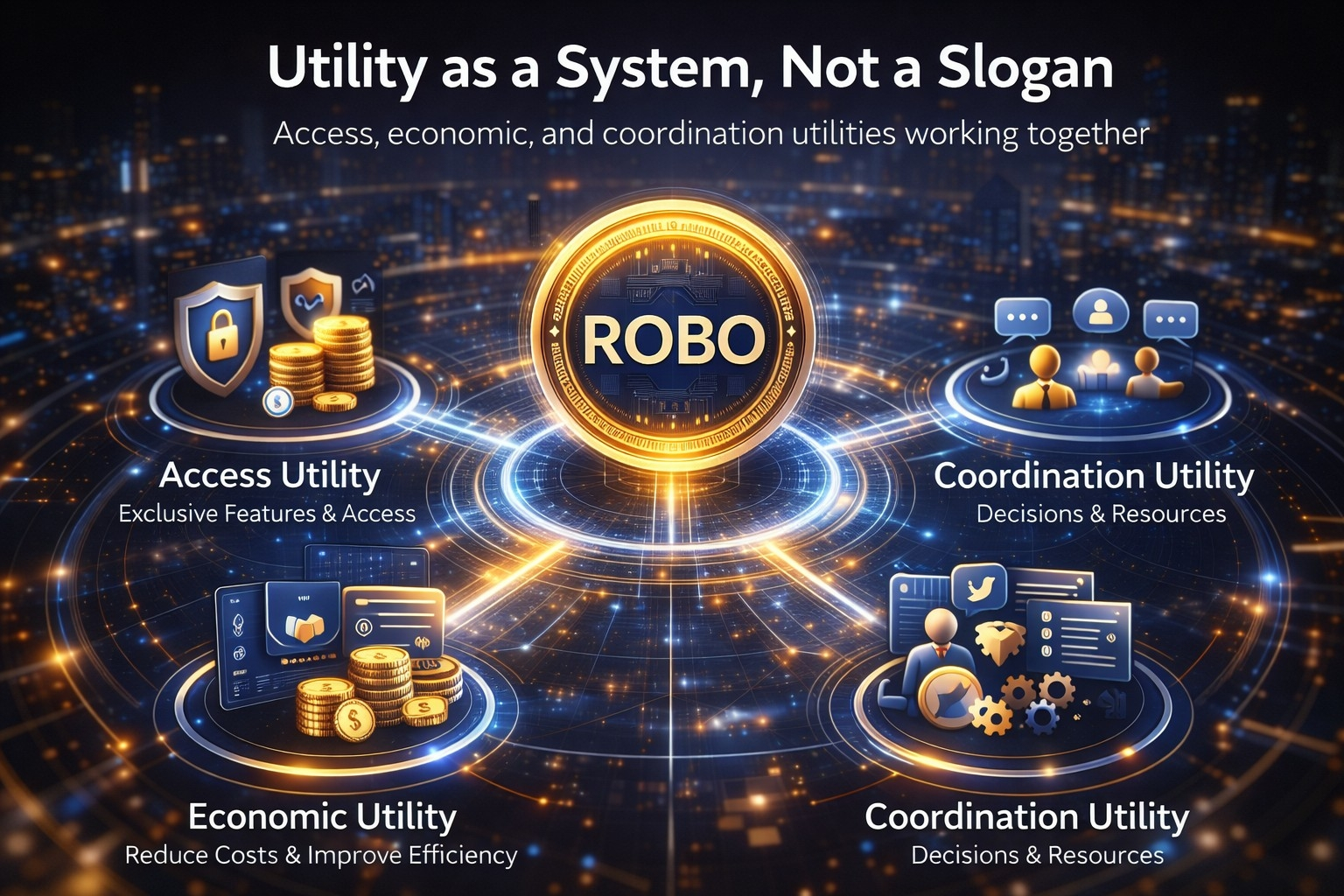
Token adoption isn’t just “more holders.” It’s repeated usage by participants who get a tangible benefit from using the token. ROBO’s adoption path—if executed with discipline—typically centers around:
Incentivized participation: rewarding actions that grow the network’s utility (contributions, referrals, usage milestones, quality signals).
Tiered benefits: giving holders escalating advantages that are directly connected to product value, not vague promises.
Partner distribution: embedding ROBO into workflows via integrations, where users encounter it as a tool rather than a trade.
The slightly bold truth: tokens don’t win because they’re listed; they win because they are used. Listings can accelerate discovery, but usage is what sustains relevance.
Real-World Applications That Translate Beyond Crypto
“Real-world” doesn’t have to mean a coffee purchase. It means ROBO enabling outcomes that map cleanly to business value, user experience, or operational efficiency. Here are application categories where ROBO token utility can be both credible and scalable:
1) Payments and Settlement in Product Ecosystems
If ROBO is used for fees, subscriptions, or in-app purchases, it can act as a settlement layer that’s faster and more global than traditional payments. The key is designing the fee model so the token is actually preferable—through discounts, priority execution, or bundled services—rather than merely required.
2) Rewards and Loyalty That Aren’t Fake Points
Traditional loyalty systems are siloed and fragile. ROBO can function as a portable rewards asset—earned through engagement and redeemed for tangible benefits (features, access, partner perks). When rewards have real optionality, they stop being marketing spend and start becoming a retention engine.
3) Access Control for Premium Features and Communities
Token-gated access works when the gated experience is genuinely valuable: advanced tools, research, automation, private communities, or early product releases. ROBO can serve as a clean credential—verifiable, composable, and not dependent on a single platform’s database.
4) Incentives for Quality and Reputation
In ecosystems where quality matters (marketplaces, content networks, AI tooling, services), tokens can reward outcomes instead of raw activity. ROBO can be structured to reinforce high-signal behavior: accurate contributions, verified work, helpful support, or reliable fulfillment—turning reputation into an asset with economic weight.
5) Ecosystem Growth via Grants and Bounties
This is the adoption lever most projects underuse. A token becomes real when builders build. ROBO-based bounties, grants, and milestone rewards can create a developer economy that expands integrations and use cases—without relying solely on centralized roadmaps.
What “Strong Utility” Looks Like Going Forward
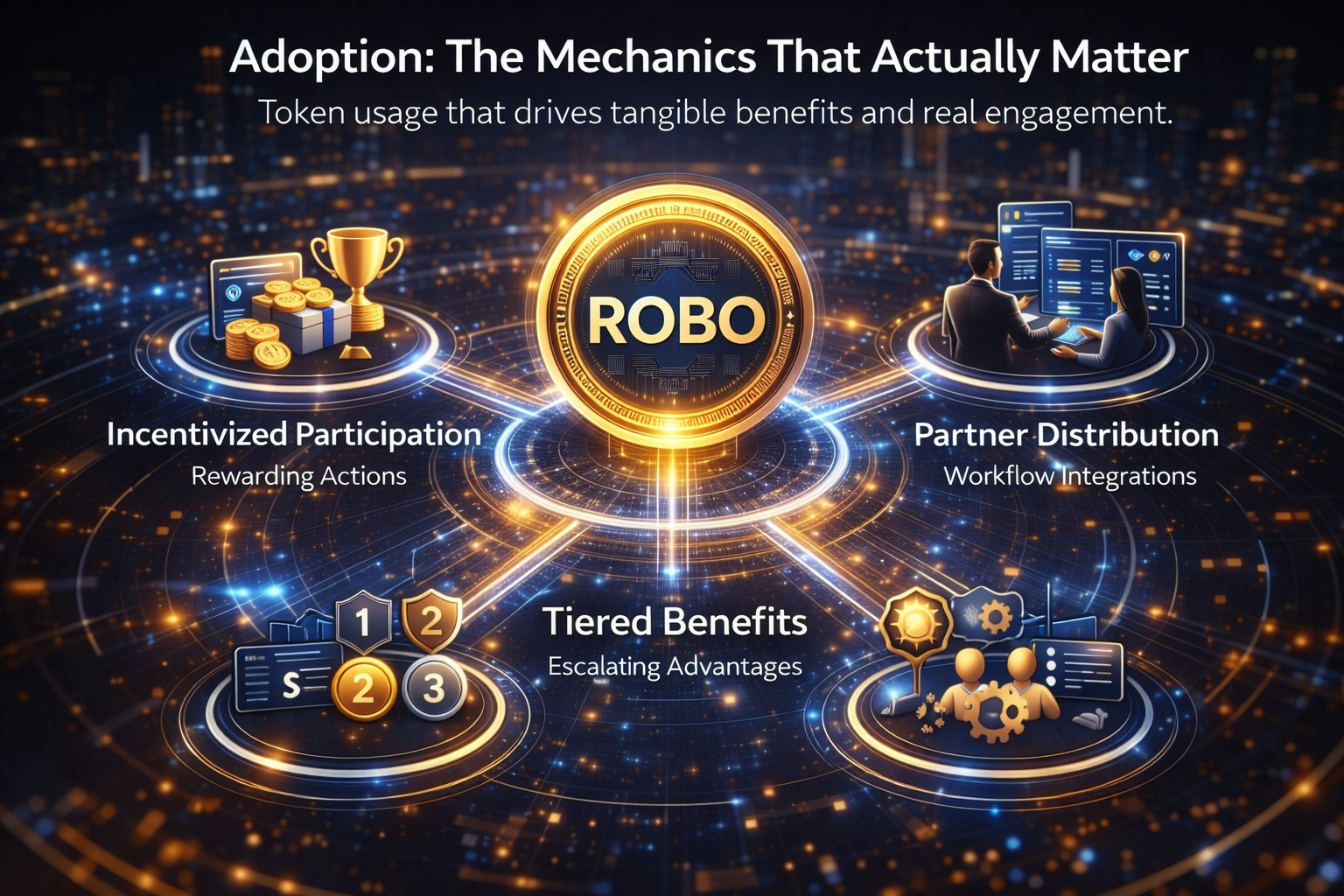
The market is increasingly unforgiving toward tokens that only exist as tradeable symbols. ROBO’s long-term credibility will be shaped by measurable usage metrics: transactions tied to product value, retention of token-enabled users, partner integrations that drive recurring demand, and incentive programs that convert newcomers into repeat participants.
If ROBO continues pushing utility that is concrete—access, economic advantage, and coordination—adoption becomes less about hype cycles and more about inevitability. In an evolving crypto landscape, that’s the difference between a token that trends and a token that matters.