
Here's a scenario that keeps coming up in conversations about automation.
A warehouse invests millions in robots from three different manufacturers. The robots are impressive—fast, precise, reliable. There's just one problem.
They don't communicate. At all.
The autonomous forklift from Company A can't tell the sorting robot from Company B that a shipment has arrived.
The inventory scanner from Company C updates its own database, but the other robots don't get the memo.
Human workers end up running around with tablets, manually moving data between systems.
The robots are brilliant. The system is broken.
This is the hidden bottleneck in automation.
We've made incredible progress in robotics. Machines can walk, jump, navigate complex environments, perform delicate tasks. But they operate in silos. Each manufacturer builds their own ecosystem, their own communication protocols, their own rules.
For anyone managing a facility with mixed robot fleets, it's a constant headache.
Want to add a new robot to your workflow? Hope it speaks the language of the existing ones.
Need them to coordinate on a task? Someone has to manually program that handshake.
Worried about safety when robots from different makers share space? You're essentially hoping they don't misinterpret each other's movements.
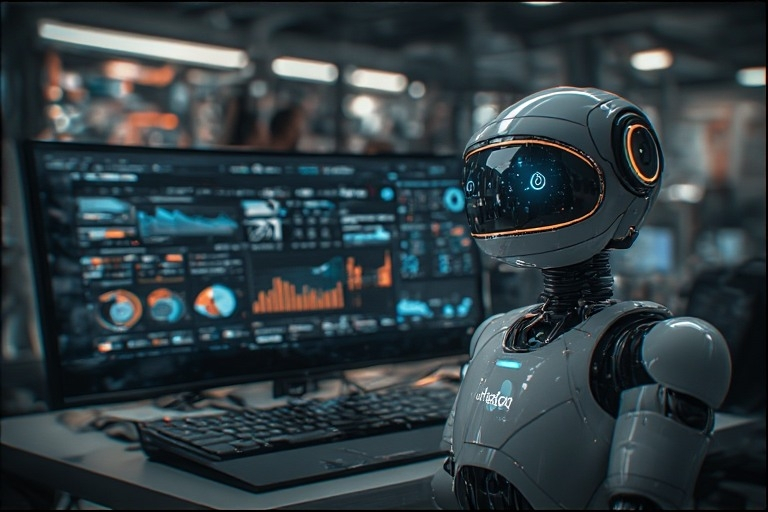
This isn't a small problem. It's the problem.
If you ask operations managers what they actually need from robotics, it's not another backflip. It's coordination. It's robots that show up and immediately know how to work alongside existing equipment. It's not having to rip out your entire system every time you want to adopt a new tool.
Enter Fabric Protocol.
@Fabric Foundation looked at this fragmentation and asked a practical question: What if robots had a shared language and a shared ledger?
Not a new robot. Not a new operating system that replaces what you already have. Just a layer that lets everything communicate.
Think of it as universal translation for machines. The forklift stays a forklift. The sorter stays a sorter. They just gain the ability to exchange information, verify each other's actions, and coordinate tasks without humans babysitting every interaction.
How it actually works.
The Fabric Foundation, a non-profit, supports an open network where robots can register themselves, share data, and verify computations.
Behind the scenes, there's a public ledger recording what happens. When Robot A completes a task, that fact is recorded. When Robot B needs to trust that information before taking its own action, it can check the ledger.
No central authority. No single company controlling the rules. Just transparent, verifiable coordination.
This is where $ROBO enters the picture.
Tokens aren't just speculative assets here. They serve a function.
When robots consume resources—charging stations, compute time, data access—payments can happen automatically. When developers contribute new capabilities to the network, they can be compensated. When participants validate actions and maintain trust, they can be rewarded.
$ROBO is the mechanism that keeps the economic layer running without requiring human approval for every micro-transaction.
The Circle partnership makes this concrete.
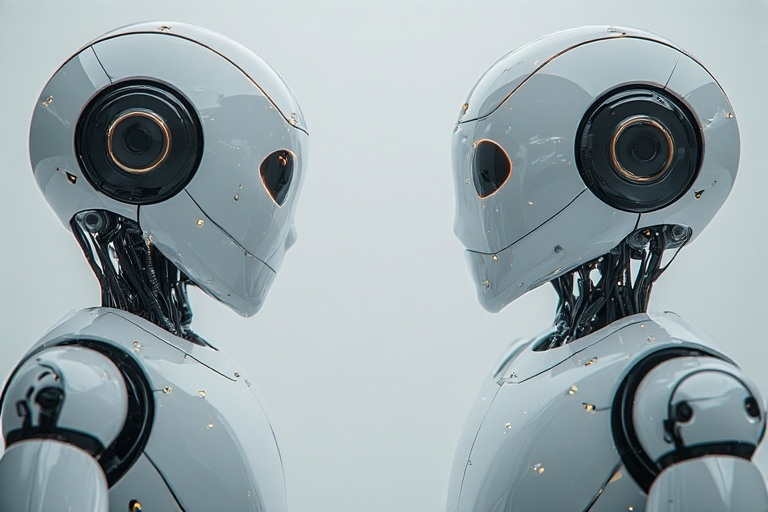
Circle's USDC integration means robots can eventually pay for their own operations . A delivery drone that needs a charge can pull into a station, pay autonomously, and continue its route. No invoice. No human reviewing a receipt. Just machine-to-machine commerce that works.
For businesses running fleets, this isn't a futuristic novelty. It's operational efficiency.
What's actually being built.
The team behind Fabric describes two layers:
· OM1, which functions like an operating environment for robots—think Android, but for machines rather than phones.
· The FABRIC protocol, which handles coordination between robots regardless of their underlying systems.
Jan Liphardt, from the OpenMind team building this, put it in terms that actually make sense: "If AI is the brain and robotics is the body, coordination is the nervous system. Without it, there's no intelligence—just motion" .
Why this matters right now.
We're at a point where individual robot capabilities are impressive enough. The next leap forward isn't a faster leg or a more dexterous hand. It's robots that stop acting like solo performers and start functioning as teams.
For the people running warehouses, factories, hospitals, and logistics networks, that shift can't come soon enough. They're tired of being the human glue holding fragmented robot fleets together.
The bottom line.
@Fabric Foundation isn't asking you to replace your robots. It's asking you to connect them.
And for anyone who's ever watched two perfectly capable machines fail to cooperate while humans scramble to fix it? That's not a hard sell.
$ROBO is the token powering that connection. #ROBO is the conversation worth following.