The @Fabric Foundation Fabric Foundation is developing Fabric Protocol, an ambitious blockchain infrastructure designed to connect robotics, artificial intelligence, and decentralized finance into a single economic network. While most blockchain projects focus on financial transactions or decentralized applications, Fabric Protocol aims to build what the team calls a “robot economy”—a system where intelligent machines and humans can interact, coordinate work, and exchange value through blockchain infrastructure. �
fabric.foundation +1
At its core, Fabric Protocol acts as a trust and coordination layer for autonomous agents and robots. The network allows machines to have cryptographic identities, record operational data on-chain, and coordinate tasks with other machines or human participants. This creates a transparent environment where actions performed by robots can be verified and rewarded through tokenized incentives. �
Gate.com
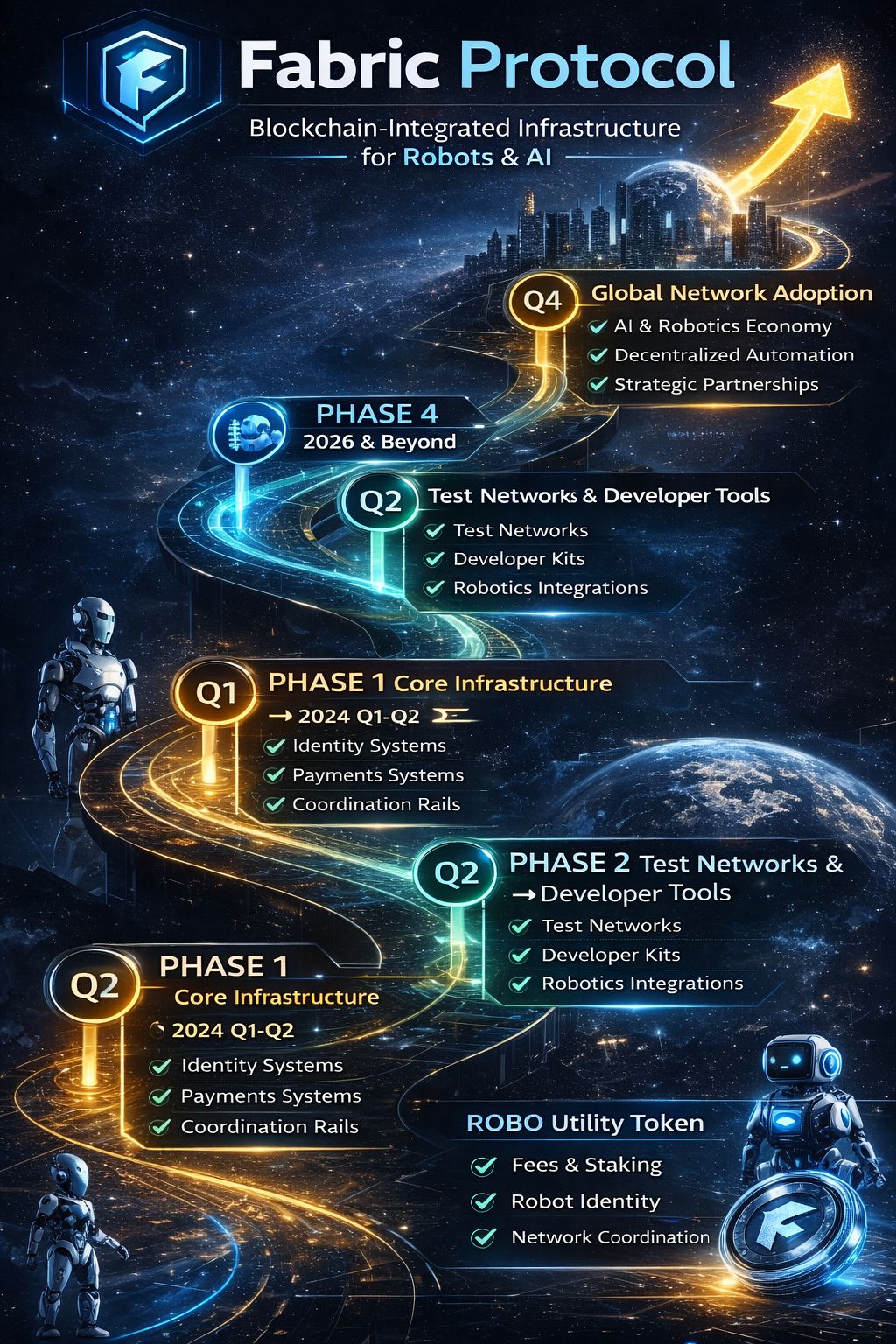
One of the key components of the ecosystem is the ROBO token, which serves as the protocol’s utility and governance asset. The token is used for transaction fees, identity verification, staking, and participation in network coordination. As robots and developers join the ecosystem, they must acquire and stake ROBO tokens to access services within the network, aligning economic incentives between developers, users, and machines. �
fabric.foundation
Development Progress
From a development perspective, Fabric Protocol has already made notable progress. The protocol is being built alongside OpenMind, a company focused on intelligent machine infrastructure, which raised significant funding from well-known venture firms such as Pantera Capital, Coinbase Ventures, and Lightspeed. This backing indicates strong institutional interest in the broader ecosystem surrounding the protocol. �
Gate.com
Technically, the project integrates robotics software with blockchain infrastructure. Robots equipped with compatible systems can connect to the Fabric network and receive a unique identity that allows them to interact economically. This enables machine-to-machine communication, automated task coordination, and transparent logging of activities on the blockchain. �
Gate.com
Another important milestone has been the introduction of the ROBO token distribution and liquidity programs. These initiatives aim to decentralize ownership and incentivize early participation from developers and community members while building the network’s initial economic layer. �
AInvest +1
Roadmap and Future Vision
Looking ahead, the roadmap for Fabric Protocol focuses on expanding both its technological capabilities and ecosystem adoption. Early phases emphasize building core infrastructure such as identity systems, payment rails, and coordination mechanisms for robots. These components are necessary to establish the basic economic framework for autonomous machines. �
fabric.foundation
The next stage of the roadmap includes test networks, developer tools, and integrations with robotics hardware manufacturers, allowing developers to build applications and experiment with machine coordination models. As adoption grows, the project aims to evolve into a dedicated Layer-1 blockchain optimized for machine-to-machine transactions and robotic workloads. �
fabric.foundation
In the long term, the vision of Fabric Protocol is to enable a global network where robots, AI agents, and humans collaborate economically. If successful, this could create a decentralized infrastructure for automation, logistics, manufacturing, and many other industries where intelligent machines play a role.
Conclusion
From a fundamental perspective, Fabric Protocol stands out due to its AI + robotics + blockchain narrative, which is still relatively unexplored in the crypto sector. The combination of institutional backing, real-world robotics integration, and a clear development roadmap suggests that the project is attempting to build long-term infrastructure rather than a purely speculative token ecosystem.
However, the project’s success will depend on its ability to attract developers, integrate with real robotics hardware, and demonstrate practical use cases. If Fabric manages to achieve these goals, it could play an important role in shaping the emerging machine economy of the future.