@Mira - Trust Layer of AI Mira Network is an emerging blockchain and artificial-intelligence infrastructure project that aims to create a trust layer for AI systems. As AI becomes more widely used across industries, one of the biggest challenges is ensuring that AI outputs are reliable and verifiable. Mira Network addresses this problem by introducing a decentralized verification layer where AI outputs are validated by multiple nodes before being accepted as trustworthy. �
BTCC +1
At the core of the ecosystem is the MIRA token, which powers the network’s economic and governance model. The token is used for staking, transaction fees, and participation in governance decisions that guide the protocol’s development. By staking tokens, validators help secure the network and verify AI claims, aligning incentives between developers, users, and infrastructure providers. �
foundation.minra.network
Development Progress
From a development standpoint, Mira Network has already demonstrated strong technical progress. The platform launched its mainnet in 2025, introducing its native token and enabling staking and governance across the ecosystem. This milestone marked a transition from experimentation to a fully operational decentralized network. �
The Crypto Times
Before the mainnet launch, Mira conducted extensive testing through its testnet environment. During this phase, the platform attracted millions of users and processed billions of tokens daily, highlighting strong early adoption and scalability potential. �
The Crypto Times +1
A key technological innovation within Mira Network is the AI Verification Layer, which breaks AI responses into smaller claims that can be verified by distributed validators. Multiple AI models and nodes analyze these claims, reducing the risk of incorrect outputs or hallucinations from AI systems. This decentralized validation model allows AI services to operate with greater transparency and reliability. �
BTCC
Additionally, Mira has developed partnerships and infrastructure integrations with several computing and AI infrastructure providers. These collaborations aim to support large-scale AI workloads and strengthen the ecosystem’s technological foundation. �
GlobeNewswire
Roadmap and Future Vision
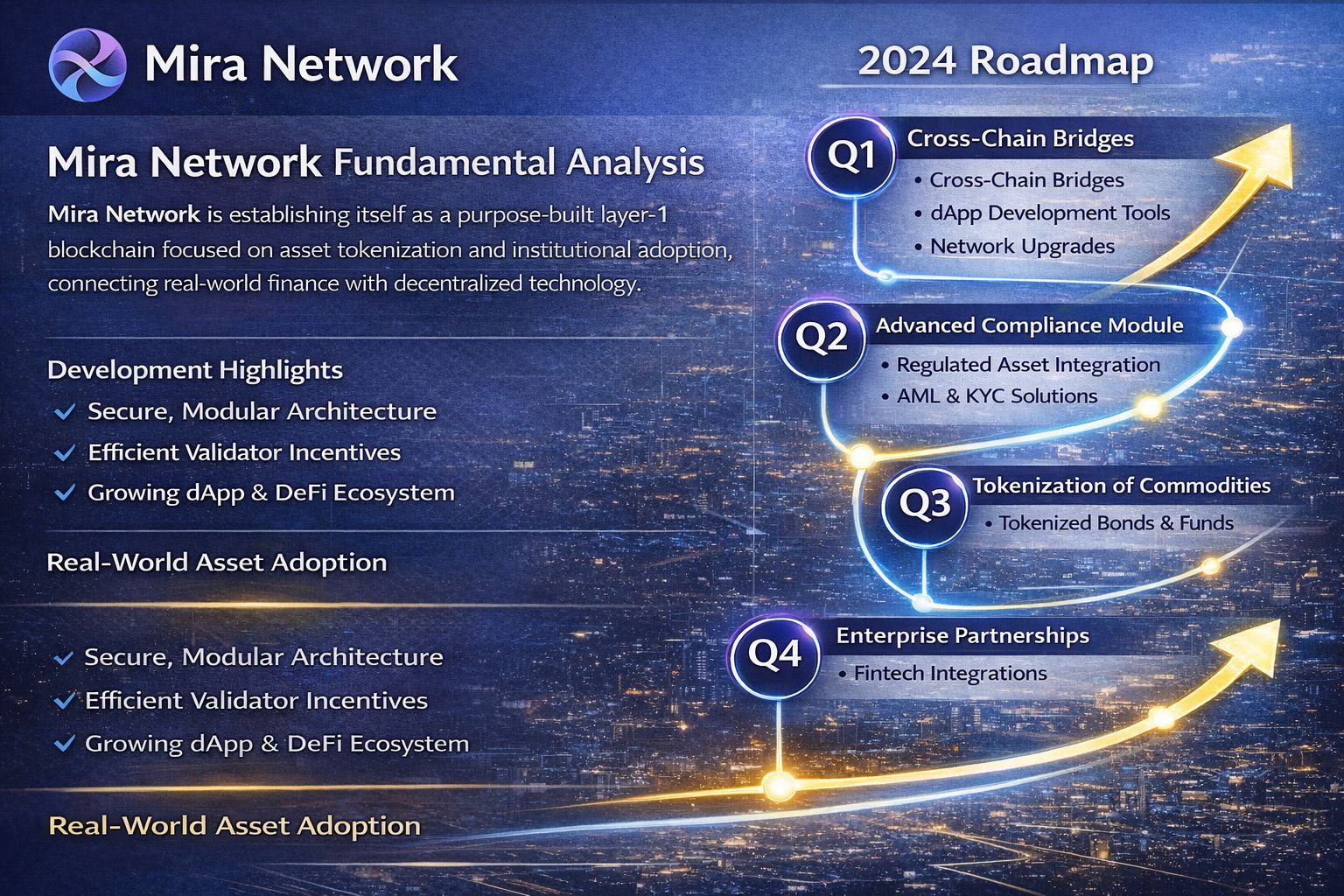
The roadmap of Mira Network focuses on expanding both the technological infrastructure and the application ecosystem. Early stages concentrated on building the protocol architecture, designing the tokenomics model, and launching the initial testnet environment.
The next phase of development introduced the mainnet launch and token distribution, enabling staking, governance, and broader participation in the ecosystem. This phase also included exchange listings for the MIRA token, improving liquidity and accessibility for users and investors. �
The Crypto Times
Looking ahead, the project plans to expand its developer tools and AI infrastructure so that third-party applications can easily integrate with Mira’s verification layer. The long-term vision includes creating a decentralized ecosystem where AI applications—such as chat systems, analytics platforms, and automated decision tools—can operate with provable reliability.
Another key roadmap objective is the growth of the ecosystem through partnerships with AI developers, blockchain platforms, and data infrastructure providers. By building a strong network of collaborators, Mira aims to position itself as a foundational infrastructure layer for AI-powered Web3 applications.
Conclusion
From a fundamental perspective, Mira Network stands out because it targets a rapidly growing sector: the intersection of artificial intelligence and blockchain infrastructure. Its decentralized verification model addresses one of the most important challenges in AI—trust and accuracy. Combined with strong development milestones, an active ecosystem, and a forward-looking roadmap, Mira Network could play an important role in the future of decentralized AI systems.