
I’ve been around in the crypto space long enough to know that most new projects come with the same pattern — a burst of excitement, a lot of initial energy, and plenty of bold promises. But once the dust settles and the spotlight dims, the real test begins. That's why, when I came across Mira Network, I felt a bit cautious. At first glance, it seemed like another attempt to capture attention with something “new,” but I couldn’t shake the feeling that it was trying to do something a little different. The question for me was simple: Is Mira just a flash in the pan, or does it have the potential to make a real impact?
Mira's central idea revolves around something they call "verified autonomy." It’s a concept that immediately intrigued me, though, if I’m being honest, I wasn’t entirely sure what that meant at first. But after diving into the details, I started to see where they’re going. The premise is that decentralized, autonomous systems — things like AI-driven bots, decentralized organizations (DAOs), or self-operating technology — can be trusted and verified through blockchain. In other words, they’re making these autonomous actions transparent, so you can verify that the systems are behaving as intended, without needing an intermediary.
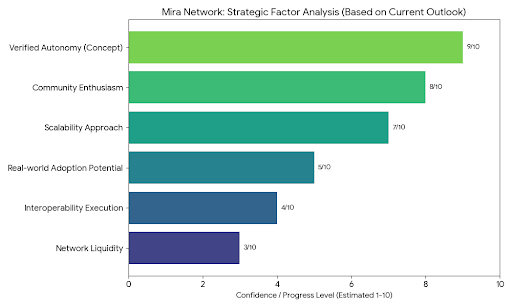
Now, I’ve seen similar ideas floating around for years — projects that want to decentralize trust or make AI more transparent. It’s nothing revolutionary in that sense. But there’s something about Mira’s specific approach that caught my attention. It’s not just about making transactions or data flows more trustless; they want to take that same trust-building idea and apply it to autonomous systems, which, let’s be honest, are becoming more and more prevalent in our daily lives. Whether it’s supply chain management, automated decision-making, or even self-driving cars, the importance of transparency in autonomous systems is growing. If Mira can pull this off, it could be a really important step forward.
What stood out even more was their focus on scalability and interoperability. I’ve seen a lot of projects promising to scale, but most of them fail to live up to the hype when the time comes to actually implement it. Mira seems to be taking a more thoughtful approach, though. Instead of building a completely isolated ecosystem, they want their platform to work seamlessly with other decentralized systems. The idea here is to bridge gaps between different autonomous technologies, making it easier for them to operate together. This, in theory, could solve one of the biggest pain points in crypto: fragmentation. If Mira can make that work, it could make a significant difference in terms of how decentralized networks interact with each other.
But, here’s the thing — I’ve seen this play out before. The concept of interoperability sounds great in theory, but it’s incredibly difficult to execute in practice. Getting different platforms to communicate with each other requires a level of standardization that rarely materializes. The question for me is: Can Mira really convince enough developers to adopt its framework and create an ecosystem of interconnected systems? The project looks promising, but there’s still a lot of work to be done to make that vision a reality. I've seen too many projects fail because they couldn’t gain the traction needed to grow past the initial buzz.
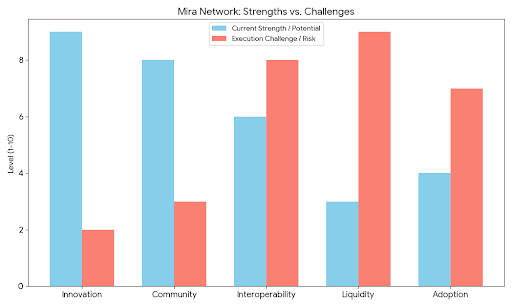
Liquidity is another thing I’ve been thinking about. No matter how impressive the tech is, if the platform doesn’t attract enough users or capital to keep things moving, it’ll struggle to survive. So far, I haven’t seen much in terms of how Mira plans to ensure liquidity across its network. They talk a lot about building a robust and interconnected ecosystem, but without real market activity, it’s hard to see how that vision will play out. It’s not enough to just have a good idea; you need a thriving, active market to keep everything running. I’ll be watching closely to see if Mira can attract enough liquidity to make their platform more than just a concept.
Another question that keeps coming to mind is adoption. Crypto, as we know, thrives on real-world usage, not just speculation. And I’m starting to see a trend with Mira that focuses on practical use cases. They mention things like supply chains, autonomous vehicles, and insurance — industries that could definitely benefit from a system of verifiable autonomy. If Mira can gain traction in these areas, it could give the project real staying power. But getting adoption in these spaces is no small task. We’ve seen many projects promise to revolutionize industries like finance, logistics, or healthcare, only to struggle when it comes to real-world implementation. So while the use cases are there, I still have my doubts about how quickly Mira can transition from theory to reality.
One thing that’s caught my eye, though, is Mira’s community. There's definitely some early enthusiasm, and I can’t help but feel a bit of déjà vu. It feels a lot like the early days of DeFi or the NFT boom — that sense of something new and exciting, where everyone’s trying to figure out how it works and whether they’re early enough to get in on something big. But here’s the thing: I’ve seen that kind of excitement before, and we all know how quickly it can fade. Will Mira be able to hold on to that initial energy, or will it be another project that burns bright for a few months before fizzling out?
I’ve also been thinking about how Mira’s team plans to continue building after the initial excitement wears off. A lot of projects make a splash with a big announcement or launch, but the real work comes after that. Can Mira continue to attract developers, and keep its user base engaged once the novelty wears off? There’s no shortage of competition in the space, and with every new project, it feels like the bar for success gets higher. I’ll be curious to see if Mira can maintain momentum or if it’s just another flash in the pan.
At the end of the day, though, the idea behind Mira is solid, and there’s definitely potential. Verified autonomy is something I haven’t seen enough focus on in the crypto space, and if Mira can make it work, it could be a game-changer. The challenges ahead — scaling, interoperability, liquidity, adoption — are real, but they’re not insurmountable.
I’m not ready to dive in yet, but I’m definitely keeping an eye on Mira. Right now, it feels like one of those projects that could either become something huge or just fade away. Time will tell if it can live up to the promise and execute when it matters most. For now, I’m just watching, waiting to see how it all plays out. It’s early, but I’ve got a feeling this one could be worth watching.