
How Mira Network Secures AI Interactions?
I’ve become cautious of the word trust in tech. It’s often used as a placeholder for hope hope that systems behave, that data is clean, that models do what they say they do. As AI systems move from generating text to taking actions, that hope starts to feel insufficient. That’s the perspective I bring when looking at Mira Network. I’m not seeking a promise that AI will be honest. I’m looking for a system that assumes it won’t be and plans accordingly.
Most AI interactions today are built on implicit trust. You trust that a model used the right data. You trust that an agent followed the rules it claims to follow. You trust logs that are often centralized, mutable, or incomplete. That works until something goes wrong. And when it does, you’re left arguing narratives instead of inspecting evidence.
Mira’s architecture seems to start from that failure mode.
Instead of trying to make AI “more truthful,” Mira focuses on making AI auditable. The idea isn’t to judge whether an output is correct in some abstract sense, but to verify whether it was produced under declared conditions. Inputs, execution context, constraints, and outputs are all candidates for verification. That shift—from trusting intent to verifying process—is subtle but important.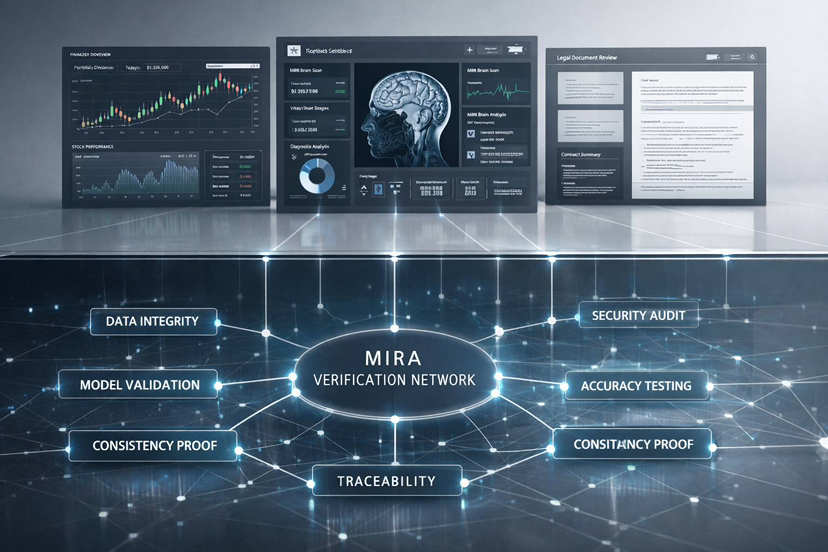
What stands out to me is that Mira doesn’t try to sit inside the AI model. It doesn’t attempt to understand weights, reasoning chains, or internal states. That would be fragile and model-specific. Instead, it treats AI systems as actors that make claims. Those claims can then be independently checked using cryptographic attestations and network consensus. In other words, trust is moved away from the model and toward verifiable signals around it.
Still, architecture alone doesn’t create trust.
Any system that claims to secure AI interactions has to deal with overhead. Verification adds cost. It adds latency. It adds complexity. Developers are notoriously good at bypassing anything that slows them down. If Mira’s verification path is too heavy, it risks becoming optional—and optional trust systems rarely get used when things are moving fast.
This is where I pay close attention to how Mira scopes its guarantees. It doesn’t claim to verify truth. It verifies compliance with declared rules. Did the model use the stated data source? Did the agent follow the specified constraints? Was this output generated under the conditions it claims? That’s a narrower promise, but it’s one that can actually be enforced.
From a systems perspective, that’s a smart tradeoff.
Another important aspect of the architecture is decentralization. Centralized verification is easier, but it just recreates the same trust bottleneck in a different place. Mira’s use of distributed verification and consensus means no single party controls the narrative. Multiple independent actors check claims before they’re accepted. That doesn’t eliminate errors, but it reduces the chance that trust collapses because one authority failed or acted dishonestly.
Of course, decentralization introduces its own risks. Incentives have to be aligned. Validators need reasons to be honest and penalties for being noisy or malicious. If verification becomes a box-checking exercise, the signal degrades quickly. The difference between real trust and performative trust is thin, and it’s enforced more by economics than by cryptography.
What I find compelling is that Mira seems designed for a world where AI interactions will be disputed. Outputs will be challenged. Decisions will be questioned. Systems will fail in ways that matter. In that world, trust isn’t about preventing every mistake—it’s about being able to reconstruct what happened after the fact.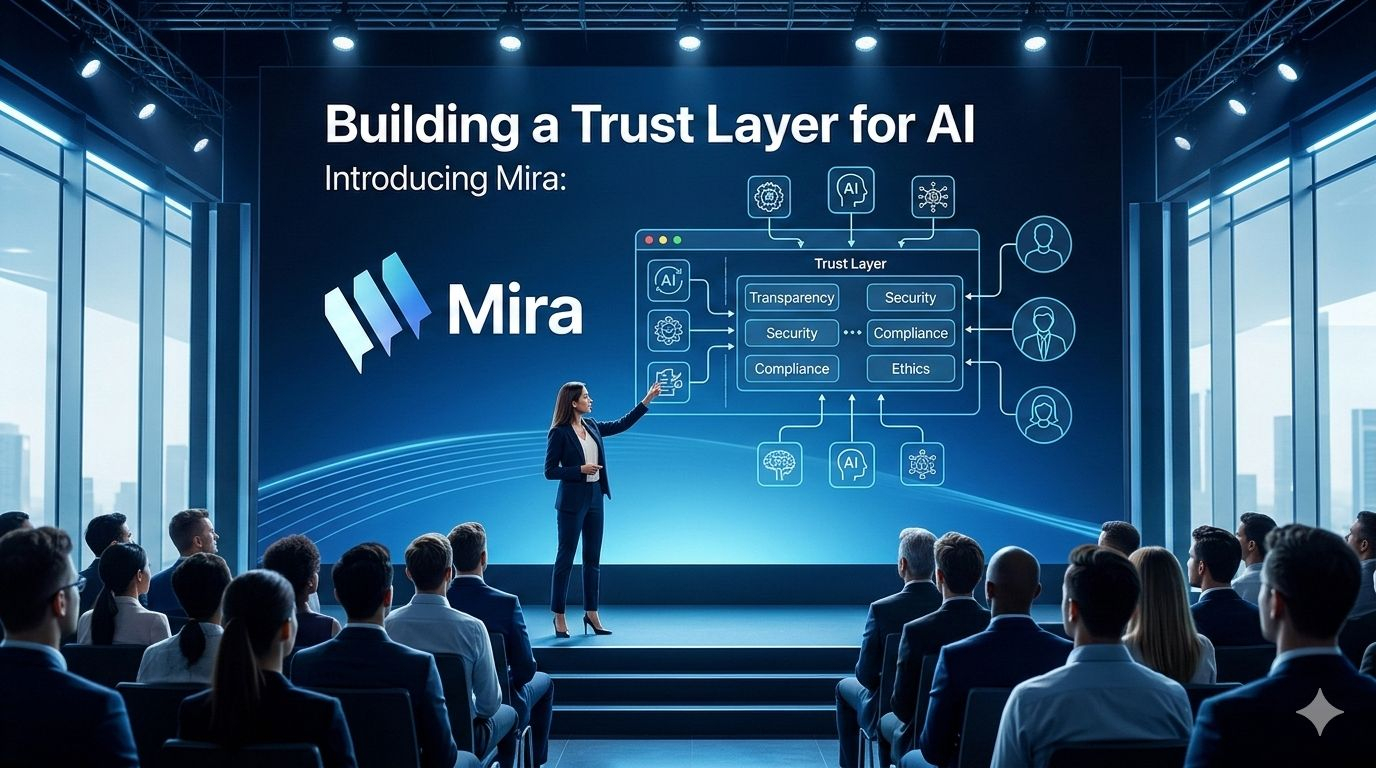
That’s a very different mindset from most AI tooling today, which optimizes for speed and convenience first and audits later, if at all.
So when I think about the architecture of trust in Mira Network, I don’t see a silver bullet. I see a framework that assumes friction, disagreement, and failure are normal. It doesn’t try to eliminate them. It tries to make them inspectable.
Whether that architecture becomes foundational will depend on adoption. Developers have to decide that verification is worth the tradeoff. Users have to demand evidence instead of assurances. And the network has to prove that its guarantees hold up under real, messy usage.
If that happens, trust stops being a feeling and starts becoming a property. Not because AI suddenly behaves better but because its interactions leave a trail that can’t be easily rewritten.
And in an age where AI is increasingly autonomous, that might be the most realistic definition of trust we can build.