
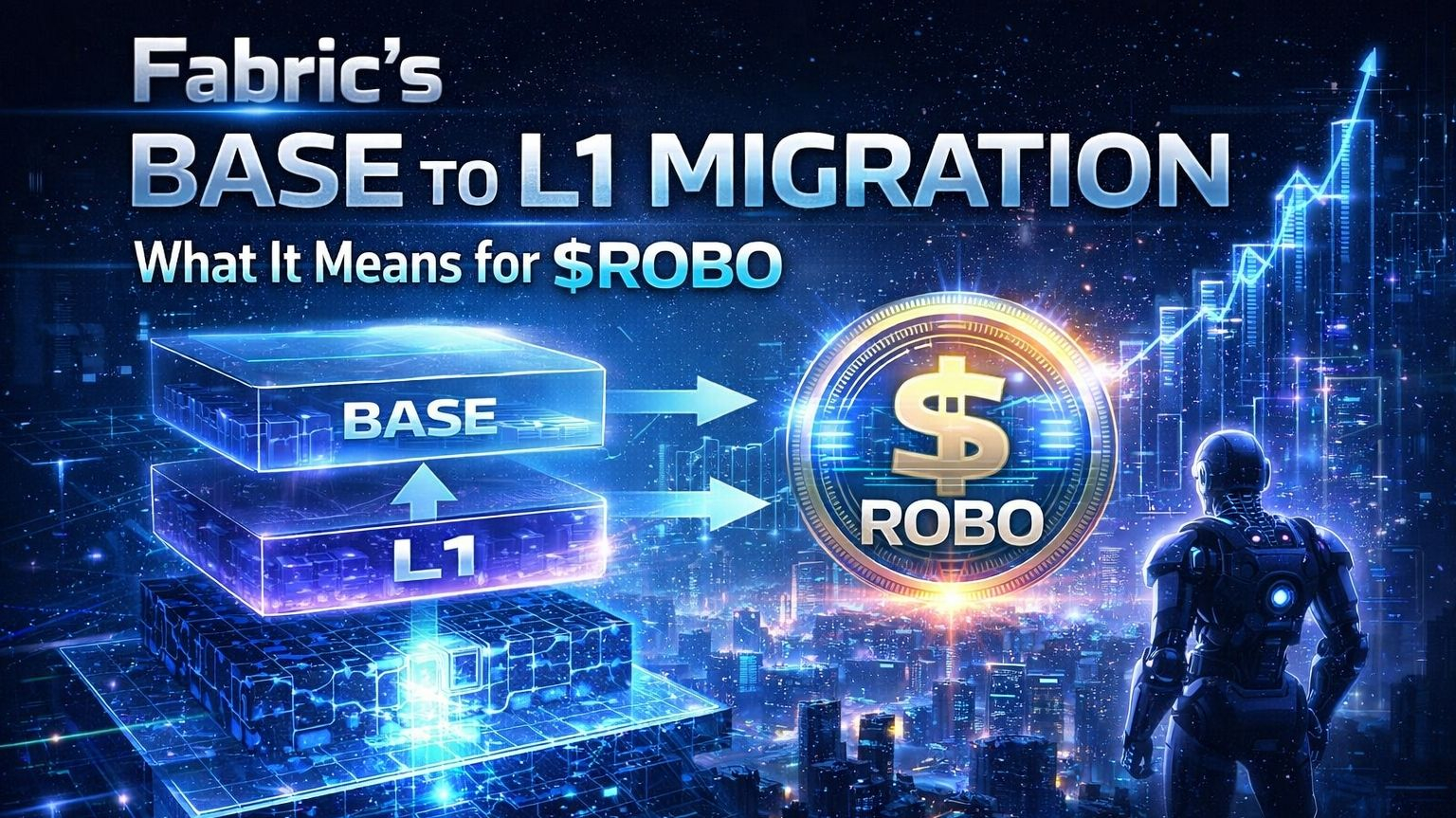
Das Fabric-Protokoll funktioniert derzeit auf Base,
Das Layer-2-Netzwerk von Coinbase, das auf Ethereum aufgebaut ist.
Dies war ein bewusster Ausgangspunkt — Base bietet niedrige Transaktionskosten, EVM-Kompatibilität und eine langjährige Entwicklerumgebung. Für ein Projekt in seinen frühen Phasen war es eine praktische Wahl.
Aber die Roadmap von Fabric weist in die Richtung von etwas besonders Ambitioniertem. Der Plan sieht vor, zu einer engagierten Layer-1-Blockchain zu migrieren, während die Akzeptanz wächst. Diese einzelne Auswahl hat langfristige Auswirkungen für $ROBO -Inhaber als fast alles andere in der Zukunft des Projekts.
Der Grund liegt ganz einfach in der Kostenerfassung.
Auf Base schwanken die Transaktionskosten teilweise in Abhängigkeit von der Infrastruktur von Coinbase. Fabric profitiert vom Ökosystem, kontrolliert jedoch nicht vollständig die monetäre Schicht darunter. Eine dedizierte L1 ändert dies vollständig. Wenn Roboter Zahlungen leisten, Identitäten verifizieren und Verpflichtungen auf Fabrics eigener Kette koordinieren, bleibt jede Transaktionsgebühr innerhalb des Ökosystems. $Robo wird zum Treibstoff-Token für ein ganzes Netzwerk anstelle eines nur auf der Infrastruktur eines anderen sitzenden Utility-Tokens.
So hat Ethereum Gebühren von Tausenden von Paketen erfasst. So hat Solana eine nachhaltige Token-Nachfrage aufgebaut. Die Vereinbarungsebene ist, in der sich die monetären Kosten konzentrieren.
Der Migrationsweg wirft jedoch wirklich wichtige Fragen auf.
Es wurde kein Zeitrahmen bestätigt. Der in offiziellen Mitteilungen beschriebene Grund ist "wenn die Akzeptanz zunimmt" — ein Szenario ohne messbare Definition. Wer entscheidet, wann die Akzeptanz ausreichend ist? Welche Kennzahlen bestimmen die Bereitschaft? Diese Fragen bleiben öffentlich unbeantwortet.
Eine souveräne Blockchain aufzubauen, während gleichzeitig ein Umfeld geschaffen wird, die Token-Ökonomie verwaltet wird und um die Aufmerksamkeit der Entwickler konkurriert wird, ist eine der maximal herausfordernden Umsetzungsherausforderungen im Kryptobereich. Mehrere Initiativen haben L1-Migrationen eingeführt und sind entweder auf unbestimmte Zeit verzögert oder haben den Plan völlig aufgegeben, als die Komplexität deutlich wurde.
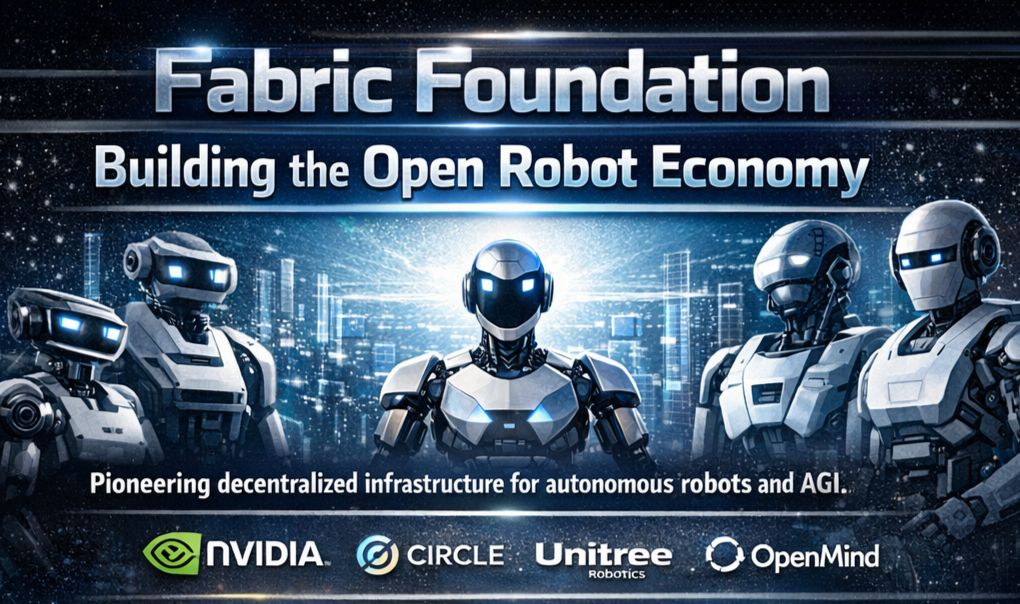
Fabric hat die technische Grundlage durch seine Basisbereitstellung und die zugehörige Gemeinschaft über
OpenMind,
NVIDIA
Unitree
um diesen Übergang glaubwürdig zu machen. Die offene Frage ist, ob sich die Roboterwirtschaft schnell genug entwickelt, um die Migration zu rechtfertigen und zu finanzieren, bevor der Schwung nachlässt.
Für $Robo-Inhaber,
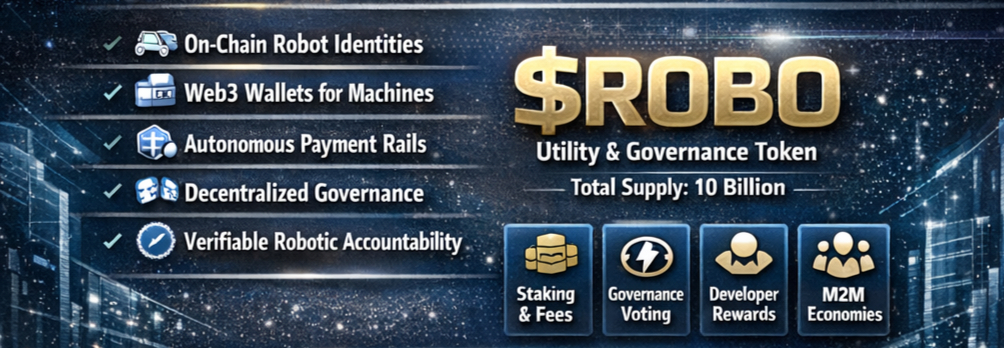
Die L1-Migration ist nicht nur ein technisches Upgrade. Es ist der Moment, in dem die Fähigkeit zur Kostenfassung des Tokens entweder drastisch erweitert oder durch die aktuelle Architektur eingeschränkt bleibt. In Zusammenarbeit mit führenden Unternehmen wie NVIDIA, Circle, Unitree Robotics und OpenMind baut die Stiftung: • On-Chain-Roboter-Identitäten • Native Web3-Wallets für Maschinen • Autonome Zahlungsbahnen • Dezentrale Governance-Strukturen • Überprüfbare Berechnung roboterverantwortung Im Zentrum dieser Umgebung steht $ROBO (Gesamtangebot: 10 Milliarden) — der zentrale Software- und Governance-Token, der das Netzwerk antreibt. $ROBO ist für Folgendes konzipiert: Staking
@Fabric Foundation Stiftung #ROBO #FabricFoundatiom $ROBO Fabrics Basis zu L1-Migration: Was es für $ROBO bedeutet