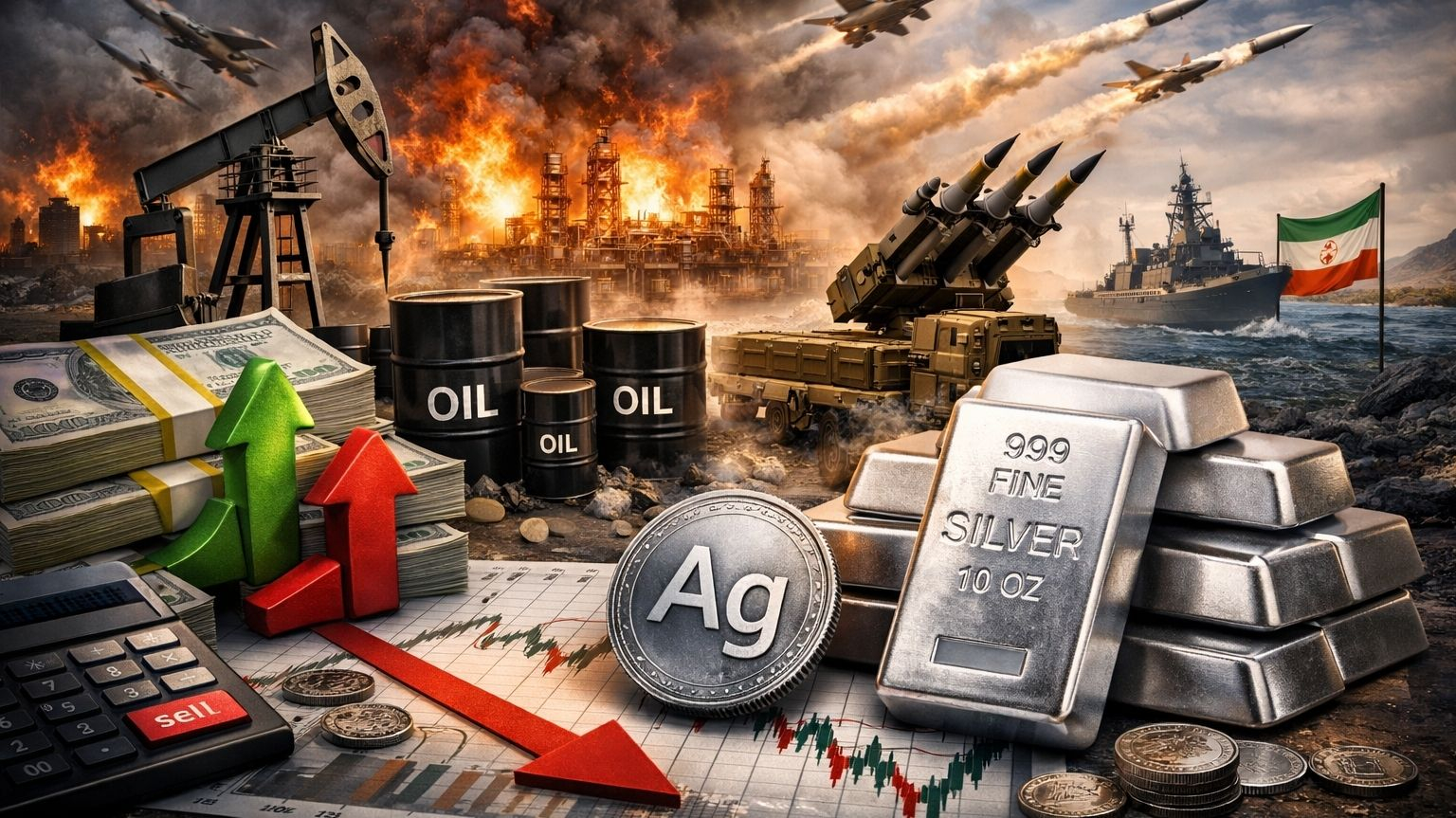
At around $87 per ounce, the metal is trying to stabilize, but the stronger U.S. dollar is acting like gravity. Whenever geopolitical tension rises, silver should theoretically benefit from safe-haven flows. But this time, dollar strength and rising Treasury yields are absorbing that demand before it can turn into sustained upside momentum.
The Middle East escalation has clearly shifted market psychology. Reports of coordinated U.S.–Israeli strikes targeting Iranian military infrastructure — and Tehran’s immediate response threatening closure of the Strait of Hormuz — injected a fresh wave of uncertainty into global markets. The Strait handles roughly one-fifth of global oil supply, so even the threat of disruption sends crude higher. Energy inflation risk is back on the table.
That matters for silver in two ways.
First, higher oil prices raise inflation expectations. Normally, precious metals like Silver and Gold attract buyers during inflation scares.
Second — and more importantly right now — rising inflation expectations push bond yields higher. The U.S. 10-year Treasury moving toward 4% increases the opportunity cost of holding non-yielding assets. Silver doesn’t pay interest. Treasuries do. That shift in relative attractiveness is capping upside.
The dollar strength compounds the issue. Since silver is globally priced in USD, any appreciation in the greenback makes it more expensive for foreign buyers. That reduces international demand just when risk sentiment should be supportive.
This creates a familiar trap: • Geopolitical tension → safe-haven bid
• Oil spike → inflation fears
• Inflation fears → higher yields
• Higher yields + strong USD → pressure on silver
So the metal stalls.
Rate-cut expectations are also adjusting. If energy inflation lingers, the Federal Reserve has less room to ease aggressively. Markets may still price two cuts later in the year, but the timeline is becoming less certain. A delayed easing cycle generally favors the dollar and weighs on metals.
Technically, silver now needs one of three catalysts to regain footing:
1. A pullback in the U.S. dollar
2. Treasury yields retreating from recent highs
3. A clear escalation that overwhelms yield effects and triggers panic-level safe-haven flows
Until one of those shifts occurs, silver may remain range-bound or mildly defensive despite the geopolitical backdrop.
In short, this isn’t a lack of fear — it’s a dominance of macro mechanics. The dollar and yields are currently stronger forces than geopolitics.
If you’d like, I can also break this down from a short-term trading perspective (support/resistance scenarios) or a medium-term macro outlook.