
The intersection of Blockchain and Artificial Intelligence is the most discussed narrative of 2026, but a massive problem remains ignored: The Verification Gap. In a centralized system, you trust the provider. In a decentralized system, how do you know the AI output you received is actually what was requested?
Many projects rush to decentralize before they are reliable. @mira_network is taking a more sophisticated path, prioritizing a "Controlled Architecture" that values accuracy over raw speed. This isn't just about decentralization; it’s about verifiable integrity.
Why Structure Trumps Chaos
The foundation of the Mira ecosystem starts with Selective Validator Onboarding. By evaluating early participants based on performance and reputation, the network establishes a high-quality "Operational DNA." When the stakes involve complex AI computations, you cannot leave the quality of your nodes to chance. This initial calibration ensures that the system is resilient before it scales.
Three Layers of Defense
To protect the integrity of $MIRA, the network employs a multi-layered securit#mira y strategy:
Structured Redundancy: Multiple validators perform the same task in parallel. This turns "silent errors"—the bane of AI—into visible signals that can be caught and corrected.
Defensive Randomness: Through unpredictable task allocation, a malicious actor cannot predict which task they will be assigned. This makes strategic manipulation statistically impossible.
Behavioral Pattern Analysis: Unlike traditional networks that judge a single transaction, @mira_network looks at the long game. By monitoring longitudinal patterns, the network identifies anomalies that simple one-off checks wou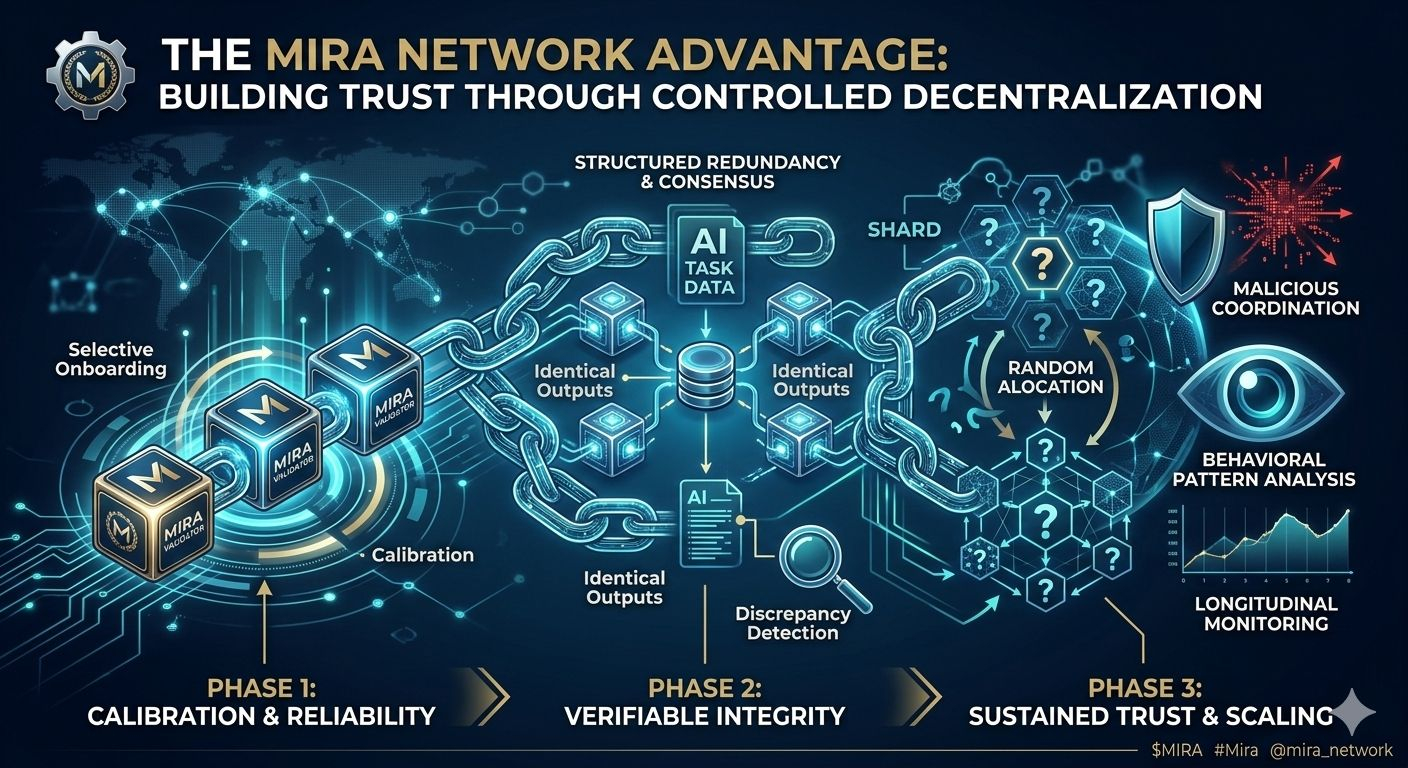 ld miss.$MIRA
