

When I first came across Fabric Protocol scrolling through some crypto feeds, I wasn't expecting much. Robotics and blockchain sounded like another flashy combo, the kind that promises the moon but delivers vaporware. But as I dug in—reading whitepapers late into the night, following the Foundation's updates—it started to click. This isn't just hype; it's a practical stab at making robots reliable in a world that's suddenly full of them.
Think about it: we're at this weird tipping point where AI agents and physical bots are popping up everywhere. Delivery drones zipping around neighborhoods, warehouse arms stacking boxes faster than humans ever could, even home helpers folding laundry or monitoring the elderly. It's exciting, sure, but also a little unnerving. What if a computation glitches and that surgical robot veers off course? Or a delivery bot hands the wrong package to the wrong door because of bad data? Centralized systems running these things feel fragile—proprietary black boxes controlled by a few big players, with no real way for outsiders to verify what's happening under the hood.
That's where Fabric steps in, almost stealthily. Backed by the non-profit Fabric Foundation, it's an open network designed from the ground up for general-purpose robots. No gatekeepers, just a public ledger that ties together data, computations, and even regulatory oversight. Developers can plug in their hardware modules, AI brains, or compliance rules, and everything gets coordinated transparently. Contributions—like deploying a new sensor type or improving the protocol—earn you $ROBO tokens, turning participants into stakeholders.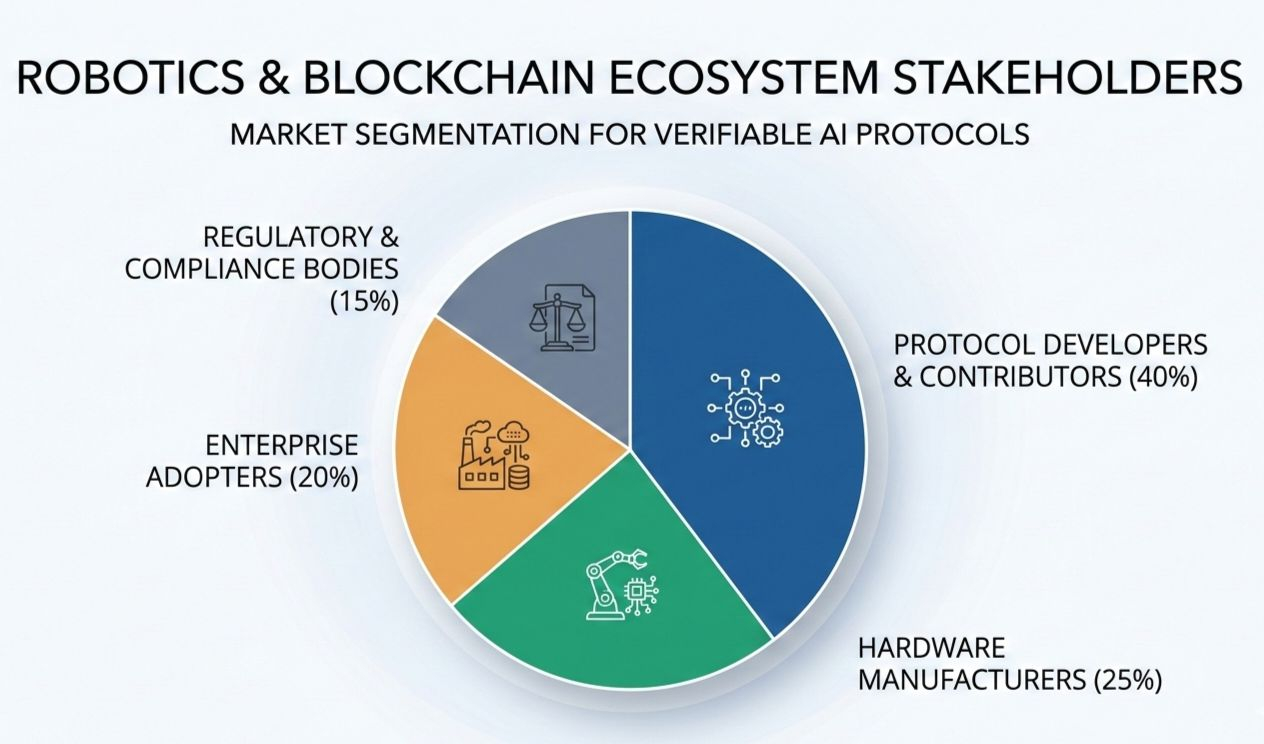
What hooked me was the verifiable computing angle. In plain terms, it uses crypto-style proofs to confirm that a robot's actions and calculations happened exactly as they should. No more blind trust; you can audit the ledger and know the bot didn't hallucinate its path or fudge its safety checks. It's agent-native too, meaning AI agents talk directly through the protocol, scaling across ecosystems without clunky middlemen. Modular like Lego bricks—one piece for compute, another for data feeds—making it easier for anyone to build on top.
Compared to the usual robotics stacks, which lock you into vendor ecosystems, Fabric feels refreshingly open. Traditional platforms rely on manual audits and corporate contracts; here, it's all on-chain incentives and non-profit governance steering the ship long-term. No VC rush to pump and dump— the Foundation's focus on safety and evolution suggests they're in it for the decade, not the quarter.
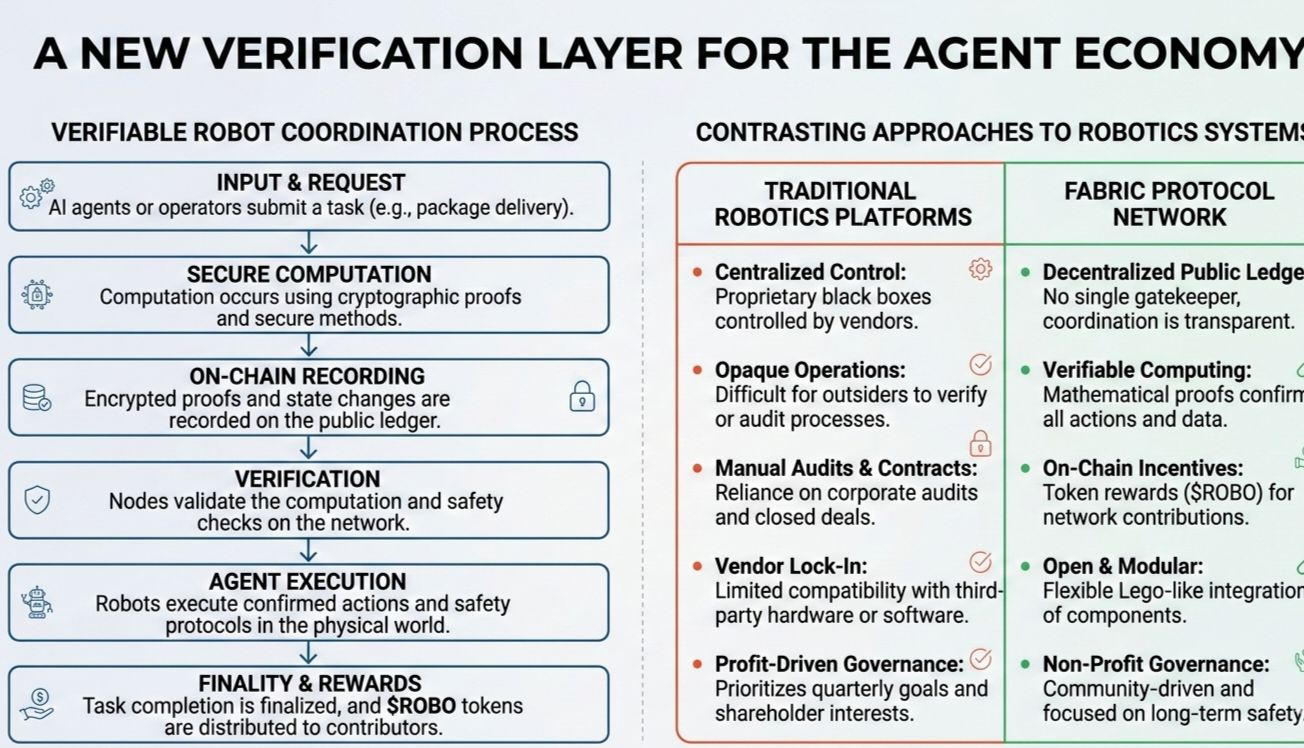
Of course, it's not without hurdles. Scaling proofs for fleets of millions of bots will test the network's chops, and $ROBO's value proposition needs real adoption to shine. regs around physical AI could throw curveballs too. But that's what makes it interesting—it's not overpromising perfection, just a smarter foundation for whatever comes next.A quick side-by-side in my notes:Coordination: Fabric uses public ledgers; others stick to servers.Verification: Crypto proofs vs. trust-me audits.Incentives: Token rewards vs. closed deals.Governance: Community non-profit vs. boardrooms.As robots weave deeper into daily life—from factories to front doors—the need for this kind of trust layer grows urgent. Fabric might not scream "moonshot" like some memecoins, but its blend of blockchain rigor and real-world utility has me keeping tabs. After weeks of pondering, one thought lingers: in the agent economy ahead, the projects quietly solving coordination might end up owning the future. What do you think—ready for robots we can actually verify?
@Fabric Foundation #ROBO $ROBO
