

I've been thinking a lot about Fabric Protocol recently, and it's genuinely refreshing to see a project tackling robotics with such a thoughtful, open approach. Supported by the non-profit Fabric Foundation, this global network is all about empowering people—developers, researchers, institutions—to build, govern, and evolve general-purpose robots together. What stands out is its use of verifiable computing, where every robot action can be checked and trusted, paired with infrastructure that's native to autonomous agents from the start.
The beauty lies in how it pulls together data sharing, heavy computation, and even regulatory oversight on a public ledger. Picture a transparent system where no single entity calls all the shots, making human-robot teamwork not just possible, but safe and reliable. It's designed to break down barriers, letting contributions flow freely without the usual corporate gatekeeping.
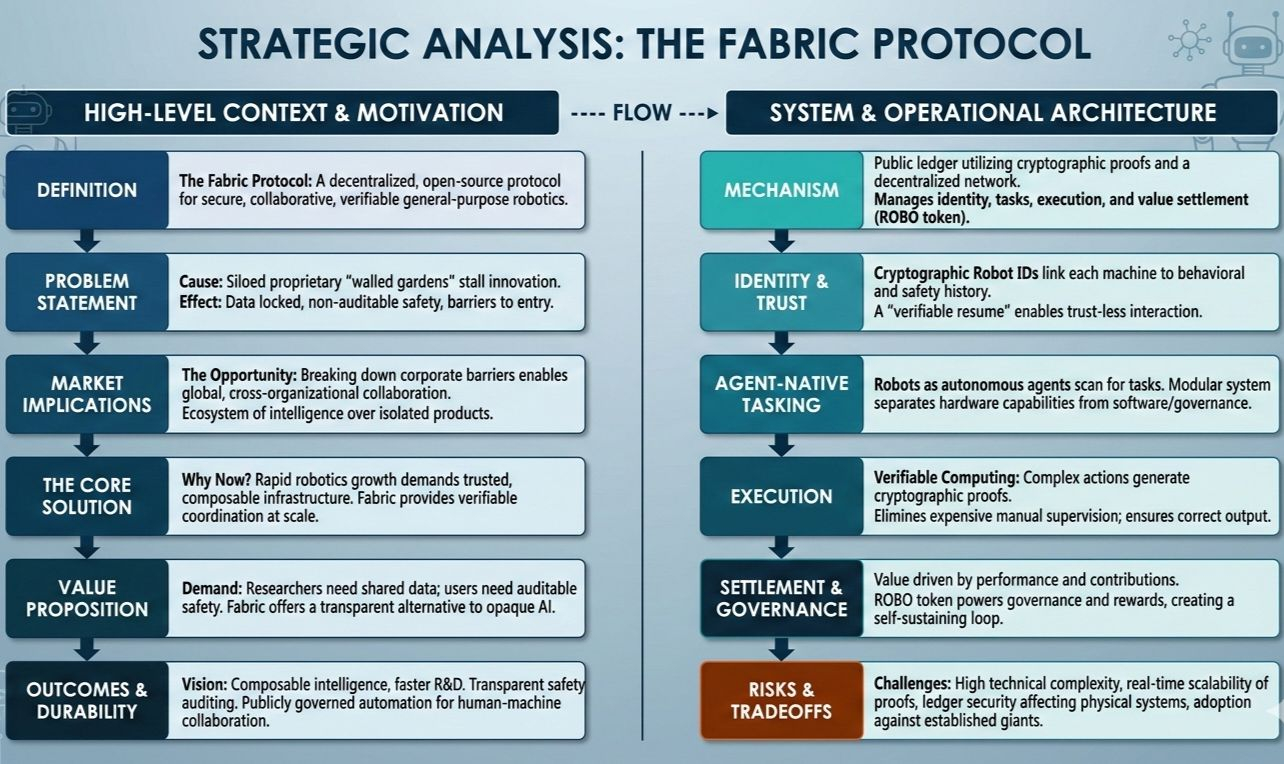
One thing that really clicks for me is the cryptographic identity system for robots. Each machine gets a unique digital ID linked straight to its behavioral history, creating trust right out of the gate. No endless verification loops or blind faith required—it's like giving robots a verifiable resume that evolves with their performance.
Then there's task discovery, which feels so intuitive. Robots actively scan the network for opportunities that match their skills, turning the whole ecosystem into a dynamic marketplace. This agent-native design means it's built for how robots naturally work, supporting modular growth without locking anyone into specific hardware.
Execution is where the verifiable proofs shine brightest. When a robot completes a task—say, processing sensor data or coordinating with others—it generates cryptographic evidence of the outcome. This minimizes errors, disputes, and the need for constant human supervision, letting focus shift to higher-level creativity.
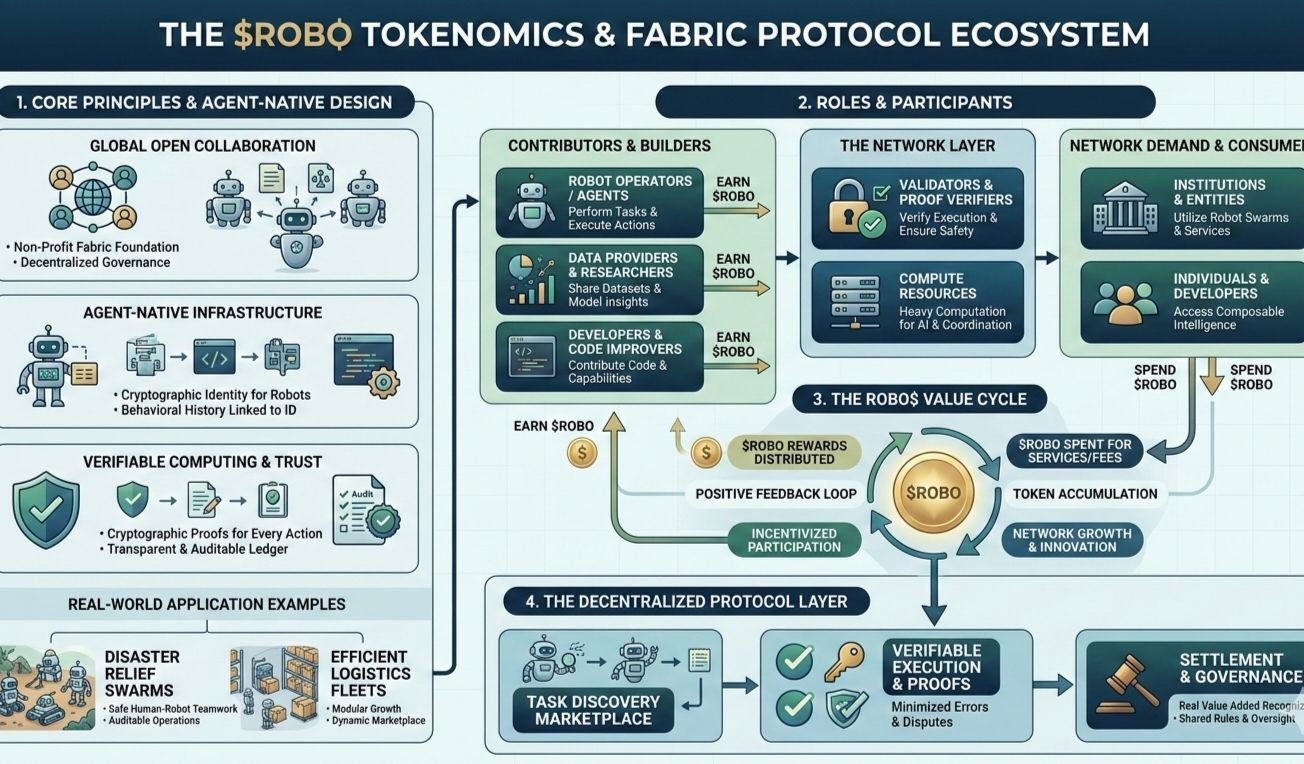
Settlement ties it all together through decentralized governance. Participants earn $ROBO tokens based on real value added, whether that's compute power, data insights, or code improvements. It's a positive feedback loop that motivates ongoing involvement, making everyone a vested partner in the network's success.
What I love about Fabric is how it enables composable intelligence—robots stacking capabilities like building blocks across the globe. This counters the closed-off silos in today's AI world, where innovation often gets stuck behind paywalls or patents.
On the safety front, it's reassuring. By embedding verifiability into every step, it addresses those big worries about uncontrolled AI in robotics. Think collaborative swarms for disaster relief or efficient logistics fleets, all operating under shared, auditable rules that prioritize human oversight.The momentum feels real too. Early 2026 signals point to growing partnerships and real-world testing, suggesting Fabric could scale into something transformative. It's not flashy hype; it's solid infrastructure fostering inclusive progress.Ultimately, Fabric paints an optimistic picture: a robotics landscape where machines amplify human ingenuity through open collaboration. In a tech space full of isolated experiments, this feels like a step toward a shared, thriving future—and that's worth getting excited about.
@Fabric Foundation #ROBO $ROBO
