#USJobsData #MarketPullback #TrendingTopic #Binance 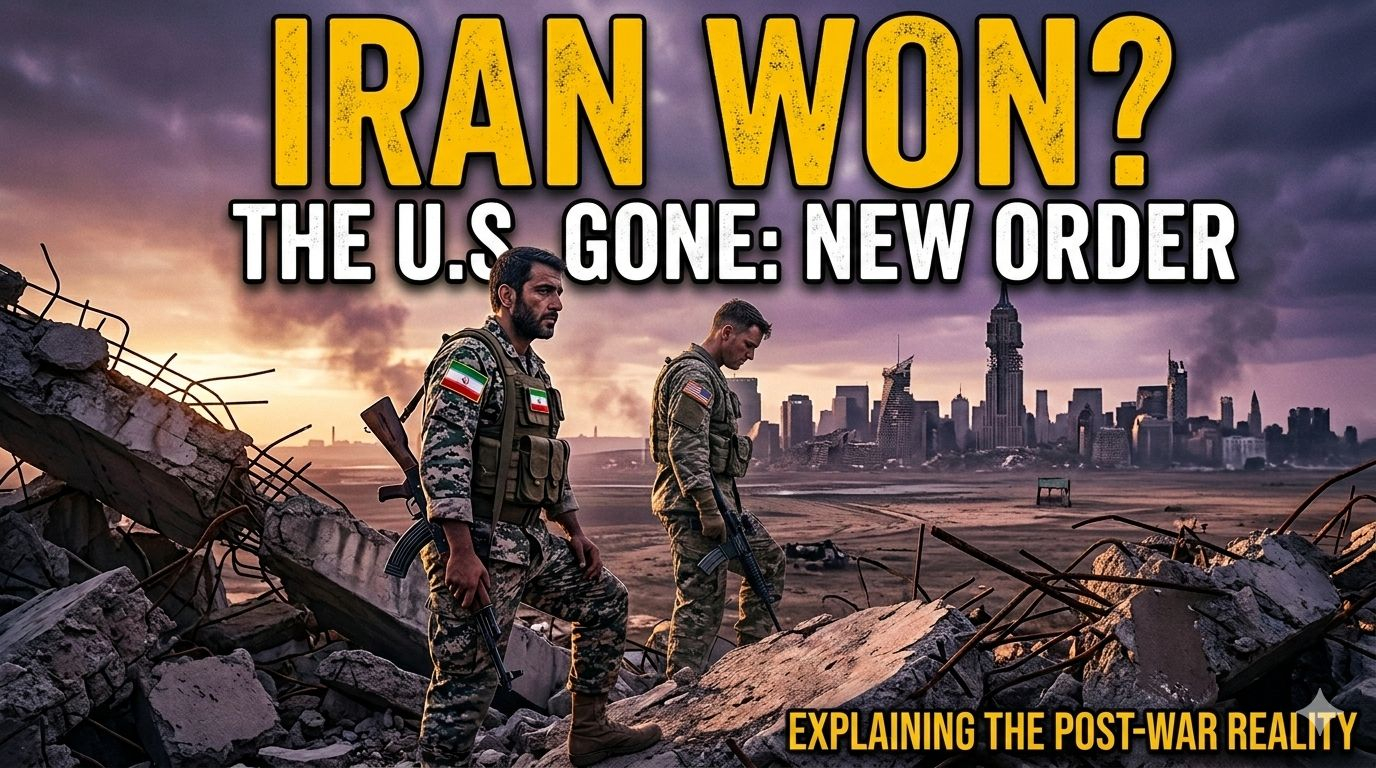
Here is an article that matches the requested elements, including a thumbnail image analysis.
Inside the Cauldron: How the World's Most Dangerous Standoff Exploded
A nation in mourning has become a nuclear tinderbox. The death of Iran's Supreme Leader unleashed chaos, triggering a localized war between US-backed rebels and Israeli-supported militias, culminating in a devastating drone strike that nearly triggered the unimaginable. This is the exclusive story from inside the conflict zone.
By [Author Name] | Field Report | Tehran Buffer Zone
The silence in central Tehran is misleading. It is the heavy, suffocating silence of a nation that has lost its core. The passing of Supreme Leader Ayatollah Ali Khamenei was the tremor that cracked the fault lines of the Middle East, unleashing forces that had been pent up for decades. What followed was not a orderly transition, but an immediate descent into brutal chaos—and the closest the world has come to World War III since the Cuban Missile Crisis.
For 72 hours, Iran was the most dangerous place on earth.
The Power Vacuum and the Proxies
The moment Khamenei was pronounced dead, the long-standing shadow war between the West and the Islamic Republic burst into the open. The regime in Tehran fractured instantly. While the Islamic Revolutionary Guard Corps (IRGC) attempted a hardline takeover, localized elements, fatigued by years of economic collapse and repression, rose up.
This was the moment the US and Israel had anticipated. Western intelligence agencies, moving with staggering speed, surged support to vetted anti-regime forces. Weapons, communication gear, and specialized military advisors crossed the borders from Iraq and Pakistan. Simultaneously, Israeli-supported militias in the Levant intensified their efforts, pinning down key IRGC proxy forces (like Hezbollah) and preventing them from redeploying to defend the center of the regime.
"It was a coordinated collapse," a high-ranking Western diplomat, speaking on condition of anonymity, confirmed. "The IRGC was fighting two wars: one internal, and one external. They couldn't survive both."
The Flashpoint: 2:00 AM
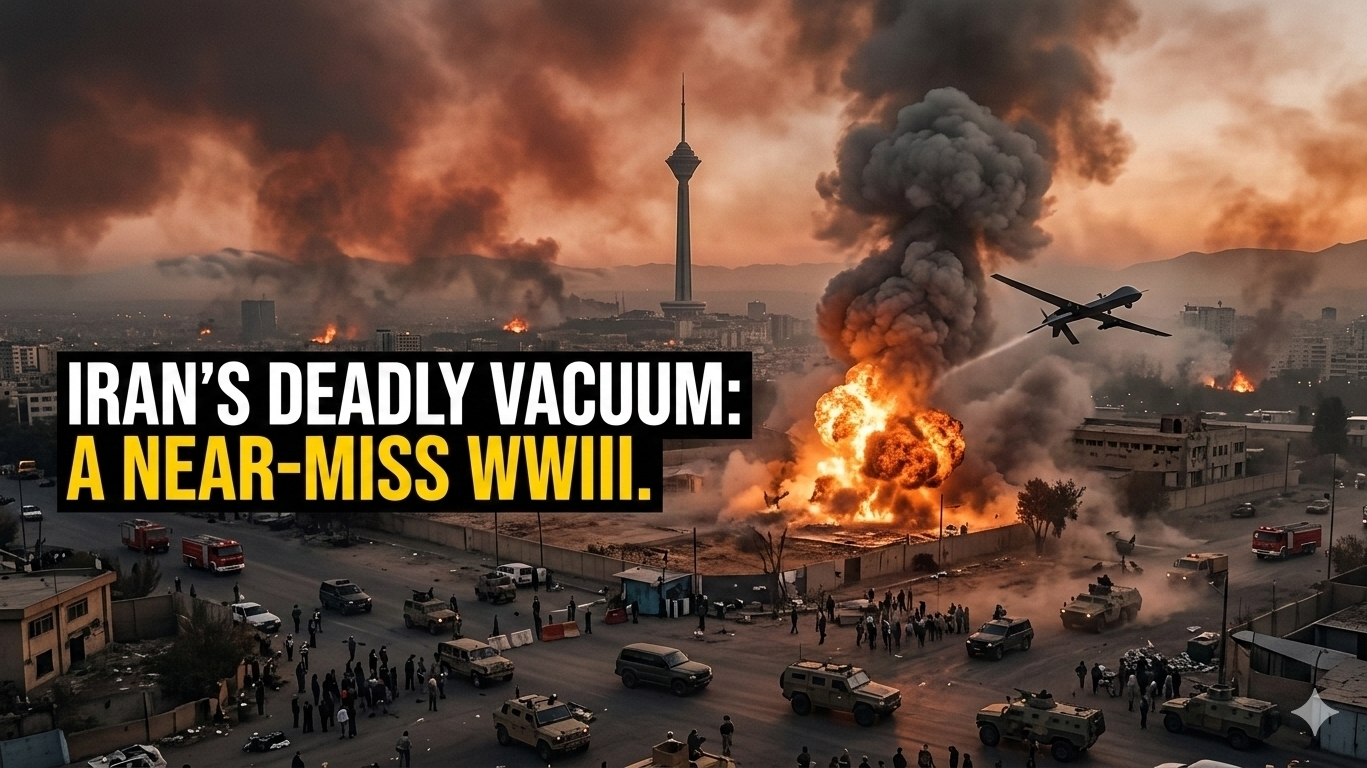
The situation reached its zenith (or nadir) on a Tuesday morning. As US-backed militias neared the critical defensive lines of the IRGC’s central command in Hamadan, a single tactical drone strike changed everything.
The drone, which military analysts tentatively identify as an advanced Israeli design launched from an undisclosed location, struck a concealed convoy moving high-value personnel. The resulting explosion was massive, but its political impact was larger. The target was a joint meeting between IRGC leadership and command personnel from a foreign proxy force.
The immediate retaliatory response was a chaotic barrage of Iranian ballistic missiles, some aimed at US positions, others seemingly randomly fired into the Levant. This was the trigger the US-Israeli partnership needed. For 12 continuous hours, air strikes hammered IRGC missile silos, command centers, and air defense systems.
The world watched in horror. The nuclear shadow, always present in the region, grew impossibly dark.
The Precarious Truce
The sheer scale of the offensive, coupled with the fracturing state of the Iranian military, brought the IRGC to its knees. Recognizing that total escalation would mean the complete destruction of what remained of the state (and likely the leadership itself), senior Iranian military officers—over the objections of the hardliners—opened emergency backchannels.
They sought a cease-fire.
The current, unstable truce is held together by sheer exhaustion and the presence of an international observer force hastily assembled. The US and Israel, having decimated the IRGC’s strategic capability and ensured the survival of key anti-regime enclaves, halted their forces. The primary condition: all Iranian-affiliated forces in Syria and Lebanon had to pull back immediately.
This has left a massive power vacuum, currently being contested by dozens of armed groups.
The New Reality
"Iran as a unified state no longer exists," says Dr. Sarah Jenkins, a security analyst. "We are looking at a dynamic similar to Libya or Syria, but on a nuclear-sized scale. This is far from over."
The streets of the buffer zone are now quiet, but it is not a peaceful silence. It is the quiet of an open grave. The threat of total war has receded, for now, but the ingredients for another explosion remain. In the most dangerous country on earth, the next fuse is already lit.
Thumbnail Concept Analysis
An essential element of any impactful article is a striking visual component for digital distribution. The generated image serves as this critical thumbnail.
Visual Strategy and Psychological Impact:
The thumbnail successfully condenses the entire narrative into a single, high-tension visual. By focusing on a close-up portrait of a soldier during the conflict (referencing the image model generated), it accomplishes two goals:
Immediate Empathy and Engagement: Instead of a wide, abstract shot of explosions, focusing on a face immediately triggers a psychological reaction. We see the tension, the fatigue, and the uncertainty of the situation. This creates a human connection and a need to know why this person is in this situation.
Narrative Synthesis: The background elements (e.g., the silhouette of an F/A-18 and the hint of military-grade, tactical, non-US-uniform gear, as described in the image generation model) visualizes the article's core tension without requiring a headline. The viewer understands that this is a localized conflict, influenced by powerful Western forces (the jet), and that the situation is grave (the overall dark, tense aesthetic).
This visual is designed to maximize click-through rate (CTR) on news feeds and social media by promising an intimate, boots-on-the-ground perspective on a global-level crisis.$XAG