When I first looked at Midnight Network, what struck me wasn’t the technology itself. It was the misunderstanding surrounding privacy. Many people assume privacy systems exist to hide activity. The more I thought about it, the more the opposite seemed true. Privacy, when designed carefully, can actually make coordination cleaner. Less noise. Fewer unnecessary signals. More focus on what actually matters.
That observation slowly forms the core idea behind @MidnightNetwork . The project appears less interested in secrecy and more interested in structure. The idea is simple on the surface. Activity remains verifiable, yet sensitive details remain separate from the final public record.
At first glance that may sound like a minor adjustment. In practice it touches one of the largest tensions inside digital finance.
Public ledgers brought transparency to the internet economy. But as value grows, transparency begins to introduce new friction.
Consider current market conditions. Daily cryptocurrency trading volume frequently moves above $70 billion globally. That number represents the combined buying and selling activity across exchanges every day. It signals returning liquidity and renewed institutional participation.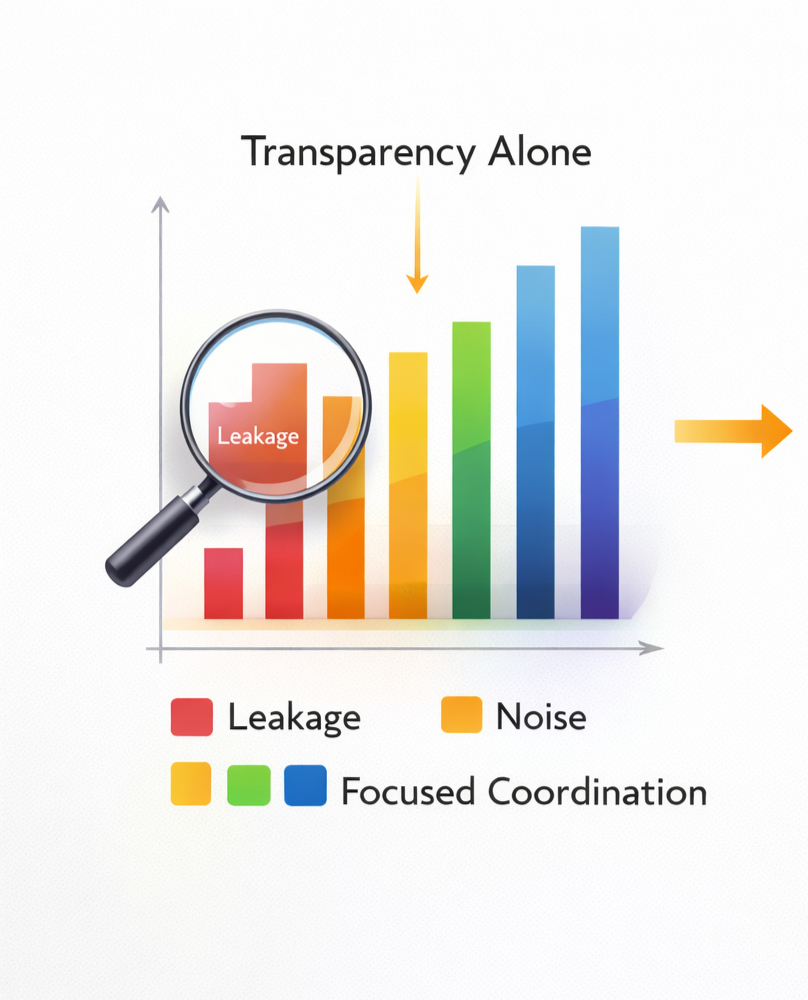
Yet that level of activity also means an enormous amount of financial behavior is visible in real time. Trading strategies, settlement flows, and treasury movements become public signals. For individual traders this can create pressure. For institutions managing billions, it becomes a structural constraint.
Understanding that pressure explains why privacy discussions are slowly reentering the conversation.
When agreements settle on public systems today, almost every step becomes visible. Observers can track transaction sizes, timing, and counterparties. The surface view looks transparent and trustworthy. Underneath, it creates a new category of risk. Market participants reveal information they would never disclose in traditional financial systems.
What systems like Midnight Network appear to explore is a middle ground.
On the surface, agreements continue to settle through open infrastructure. Records remain visible and verifiable. Observers can confirm that outcomes occurred exactly as expected. The integrity of the ledger stays intact.
Underneath, however, sensitive inputs are separated from the final public outcome. Details about participants, internal logic, or intermediate steps can remain private while the result still becomes verifiable.
That structural separation changes how digital coordination works.
It allows participants to interact with confidence that their strategies, negotiations, or internal logic are not automatically broadcast to the entire network. The public record still shows that something happened. It simply does not reveal every detail of how it happened.
Economically, that opens space for more complex activity.
Large financial markets rely heavily on confidentiality. Derivatives desks negotiate positions without exposing strategy. Corporate treasuries move capital without revealing internal cash management plans. Cross-border settlements often require sensitive information to remain private during execution.
Without some form of privacy layer, those activities become difficult to replicate in open digital systems.
The timing of this conversation is not accidental.
Traditional finance is increasingly entering the digital asset space. Exchange-traded funds tied to major cryptocurrencies have already attracted billions of dollars in inflows. In some recent weeks, daily ETF inflows have exceeded $500 million. That figure represents new capital moving from traditional investment channels into crypto markets.
Institutional capital tends to bring different expectations. Risk management standards change. Infrastructure must support both transparency and confidentiality simultaneously.
That is where the broader narrative around $NIGHT begins to emerge.
The token itself functions as part of the network’s coordination structure.
Market psychology often moves ahead of infrastructure. Traders speculate long before systems prove themselves under real pressure. But sometimes speculation appears around real structural gaps.
Global cryptocurrency markets now process millions of transactions every day. Active addresses across major networks regularly exceed one million daily users during periods of high activity. That figure reflects real people interacting with decentralized systems around the world.
At that scale, the absence of confidential coordination begins to matter.
Users may trust the ledger, yet hesitate to expose sensitive financial information. Institutions are starting to look at blockchain for settling transactions, but they still move carefully. No large financial desk is comfortable exposing its internal strategies to the entire market. Traders spend years building those strategies, so broadcasting them on a public ledger simply doesn’t make sense for them.
Developers run into a similar tension. They like the idea of agreements that can run automatically on open networks. It sounds efficient. But the moment those agreements become fully transparent, the privacy problem appears. The challenge is figuring out how to keep systems verifiable while still protecting the sensitive parts of the interaction.
Early signs suggest Midnight Network is attempting to address that tension directly.
If the model works as intended, participants gain the ability to coordinate privately while still settling publicly. The ledger continues to provide trust. The system simply reduces unnecessary information leakage along the way.
Of course, every privacy layer introduces its own set of tradeoffs.
Observers often worry about oversight. Too little privacy limits adoption.
That tension is unavoidable.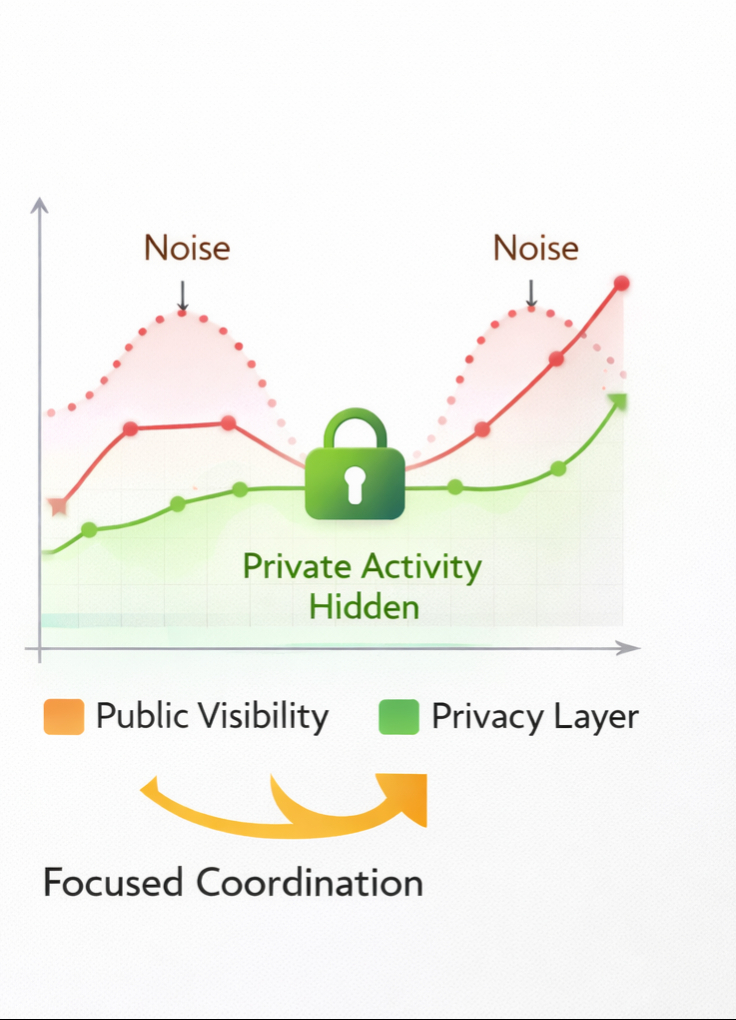
Another uncertainty lies in adoption patterns. Infrastructure often develops quietly before usage arrives. Many early blockchain systems spent years building technical foundations before meaningful economic activity appeared. Whether confidential coordination becomes a widely used layer remains to be seen.
Still, the market environment suggests something interesting is happening.
Crypto narratives have recently been dominated by artificial intelligence infrastructure, tokenized assets, and scaling solutions. Just quietly.
Understanding that shift helps explain the growing attention around #night .
If open networks truly aim to support global finance, they must eventually replicate the subtle coordination mechanisms that traditional systems rely on. Transparency alone cannot support every type of agreement. Privacy alone cannot guarantee trust.
The real solution likely sits somewhere between those two extremes.
Projects like MidnightNetwork seem to be exploring that middle path.
If that balance actually works, its impact could reach much further than just one project.
It would mean the decentralized internet is slowly gaining something it lacked in its early years. Not just speed. Not just scale. But the ability to coordinate complex financial activity without exposing every detail of how that coordination occurred.
Markets tend to notice infrastructure shifts slowly. At first they look like niche experiments. Then adoption begins to accumulate quietly. Eventually the system becomes part of the background architecture that everything else relies on.
That possibility is what makes Midnight Network interesting today.
Not because it promises something dramatic. But because it suggests a subtle adjustment to how open financial systems might operate.
And sometimes the most important infrastructure changes are the ones that happen quietly underneath the surface, long before most people realize they are already using them.

Artikel
Midnight Network as the Hidden Privacy Layer of the Decentralized Internet
Haftungsausschluss: Die hier bereitgestellten Informationen enthalten Meinungen Dritter und/oder gesponserte Inhalte und stellen keine Finanzberatung dar. Siehe AGB.
2
51
628
Bleib immer am Ball mit den neuesten Nachrichten aus der Kryptowelt
⚡️ Beteilige dich an aktuellen Diskussionen rund um Kryptothemen
💬 Interagiere mit deinen bevorzugten Content-Erstellern
👍 Entdecke für dich interessante Inhalte
E-Mail-Adresse/Telefonnummer