
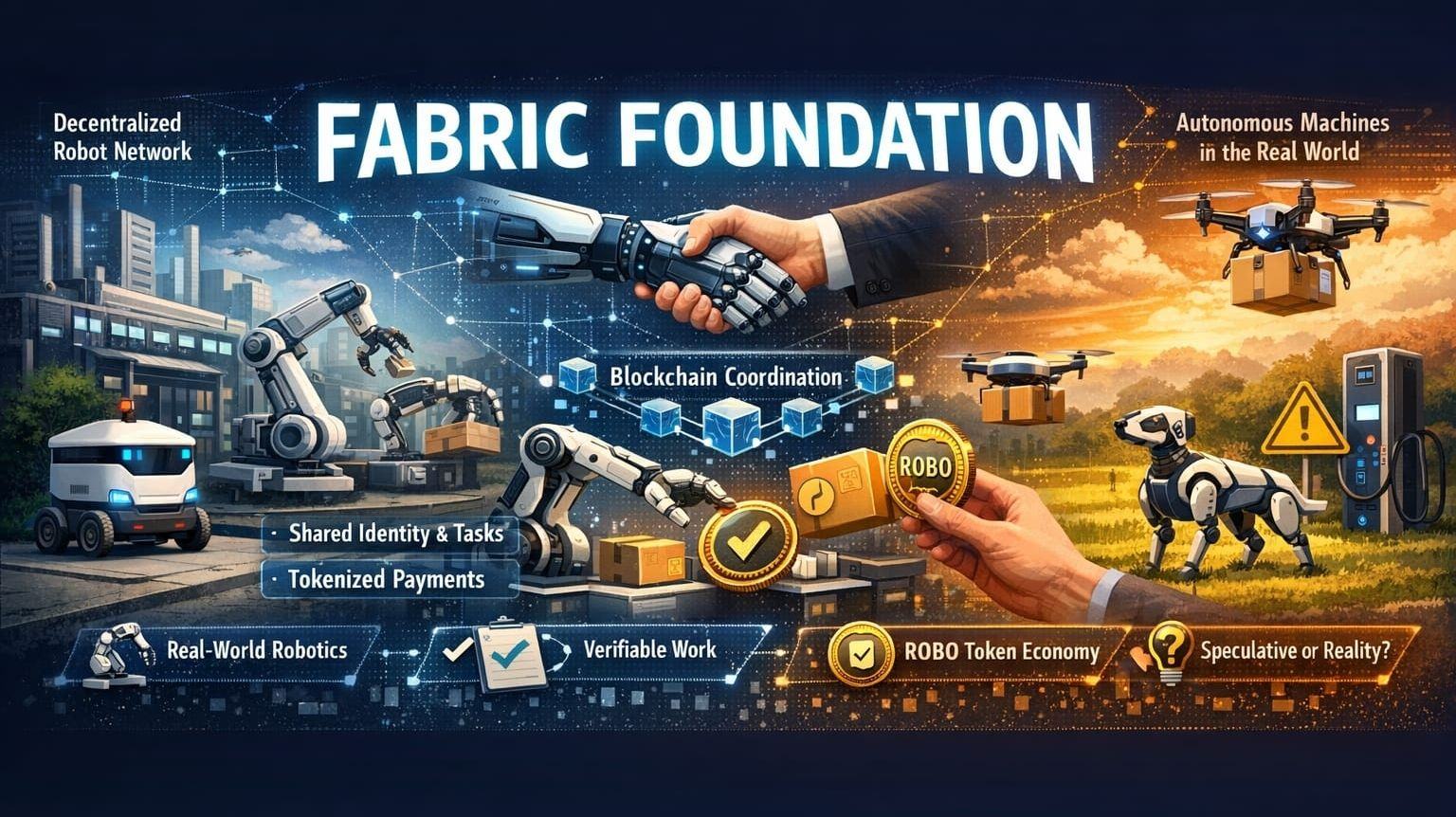
Late-Night Thoughts on Fabric Protocol: Infrastructure, Robots, and the Usual Crypto Reality Check
I ran into Fabric Protocol late at night while scrolling through crypto updates, and honestly my first reaction was the same one I always have these days: here we go again.
Another protocol. Another big idea. Another pile of technical words trying to explain the “future.”
After years in this space, you develop a kind of instinct for these things. You can almost smell when something is just marketing. The industry has a habit of dressing normal ideas in futuristic language until they sound revolutionary.
AI agents. Autonomous systems. Modular infrastructure. Verifiable computing.
Half the time it feels like someone just took the most trending buzzwords from Twitter and glued them together into a whitepaper.
And yet, sometimes when you slow down and read past the jargon, there’s actually a real idea hiding underneath.
Fabric Protocol seems to sit somewhere in that strange middle ground.
Not obviously nonsense. But also not something you can immediately say will work.
Crypto itself feels messy right now. The market is active again, but the energy feels different from previous cycles. There’s excitement, sure, but there’s also this quiet exhaustion underneath it all.
Everyone has seen too much already.
We watched DeFi explode. We watched NFTs take over the internet for a year and then collapse into a shadow of what they were. We watched hundreds of chains promise to solve scalability.
And now the newest wave is AI.
Every project suddenly has an AI layer. AI agents trading, AI bots coordinating systems, AI infrastructure for autonomous networks. Some of it is real progress. A lot of it is just narrative.
Crypto always chases the next story.
But the interesting thing about Fabric is that it isn’t really pitching itself as just another finance protocol or another trading platform. It’s trying to solve a different kind of problem.
Machines are starting to operate more independently.
Not in some dramatic sci-fi robot uprising way. In a much more practical, quiet way.
Think about logistics robots moving packages inside warehouses. Autonomous delivery drones. Industrial machines running AI models. Software agents automatically managing data or executing tasks.
These systems are becoming more capable every year. They’re starting to make decisions, coordinate actions, and interact with each other.
The question nobody talks about much is what kind of infrastructure those systems should run on.
Right now, most of it happens inside private systems controlled by big tech companies. Cloud providers host the infrastructure. Robotics companies build their own closed platforms. AI labs operate their own networks.
Everything is centralized and mostly invisible.
You can’t really see how decisions are made. You can’t verify actions. And if different systems need to work together, it usually requires trusting some central operator.
Fabric’s idea seems to be that if machines are going to interact and make decisions on a large scale, there should be a neutral layer underneath all of that.
Something open.
Something verifiable.
That’s where the blockchain part comes in. The protocol basically proposes using a public ledger to coordinate machines, track actions, and verify computation.
On paper, that sounds logical.
But crypto has taught me to be careful with ideas that sound logical.
Because building something in theory is very different from running it in the real world.
Blockchains have a long history of struggling when real traffic arrives.
When a network is small, everything feels smooth. Transactions move quickly, fees stay low, and developers talk about how scalable their architecture is.
Then users show up.
Suddenly thousands of people are interacting with the system at the same time. Bots start spamming transactions. Speculators jump in looking for quick profits.
And the chain slows down.
Sometimes it’s not even a flaw in the technology. It’s just that real-world usage is chaotic. Humans are unpredictable, impatient, and extremely good at stressing systems in ways developers never expected.
We’ve seen this story play out over and over again across different chains.
So when I read about infrastructure protocols now, I automatically wonder how they’ll behave once real activity begins.
Fabric is entering a space that’s already crowded with different visions of blockchain infrastructure.
Ethereum still dominates the ecosystem, even with its slower pace and higher fees. Its strength is reliability and the massive developer community built around it.
Solana went in the opposite direction, focusing on speed and high throughput. It’s incredibly fast, though its past outages still get mentioned whenever people debate reliability.
Then there are the modular blockchain projects trying to break networks into different layers — execution, settlement, data availability — all separated into specialized components.
Everyone in crypto is basically arguing about how the underlying plumbing of the internet should work.
Fabric isn’t competing directly with all of them, but it does introduce a slightly different perspective.
Instead of focusing mainly on financial transactions between humans, it’s thinking about machines communicating with machines.
That’s a subtle but important shift.
Right now most blockchain activity still comes from human users clicking buttons on apps. Trading tokens, minting NFTs, interacting with DeFi protocols.
But imagine a future where autonomous agents are constantly interacting with networks.
Software agents negotiating tasks.
Robots sending data to coordination systems.
AI services requesting resources or executing operations.
In that world, blockchain traffic might not be driven by humans at all.
It could be driven by machines.
That’s the future Fabric seems to be preparing for.
The protocol talks about “verifiable computing,” which basically means actions taken by machines can be proven and checked by the network. Instead of trusting a black-box system, you could verify that a decision or calculation actually happened the way it was claimed.
In theory, that kind of transparency could be useful for autonomous systems operating in the real world.
But theory and reality are two very different things in crypto.
There are still practical challenges everywhere.
Liquidity is one of them. Crypto networks thrive when capital flows through them. Without liquidity, ecosystems struggle to grow because developers and users have little incentive to participate.
Another challenge is human behavior.
People in crypto often say they want decentralization, but they also love convenience. That’s why so many users still rely on centralized exchanges or simple apps that hide the complexity of blockchain interactions.
Infrastructure projects face a tough reality here.
They’re important, but they’re rarely exciting.
You don’t see viral hype around protocols that quietly handle coordination between systems. They’re like plumbing inside a building — critical, but invisible.
Fabric’s success will probably depend on whether developers actually decide to build on it.
That’s always the real test.
Whitepapers don’t create ecosystems. Builders do.
If robotics companies, AI developers, or autonomous system projects start experimenting with Fabric’s infrastructure, then the network could slowly grow into something meaningful.
If they don’t, the protocol might remain an interesting idea that never quite finds its moment.
The involvement of the Fabric Foundation suggests an attempt to build an open ecosystem rather than a tightly controlled corporate platform. That’s encouraging, but foundations in crypto can be unpredictable. Some become strong coordinators for their communities, while others fade into the background managing token treasuries.
At the end of the day, the biggest question is adoption.
Technology alone doesn’t guarantee anything in this industry.
Some of the best-designed systems never attract users. Meanwhile, simple projects sometimes explode in popularity because the timing or community happens to align perfectly.
Fabric Protocol could end up becoming a quiet piece of infrastructure supporting future autonomous systems.
Or it could remain an ambitious concept that arrived before the world was ready for it.
Right now it’s impossible to know.
I’ve been around crypto long enough to resist getting too excited about new protocols. I’ve seen too many promises turn into empty roadmaps.
But I’ve also seen strange ideas eventually turn into real infrastructure once the right conditions appeared.
So I’m not dismissing Fabric.
I’m just watching it with cautious curiosity.
Because in crypto, the difference between a brilliant protocol and a forgotten one is usually simple.
Whether anyone actually shows up to use it. 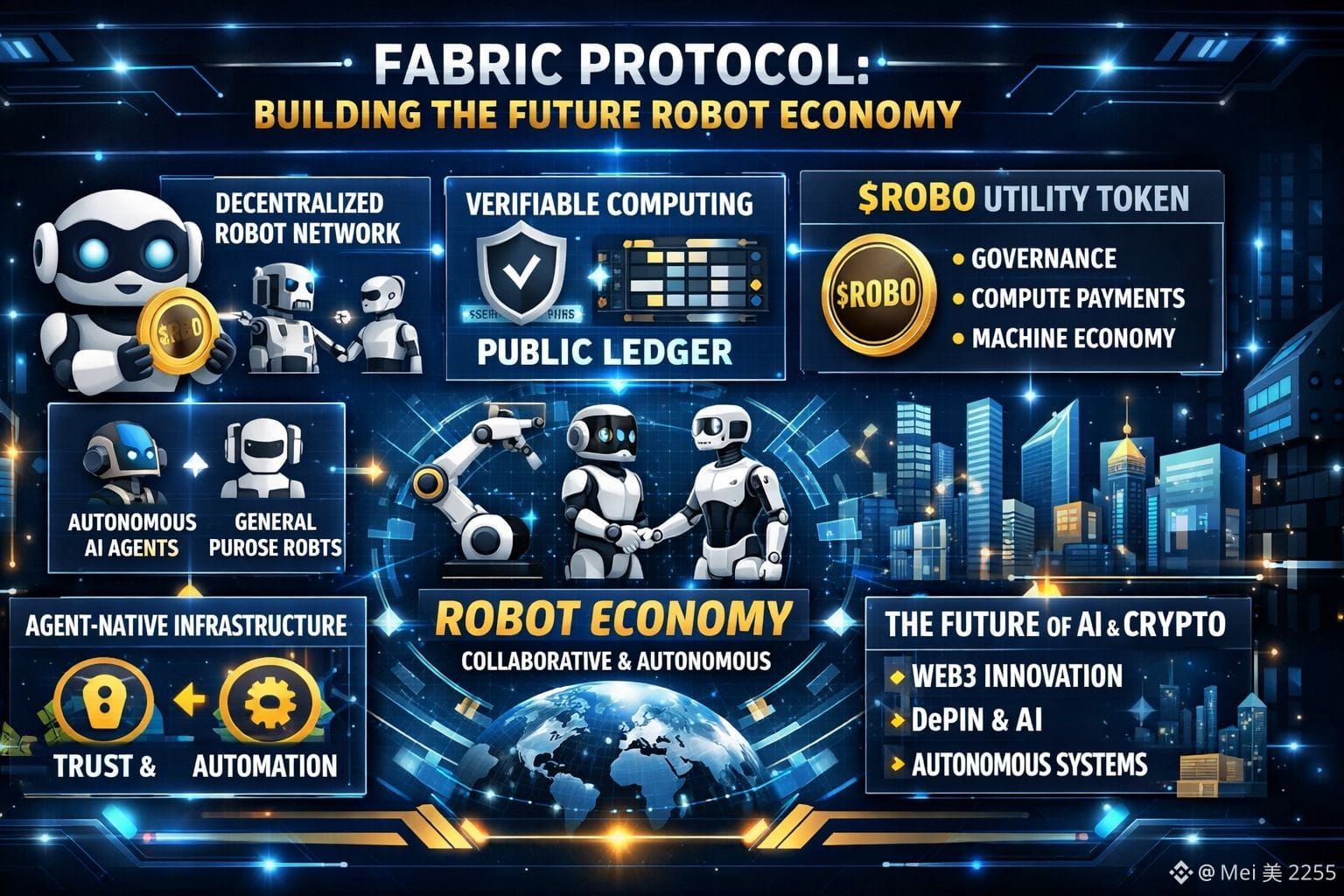
@Fabric Foundation #ROBO $ROBO
