
@Fabric Foundation #robo $robo
Setting the Fabric Foundation: Robo-Calibration 101
Welcome, human operator! You've unboxed your new robotic assistant, and it's ready to integrate into your fabric workspace. The initial calibration is critical. This process establishes the essential "Fabric Foundation," defining how the robot understands and interacts with the materials it will handle.
This foundational calibration isn't complicated, but it is necessary. Here's a quick 500-character breakdown of the primary focus points:
Material Signature: Your robot doesn't see "cotton" or "silk." It measures data. The first step involves introducing it to each specific fabric you intend to use. Place samples under its sensors. The robot measures parameters like thickness, surface friction, and tensile strength (how much the fabric stretches). This data forms the "signature" for that particular material.
Gripper Force Profile: Not all fabrics are equal. Picking up a delicate silk blouse requires a different pressure than handling a sturdy denim work jacket. During this calibration, you'll teach the robot the appropriate "gripper force profile" for each material signature. Over-tight gripping can damage fine fabrics, while too loose a grip will result in dropped items.
Path and Stretch Compensation: When fabrics are moved or laid out, they stretch and shift. This calibration helps the robot anticipate and compensate for these dimensional changes. By analyzing how different fabrics deform under typical handling, the robot builds a model of its predictable behavior, ensuring more precise manipulation.
Spatial Workspace Mapping: Define the physical boundaries of the workspace. This includes specifying where supply bins are located, where fabric goes on the cutting table, and where finished products should be placed. This creates a secure "Fabric Foundation" that allows for consistent, accurate, and safe robotic movement.
A correct initial calibration prevents damage and ensures consistent results. Now, let’s see the robot in action!
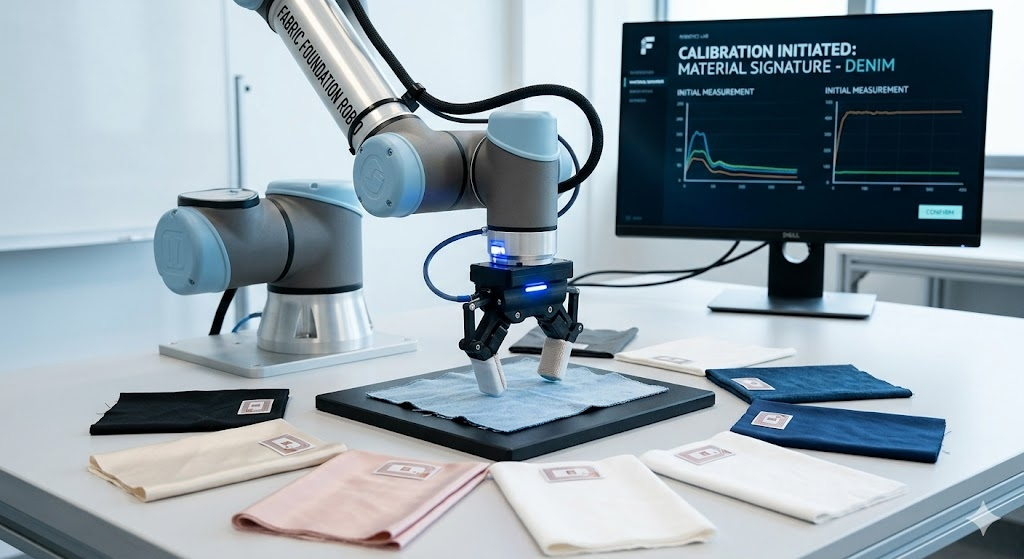
This image shows the "Fabric Foundation Robo" undergoing its critical initial calibration. The robotic arm, fitted with delicate sensors, is measuring a denim sample. The background monitor confirms the process, showing "MATERIAL SIGNATURE - DENIM" and data graphs. Notice the variety of textile samples, including silk, arranged nearby—all must be scanned and defined during this foundational process to establish how the robot handles diverse materials without damage. Over-tight gripping or miscalculated pathing could result in disaster, making this initial 500-character breakdown of the calibration a must-read for all human operators.
Gemini is AI and can make mistakes.