
The other day I was sitting in a quiet corner of the house, watching my old vacuum robot bump into the same table leg for the third time this week. It beeped in what sounded like frustration, corrected itself, and kept going. I thought, machines are getting better at repeating tasks, but they're still blind to anything beyond their narrow programming. That small, almost funny moment stuck with me.
Later I opened Binance Square and clicked into CreatorPad for the ROBO campaign. One of the tasks required posting about the project while hitting the leaderboard through engagement points—nothing complicated, just share thoughts and get verified. As I scrolled the activity page and saw the reward pool listed next to Fabric Foundation details, something shifted. Here was a token tied to coordinating actual robots—staking ROBO to prioritize task allocation for hardware, bonding for operators, even governance over how the network evolves. The screen showed "Join now" and the leaderboard refresh, but what hit me was how casually we're treating token utility as if it's still mostly about paying gas or farming yields.
Most crypto projects push tokens as access tickets or reward points—buy, hold, stake, repeat. But when I paused on that CreatorPad task description mentioning staking for early activation and coordination of robot participation, it felt off. ROBO isn't just another utility coin for transactions or fees; it's being positioned to give economic weight to machines themselves. Robots earning, spending, and deciding through delegated stakes. That blurs a line we pretend is solid: tokens are human tools, not something that could let non-human actors hold real influence in a network.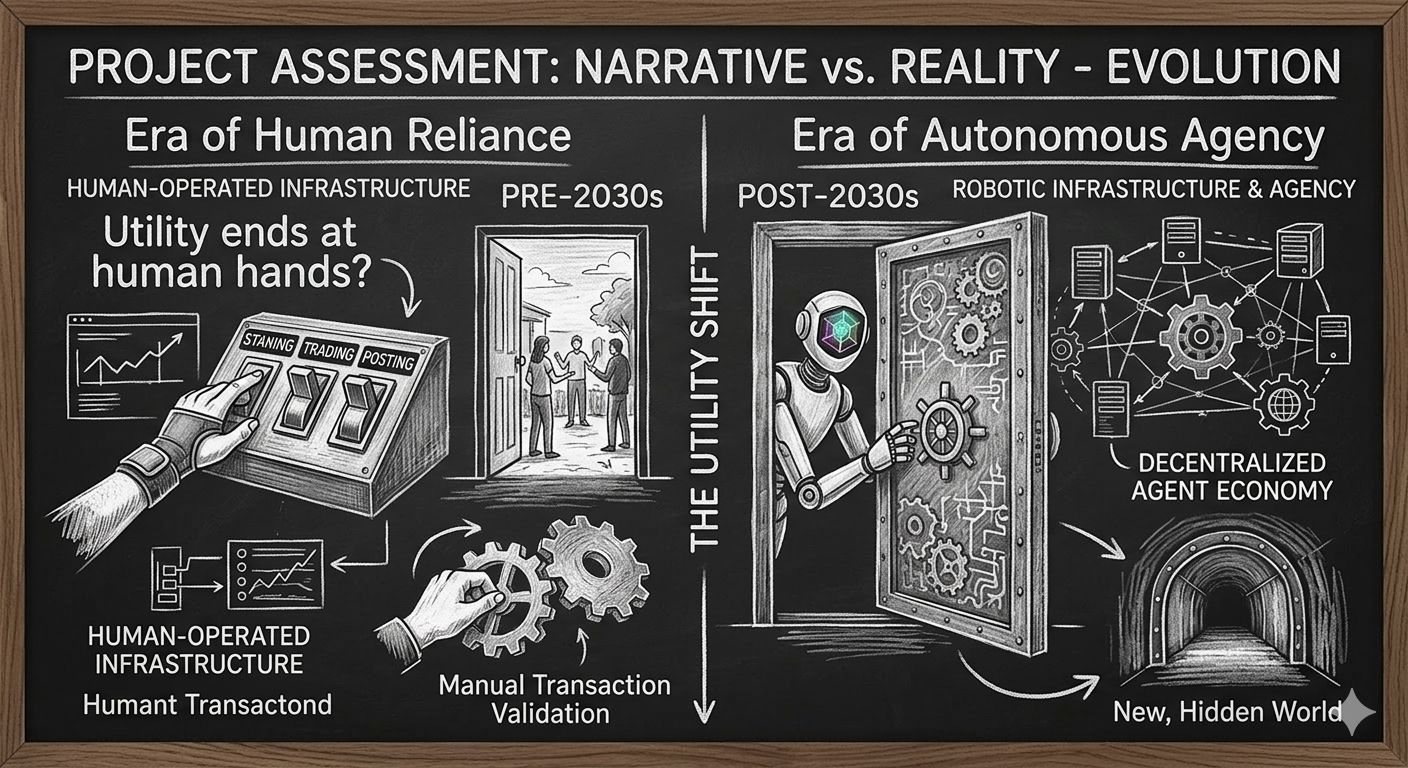
We like to say decentralization empowers people, but what if the real shift is that tokens start empowering things? Not in some sci-fi takeover way, but quietly—through staking mechanics that let robot operators bond tokens, AI agents access compute via payments, and governance votes weighted by holdings that could include machine-side contributions. The Fabric setup makes ROBO the bridge for that. I finished the post requirement, watched the points tick up, but the unease stayed. We're building systems where value flows to coordination layers that don't care if the participant is flesh or metal.
The uncomfortable part is admitting that token utility might outgrow the human-only story we've told ourselves. If robots can stake, earn from verified work, and influence protocol changes indirectly through delegated economics, then the token stops being purely a human financial instrument. It becomes infrastructure for a mixed economy where agency isn't limited to people. That challenges the comfortable belief that crypto remains a tool for individual sovereignty. Instead, it could quietly redistribute influence toward whatever entities—human or otherwise—can prove useful work at scale.
I don't know if that's progress or a slow handover. But watching that vacuum robot persist, and then seeing ROBO's mechanics on the campaign screen, made me wonder: when machines start meaningfully holding and using tokens, who exactly are we decentralizing for anymore? $ROBO #robo @Fabric Foundation