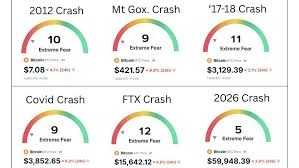
Every major Bitcoin crash is indeed unified by a period of extreme fear, a psychological state where rational strategy is replaced by panic-driven selling. This emotional peak often marks the capitulation phase, which historically serves as a reset for the market. [1, 2, 3, 4, 5]
The Role of Extreme Fear in Crashes
Capitulation: This is the "final surrender" where investors sell at any price to stop the pain of losing money.
The Fear & Greed Index: Analysts use this 0–100 scale to track sentiment; readings below 25 signify "Extreme Fear".
Forced Liquidations: Rapid price drops trigger automated sell orders for leveraged traders, creating a "waterfall" effect that intensifies panic.
Contrarian Signal: While it feels like "the end" in the moment, extreme fear has historically been one of the strongest indicators of a market bottom. [6, 7, 8, 9, 10, 11, 12]
Historical Fear Milestones
Event [1, 5, 13, 14, 15] Context of FearSentiment OutcomeMt. Gox (2014)The world's largest exchange failed, destroying trust in infrastructure.Sentiment plunged to near-zero as many believed Bitcoin was finished.2018 Bear MarketPrices dropped over 80% after the 2017 bubble burst.Fear dominated for months as "Bitcoin is dead" narratives peaked.COVID Crash (2020)Global liquidity crisis forced a 50% drop in two days.The index hit 9, reflecting total market uncertainty.FTX Collapse (2022)Another major exchange failure caused a deep sentiment trough.Fear hit 12, leading to a long accumulation phase near $16k.2026 CrashRecent volatility saw the index drop as low as 5.Analysts noted this was some of the most negative sentiment ever recorded.
Why Markets Recover from Fear
Exhaustion: Markets stop falling when there are simply no more emotional sellers left to push the price lower.
Smart Money Accumulation: While retail investors flee in fear, institutional or "strong hand" investors often see deep value and begin buying.
Structural Reset: Crashes flush out "weak hands" and over-leveraged positions, building a healthier foundation for the next cycle. [4, 16, 17]
Would you like to see how on-chain data, such as miner behavior, compares to these emotional fear readings?