
The other day I was sitting in traffic, staring at the dashboard clock ticking past midnight, thinking how strange it is that we hand over so much of our lives to systems that see everything—phones tracking every step, apps logging every tap—yet we still pretend privacy is just a switch we can flip when we need it. It felt exhausting, that constant exposure.
Later that evening I opened the CreatorPad campaign task for Midnight Network on Binance Square. The prompt was straightforward: compare Midnight Network to traditional privacy blockchain projects. I clicked through, read the briefing, scrolled the linked blog post titled something like "Data protection vs privacy chains," and paused on the part where it described "shielding" transactions while allowing selective disclosure through access keys. That specific term—"shielding"—and the diagram showing shielded vs unshielded data flows stopped me. It wasn't just another privacy coin pitch; it forced a direct side-by-side with projects like Monero or Zcash that hide almost everything by default. Right there on the screen, seeing the contrast laid out so clinically, it hit me uncomfortably: maybe we've been romanticizing total opacity all this time.
The uncomfortable idea is that absolute privacy on-chain might be less liberating than we think and more isolating. Traditional privacy chains often go all-in on hiding transaction details, metadata, amounts—everything—to protect the user from surveillance. It sounds ideal in theory, especially when you're reacting against the total transparency of Bitcoin or Ethereum. But in practice it creates a walled garden where verifiable cooperation becomes hard. If nobody can see anything, how do you prove compliance, share just enough for an audit, or build applications that interact with regulated worlds? The trade-off isn't freedom versus control; it's privacy versus usefulness in any shared system. Midnight's approach, with programmable selective disclosure via zero-knowledge proofs, suggests you don't have to burn the bridge to regulators or partners—you can keep parts private and reveal proofs only when it makes sense. That moment reading the task, staring at the shielding explanation, made the binary choice feel outdated and almost stubborn.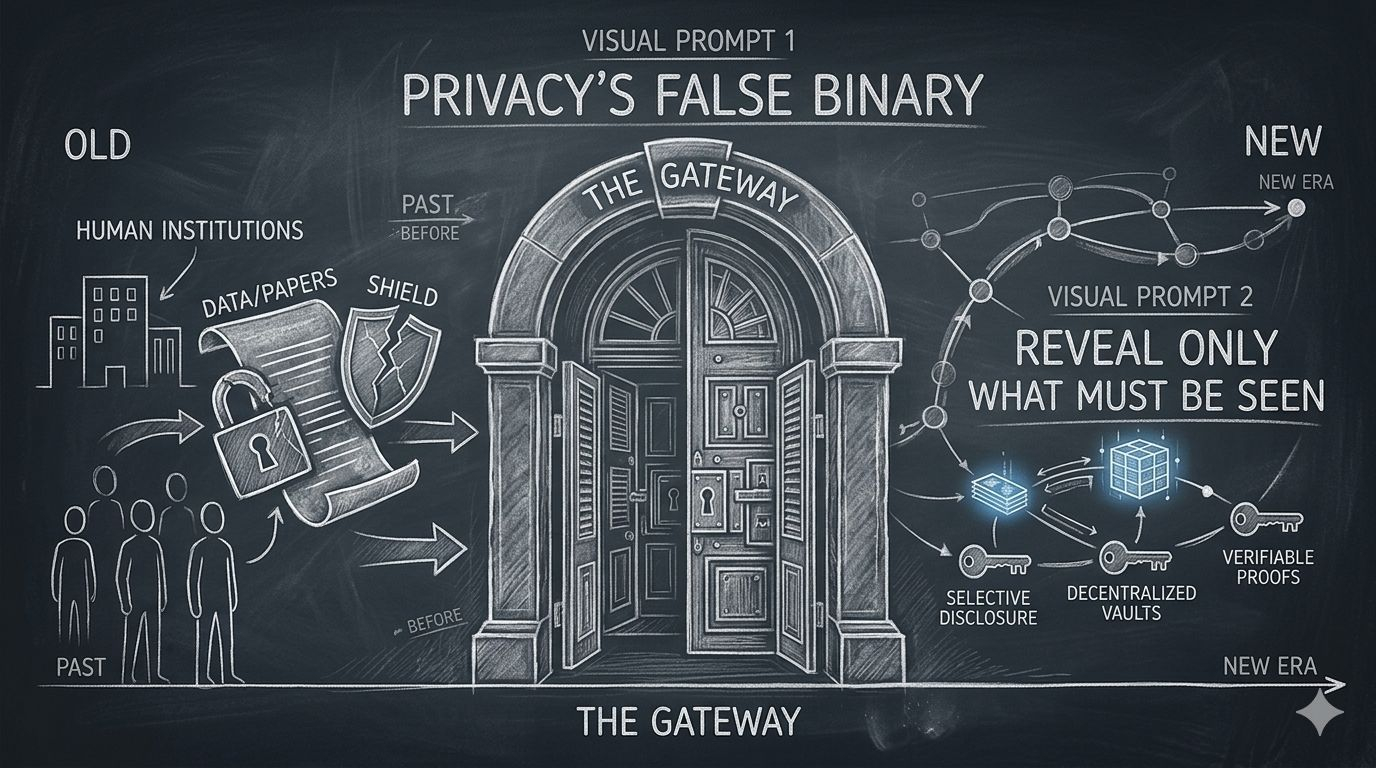
It extends beyond one project. In the broader crypto conversation we treat full transparency as naive and full privacy as rebellious virtue. But real life rarely works in absolutes. Businesses need to prove solvency without exposing customer data; individuals want confidential payments but still need to interface with tax systems or loans. Traditional privacy models force a choice that feels increasingly artificial in a world demanding both trust and discretion. Midnight isn't solving it perfectly—it's still early, still tied closely to Cardano's ecosystem—but it exposes the limitation clearly: hiding everything can trap value inside silos just as surely as exposing everything invites exploitation.
Midnight Network stands as a concrete example because it deliberately positions itself against those older privacy chains. It calls itself a data-protection blockchain rather than a pure privacy one, emphasizing granular control over blanket secrecy. That shift in framing, visible even in the campaign task's comparison framing, quietly challenges the old narrative that more hiding equals more freedom.
So what if the next real unlock isn't deeper darkness, but smarter light—revealing only what's necessary while keeping the rest in shadow? Isn't that closer to how humans actually handle secrets in trusted relationships? Or are we too attached to the drama of total concealment to admit it might be holding us back? #robo $ROBO @Fabric Foundation