

I still remember the moment this question started bothering me.
I was looking through on-chain activity, following transfers the way many of us do out of habit, and everything felt familiar at first. Wallets, movements, balances, transaction histories — all visible, all traceable, all sitting there in the open. That level of transparency has always been one of blockchain’s proudest features. It gives people a way to verify what is happening without depending on a central authority.
But the longer I sat with it, the more uncomfortable the model started to feel.
Because openness sounds powerful until you imagine blockchain being used in more serious parts of the world. A business does not want competitors reading its financial behavior in real time. An institution cannot just expose sensitive data because “that’s how public chains work.” Even ordinary users may believe in decentralization without wanting their activity to become permanent public theatre.
That is the tension Midnight Network is trying to address.
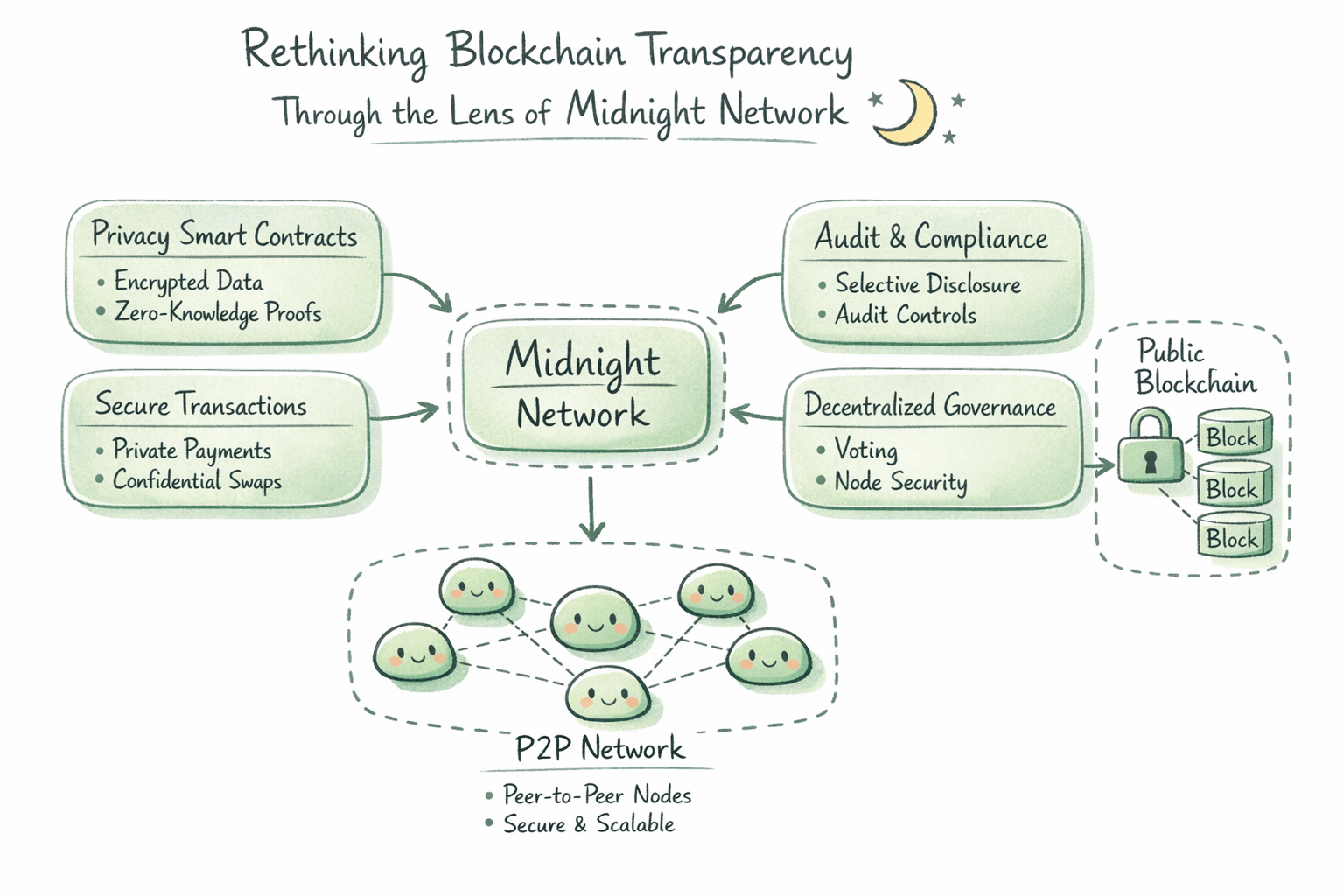
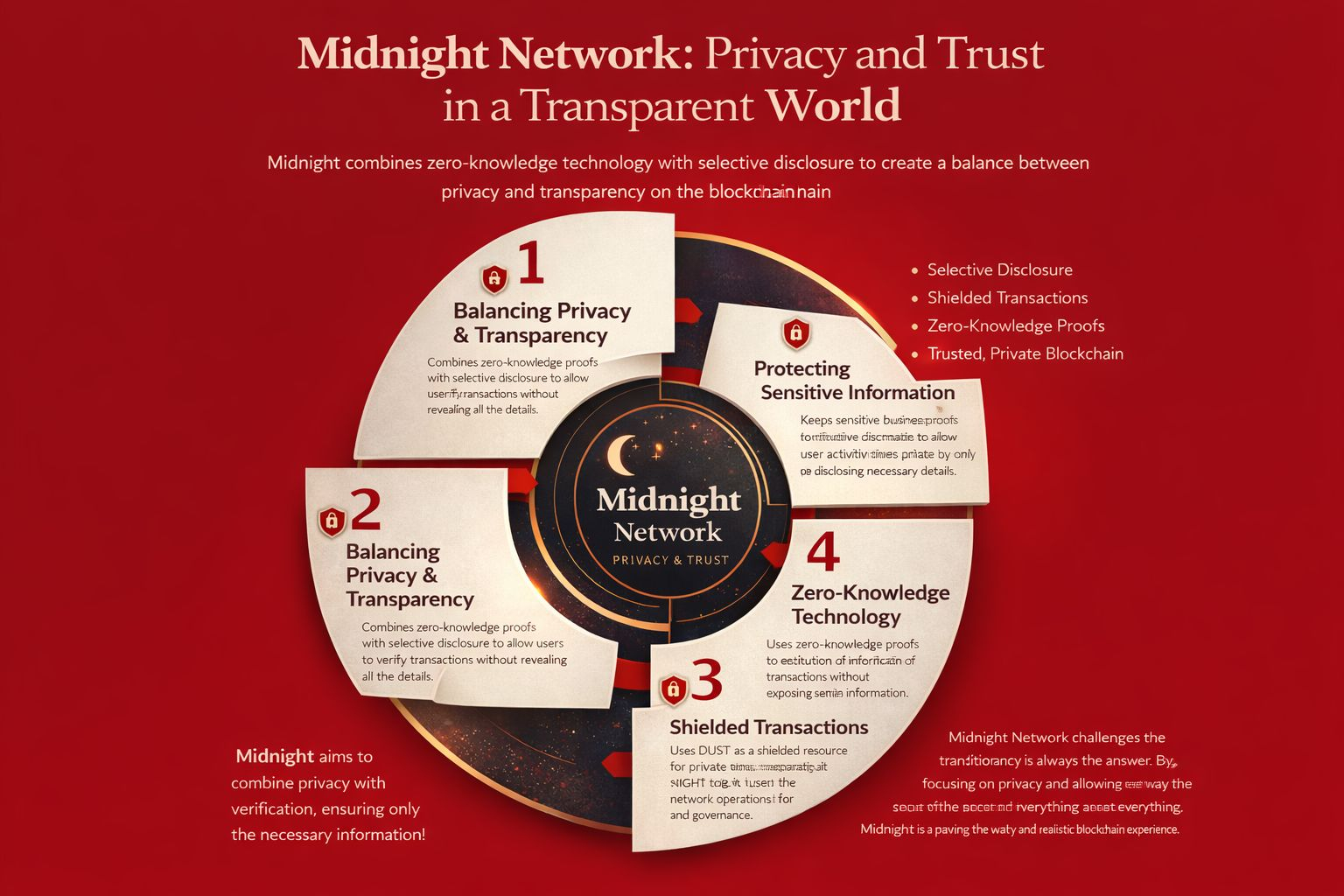
What makes Midnight interesting is that it does not treat privacy as the opposite of trust. Instead, it works from the idea that privacy and verification can exist together. The network uses zero-knowledge technology and selective disclosure to let users prove that something is valid without revealing everything underneath it. In simple terms, the system is built around the idea that not all information needs to be visible for a network to remain trustworthy.
That sounds like a small shift, but I think it changes the whole conversation.
For years, blockchain has often been framed as if transparency is always the answer. Midnight challenges that assumption. It suggests that the next stage of blockchain design may be less about exposing everything and more about deciding what actually needs to be shown. That feels much closer to how real systems work outside crypto. In normal life, trust does not come from publishing every detail to everyone. It comes from proving the right things to the right people at the right time.
Midnight’s token design reflects that same thinking. According to the project’s materials, NIGHT functions as the network’s native token, while DUST acts as a shielded resource used for transactions. That split is important because it separates speculation from day-to-day utility a bit more clearly. If that model works well in practice, it could make the network more usable for developers and applications that need predictable operating costs instead of constant exposure to token-price swings.
From a broader market perspective, Midnight sits in a very real and very difficult category.
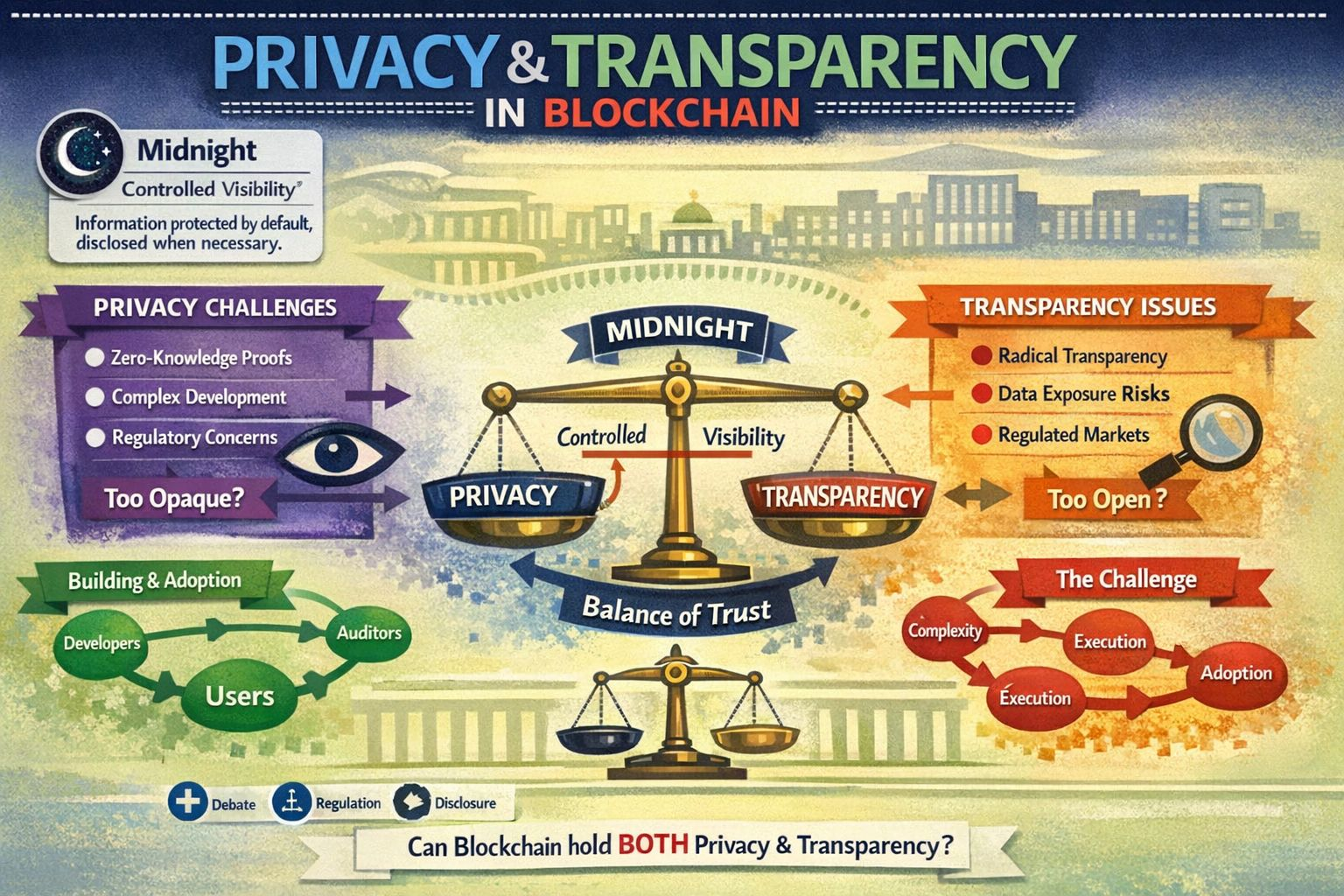
The demand for privacy-aware infrastructure is not imaginary. As blockchain moves toward finance, identity, enterprise systems, and data-sensitive applications, the weaknesses of radical transparency become harder to ignore. But privacy in crypto has also always come with pressure. Regulators tend to get nervous when systems look too opaque, and that has shaped the path of privacy-focused networks for years.
That is why Midnight’s approach feels strategically important. It does not frame privacy as total invisibility. It frames it more as controlled visibility. Information can remain protected by default, but still be disclosed when necessary under the right conditions. That balance may end up being one of the project’s most important strengths, especially if blockchain is going to interact more deeply with regulated markets and traditional institutions.
Of course, the idea is stronger than the outcome so far.
Zero-knowledge systems are powerful, but they are not simple. They raise the complexity for developers, auditors, and even users trying to understand what they are trusting. Midnight may have thoughtful architecture, but architecture alone is never enough. The real challenge is whether teams can build applications on it without privacy becoming a technical burden too heavy for everyday use.
That is where the project still has something to prove.
And honestly, that is true for most infrastructure plays in crypto. A compelling design can attract attention, but long-term relevance depends on execution, adoption, developer experience, and the network’s ability to survive both market cycles and political pressure. Midnight’s vision is serious, but serious visions still have to survive reality.
What stays with me, though, is the question underneath it all.
Maybe the future of blockchain is not about choosing between transparency and privacy like they are enemies. Maybe it is about building systems flexible enough to hold both. Midnight seems to be pushing in that direction. And if that model works, then its importance will not come from hiding information. It will come from proving that blockchain can grow up — and learn that trust does not always require total exposure.
@MidnightNetwork #night $NIGHT
