
Midnight Network Enabling Confidential Smart Contract Development
I was sitting in the kitchen last night, staring at my phone after a long day, thinking about how every conversation I have online leaves a permanent trace somewhere—emails, messages, even casual searches. It felt heavier than usual, the way nothing really disappears anymore.
Then I opened the CreatorPad campaign task on Binance Square, the one tied to Midnight Network. I was scrolling through the prompts, typing out a short post about their approach to confidential smart contracts, when I hit the part describing Compact—the TypeScript-based language they use for writing these shielded contracts. Seeing that line about how private data stays local and only proofs go on-chain, something clicked uncomfortably. I paused, reread it, and felt this quiet unease settle in.
The common belief in crypto is that transparency is sacred, that everything on a blockchain should be visible to everyone for trust to hold. We repeat it like a mantra: public ledgers mean no one can cheat. But sitting there, trying to phrase my thoughts for the task, I realized how exhausting that full exposure is. Midnight's setup forces the question—why do we accept that the only way to prove something is true is to show the whole thing? When I was drafting about selective disclosure and how Compact lets you handle private state off-chain while still verifying rules publicly, it hit me: maybe radical transparency isn't freedom; maybe it's a trap that keeps real utility out of reach. 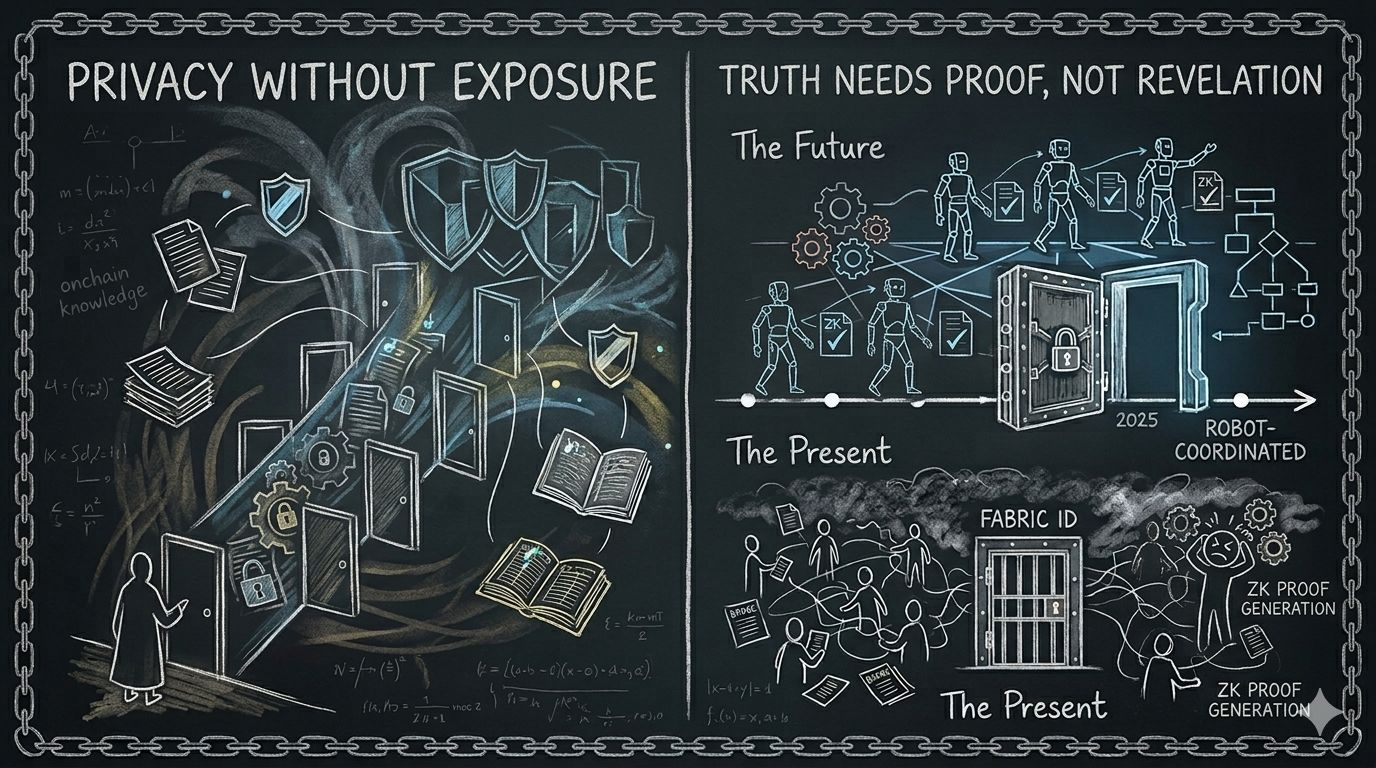
We built this space on the idea that hiding anything means you're doing something wrong. Privacy tools get labeled as criminal enablers almost automatically. Yet here is a project quietly building a way to run complex logic where sensitive parts never touch the chain at all. The moment I typed "Compact" and "local private state" into my response for the campaign, it disturbed me because it makes the old purity argument feel naive. If you can't process payroll, medical records, or even basic business agreements without broadcasting every detail, then blockchain stays a toy for speculation, not a tool for the real world. Midnight isn't hiding; it's choosing what to reveal, and that choice challenges the dogma we've all bought into.
The project becomes the clearest example when you think about it. While most chains force everything into the open to claim decentralization, Midnight separates the shared proof from the hidden data, using zero-knowledge to keep the ledger honest without turning users into open books. It doesn't pretend privacy is absolute or unnecessary—it makes it programmable.
What if we've been wrong all along about what trust really requires? Do we need to see everything to believe nothing is broken, or is that just the easiest story we've told ourselves so far? #night $NIGHT @MidnightNetwork