
I was sitting in the kitchen this morning, staring at my phone while the tea cooled, thinking about how much of my day is already tracked without me noticing. Bills, messages, location pings—everything leaves a trail I didn't consciously approve. It's not paranoia; it's just the default now.
That feeling lingered when I opened Binance Square later and clicked into the CreatorPad campaign for Midnight Network. The task was straightforward: post something thoughtful about how Midnight is solving Web3 privacy challenges. I scrolled the prompt again, saw the leaderboard reference, the NIGHT rewards pool mentioned in the activity description. But what hit me wasn't the incentives—it was typing out a quick draft and realizing I was publicly debating privacy on a platform where every post is visible, timestamped, and tied to my profile forever.
That's when it disturbed me: the crypto space still worships transparency as the ultimate virtue. We built everything on public ledgers because hiding was for banks and governments, right? Full visibility equals trust, immutability, no one can cheat if everyone can see. But sitting there, attaching my real thoughts to a public thread about a project whose whole point is programmable privacy, selective disclosure via zero-knowledge proofs—it felt hypocritical. We're out here demanding openness for blockchains while quietly resenting how exposed our own lives have become online. Midnight isn't just another chain; it's quietly forcing the question of whether absolute transparency was ever the goal or if it became an accidental dogma.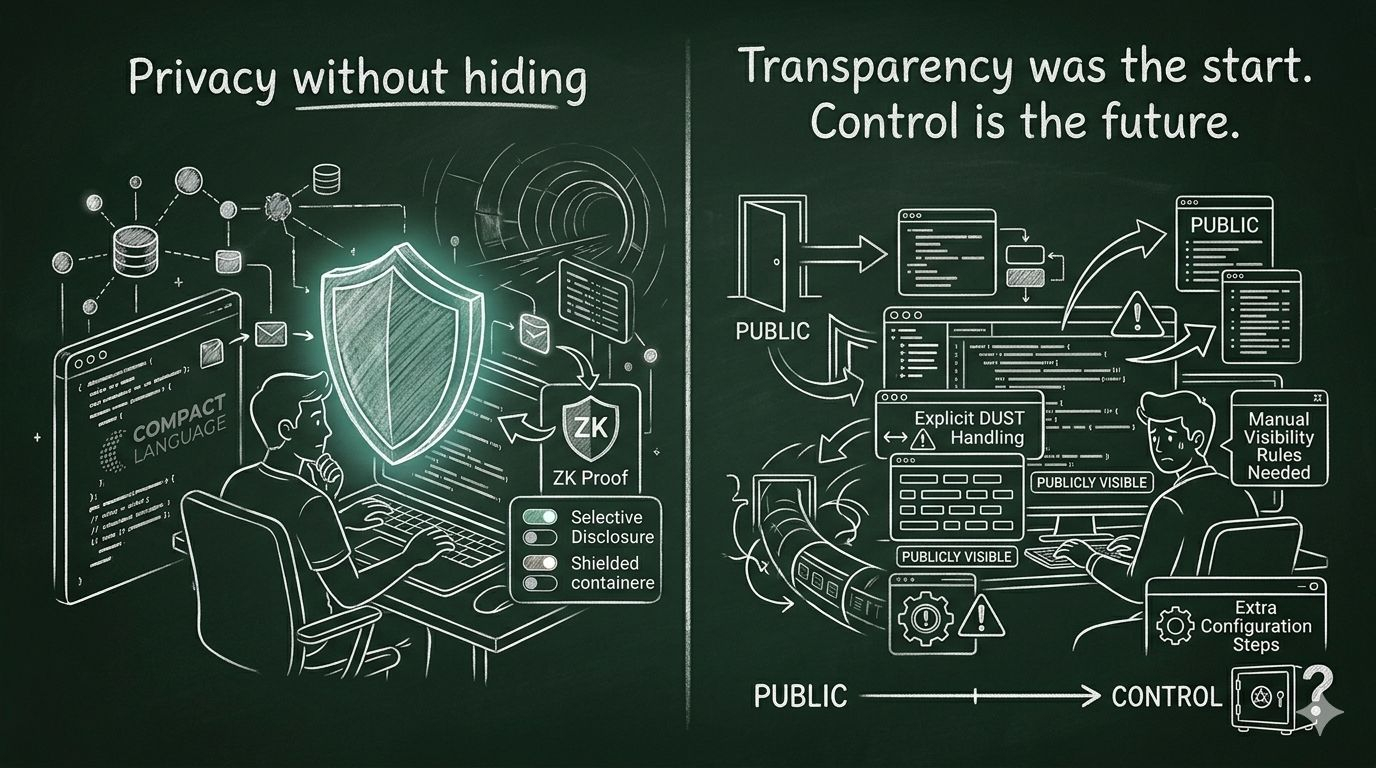
The more I think about it, the more that common belief—that privacy features somehow weaken security or invite bad actors—starts to crack. We've seen transparent chains struggle with real adoption because people and institutions won't put sensitive data on public display, no matter how "trustless" the system claims to be. Rational privacy, as Midnight calls it, isn't about total secrecy; it's about control. Prove compliance without revealing everything. Verify without oversharing. The irony is that insisting on full transparency might be what's holding Web3 back from everyday use, not privacy tools.
Midnight becomes the clearest example right now. While other networks double down on everything-on-chain visibility, this one builds from the assumption that not everything needs to be exposed to be valid. The task itself—writing publicly about privacy—made the contrast sharper. I finished the post, hit send, and watched it join the feed like everything else: open, searchable, permanent. Meanwhile, the project it's about is engineered so users don't have to make that same compromise in their applications.
What if the real decentralization we need isn't more eyes on every transaction, but the freedom to decide who sees what? We've spent years proving transparency works for money movement. Maybe the next step is proving that selective privacy works even better—for trust, for scale, for actual people.
Isn't it strange that after all this time chasing open systems, the thing that might finally bring in the rest of the world is the ability to close the curtain when it matters? $NIGHT #night @MidnightNetwork