
In today’s rapidly evolving world, technology is no longer just about computers and smartphones. We are entering an era where robots are becoming a part of everyday life—from helping in industries to assisting in homes. However, building and managing these robots in a safe, transparent, and collaborative way is a big challenge. This is where Fabric Protocol comes into the picture.
Fabric Protocol is a global, open network designed to support the creation, management, and continuous improvement of general-purpose robots. It is backed by a non-profit organization known as the Fabric Foundation, which ensures that the system remains open, fair, and focused on the benefit of society rather than profit.
What Makes Fabric Protocol Special?
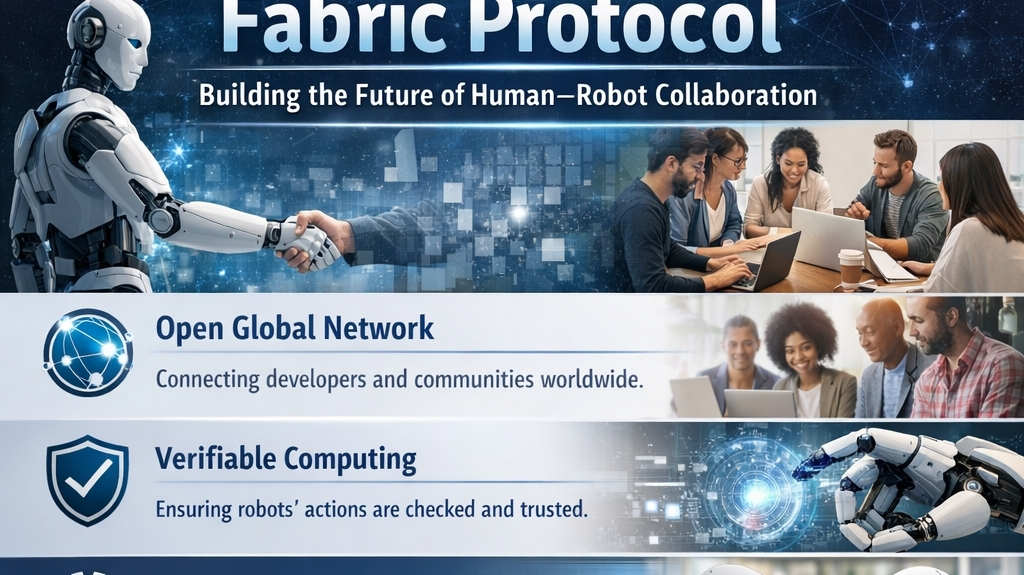
One of the most unique aspects of Fabric Protocol is that it is an open network. This means that developers, researchers, organizations, and even communities from around the world can participate. Instead of a single company controlling everything, Fabric Protocol allows collaboration at a global level.
The protocol is designed to support general-purpose robots, which are machines that can perform a variety of tasks rather than being limited to just one function. For example, instead of a robot that only cleans floors, imagine a robot that can clean, assist, communicate, and even learn new tasks over time.
The Role of Verifiable Computing
A major concern with advanced robots is trust. How do we know that a robot is doing the right thing? How can we be sure it is following rules and not causing harm?
Fabric Protocol addresses this through something called verifiable computing. In simple terms, this means that every action or decision made by a robot can be checked and verified. It creates a system where transparency and trust are built into the technology itself.
This feature is especially important in areas like healthcare, transportation, and public services, where mistakes can have serious consequences.
Agent-Native Infrastructure: Built for Intelligent Machines
Fabric Protocol is also built on what is known as agent-native infrastructure. While this may sound technical, the idea is simple: the system is designed specifically for intelligent machines (agents) to function efficiently.
Instead of adapting old systems meant for humans, Fabric Protocol creates a digital environment where robots and AI systems can communicate, share data, and work together seamlessly. This leads to better performance, faster decision-making, and more efficient collaboration between machines.
A Transparent Public Ledger
At the heart of Fabric Protocol is a public ledger, similar to blockchain technology. This ledger records important information such as data, computations, and rules.
Think of it like a digital notebook that everyone can see but no one can secretly change. This ensures transparency and accountability. If a robot performs a task or makes a decision, it can be recorded and reviewed by others.
This openness builds trust not only between humans and machines but also among different organizations working together.
Modular and Flexible Design
Another strength of Fabric Protocol is its modular infrastructure. This means the system is made up of different components that can be easily added, removed, or upgraded.
For developers, this is extremely helpful. They can build specific parts of a robot or system without needing to create everything from scratch. It also allows the technology to evolve over time, adapting to new challenges and innovations.
Enabling Safe Human–Machine Collaboration
The ultimate goal of Fabric Protocol is to create a world where humans and machines can work together safely and effectively. By combining transparency, trust, and collaboration, the protocol ensures that robots are not only powerful but also responsible.
For example, in industries like manufacturing, robots can work alongside humans to increase productivity. In healthcare, they can assist doctors and nurses. In daily life, they can help with household tasks or support elderly people.
However, all of this must be done with proper governance and safety measures—and Fabric Protocol is designed to handle exactly that.
Conclusion
Fabric Protocol represents a significant step forward in the way we build and interact with intelligent machines. By creating an open, transparent, and collaborative network, it allows people from around the world to contribute to the development of safe and reliable robots.
With features like verifiable computing, agent-native infrastructure, and a public ledger, Fabric Protocol ensures trust, accountability, and efficiency. As robotics continues to grow, platforms like Fabric Protocol will play a crucial role in shaping a future where humans and machines work together in harmony.