
In Web3, transparency has always been seen as a core strength—but is it always necessary? While exploring Midnight Network and its Leaderboard Campaign, I started to question this assumption. Not everything needs to be public, and perhaps true innovation lies in giving users control over what they choose to reveal.
Midnight Network is built around zero-knowledge (ZK) proof technology, allowing users to verify information without exposing the actual data. This isn’t just a technical upgrade—it’s a shift in how we think about trust online. Imagine proving your identity or eligibility without sharing personal details. That’s the kind of real-world usability Midnight is aiming for.
Unlike many privacy-focused projects that operate on an “all-or-nothing” basis, Midnight introduces the concept of selective disclosure. Users can decide what to keep private and what to share. This balance makes it more adaptable compared to other solutions, positioning it as a flexible privacy layer rather than a closed ecosystem.
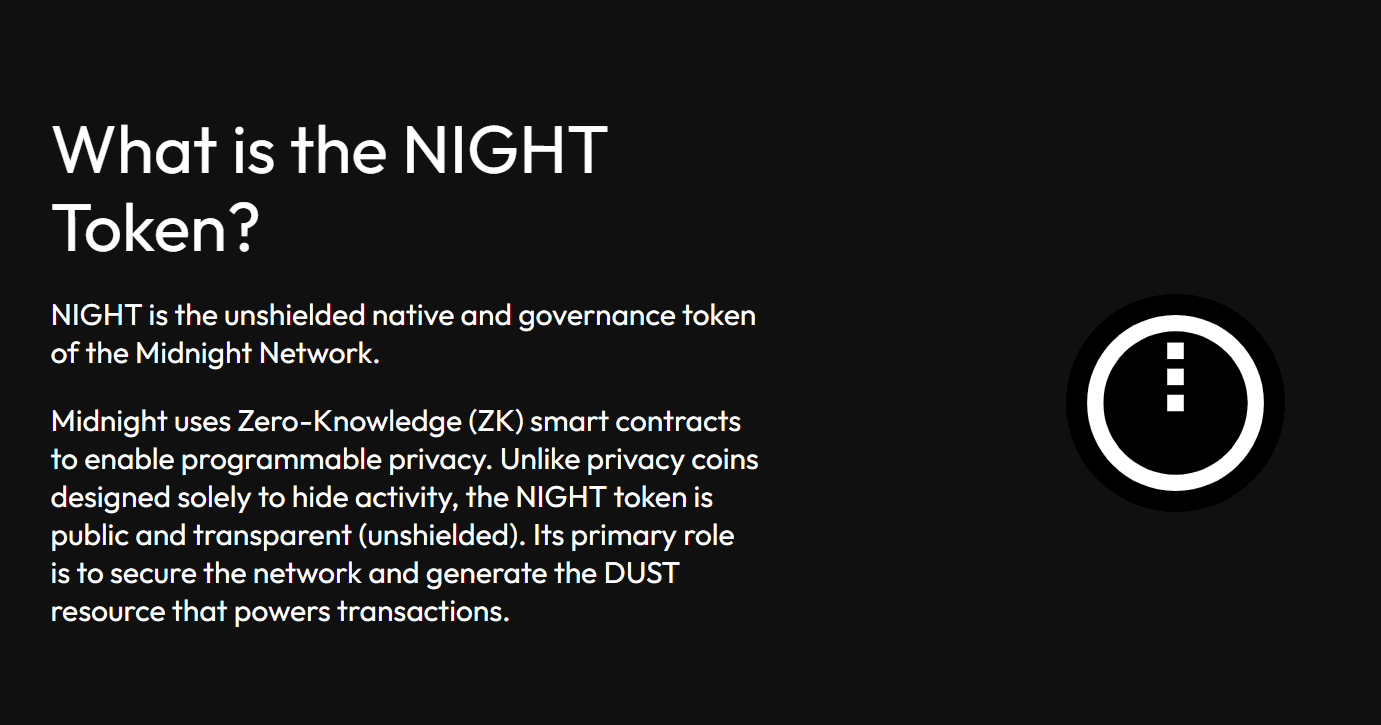
Another standout feature is its dual-token model, using $NIGHT and DUST. Instead of relying solely on a single volatile token for fees, Midnight separates value from utility. This could lead to a more stable and predictable user experience—something that many blockchain networks still struggle to achieve.
The Leaderboard Campaign itself reflects a deeper strategy. It’s not just about earning rewards; it’s about encouraging users to understand and engage with privacy-focused technology. That educational aspect could play a key role in driving long-term adoption.
Looking ahead, Midnight has strong potential in industries where privacy is critical—such as healthcare, finance, and digital identity. As regulations tighten and users become more aware of data ownership, solutions like Midnight may move from optional to essential.
The real question is: are we ready for a blockchain that prioritizes privacy as much as transparency? If the answer is yes, Midnight Network could be leading the next major evolution of Web3.