
I used to look at @SignOfficial as just another piece of the technical furniture,standard infrastructure that keeps the lights on. But the more I sit with it, the more it feels like something else entirely. It feels like a new kind of control. Not the Big Brother kind of surveillance we usually worry about, but something subtler. A shift in who actually decides what is valid and how we prove it later.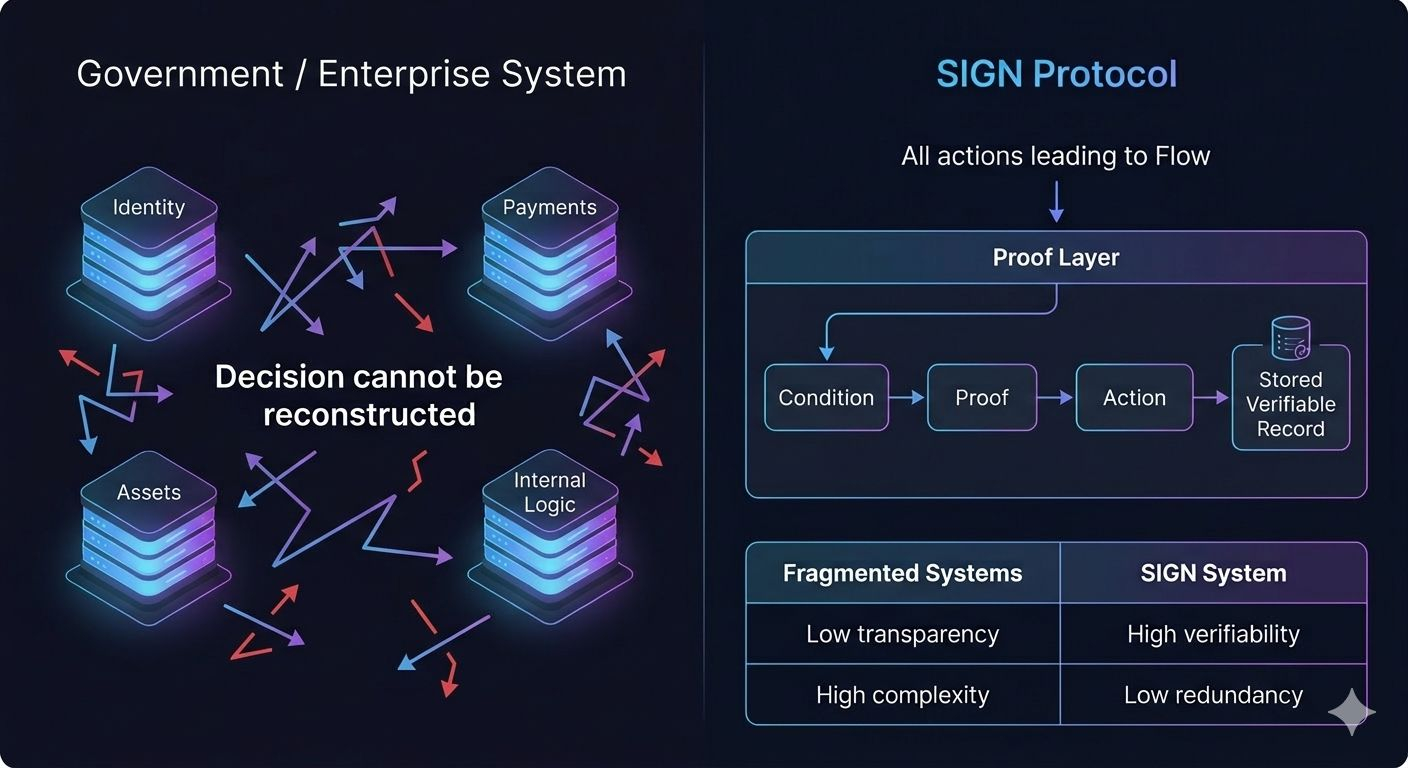
The reality is that most national systems are quietly struggling underneath the surface. On a normal day, everything looks operational someone gets approved, a payment is released, an asset is issued. At the time, it makes sense because there’s a rule or a policy being followed. But the moment you look back and ask why a specific decision happened, the answer is usually scattered across a dozen different databases. Part of it is in an identity system, part in a payment log, and part in some internal logic that nobody can quite find anymore. Reconstructing that decision becomes a project in itself.
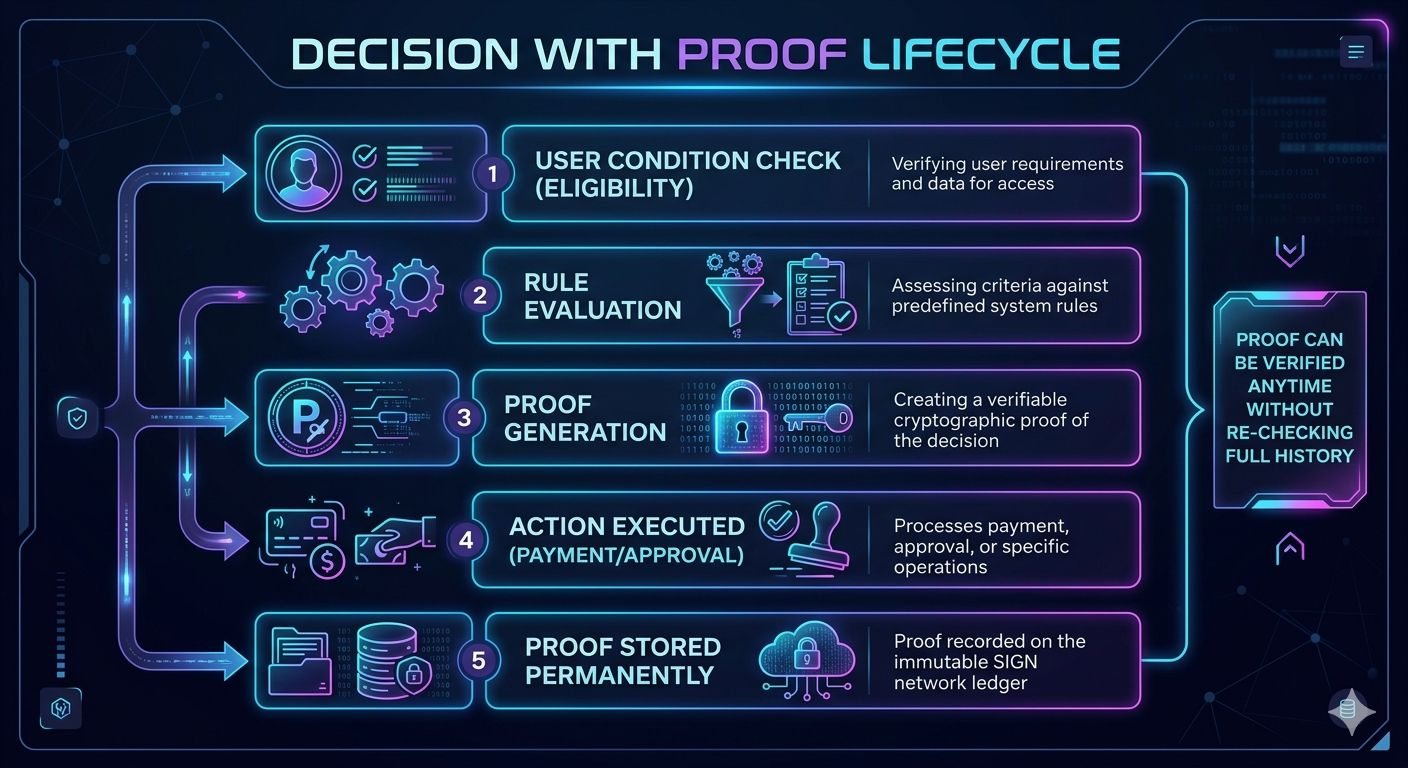
That is the gap SIGN seems to be closing. It’s not just about the action. it’s about making sure the action carries its own justification forward. Instead of relying on hidden logic that vanishes the moment a button is clicked, the system forces every decision to leave behind a proof. It’s not just raw data it’s a verifiable statement that a specific condition was met at that exact moment. When something gets approved, it isn’t just a change in a database. it’s a state change tied to a proof that can be checked a year from now without having to dig through the entire system again.
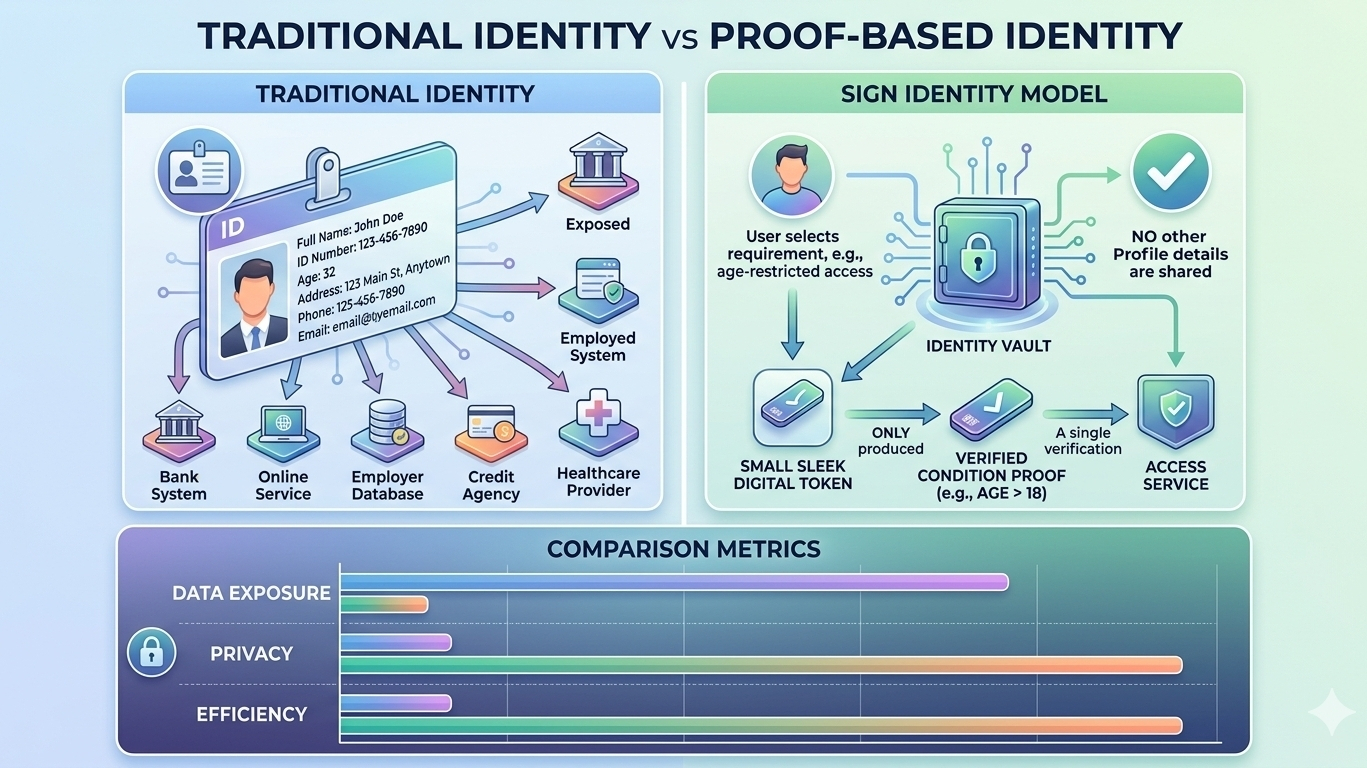
This fundamentally changes how we think about identity. We usually treat identity as a collection of records about who someone is, but SIGN treats it as a tool to satisfy a condition. If you need to prove you’re eligible for something, you don’t have to expose your entire profile. You just provide a signed statement that you met the rule. Because that proof stands on its own, other systems can accept it and move forward without needing to re verify your whole history. The system finally stops re deciding the same things over and over again.
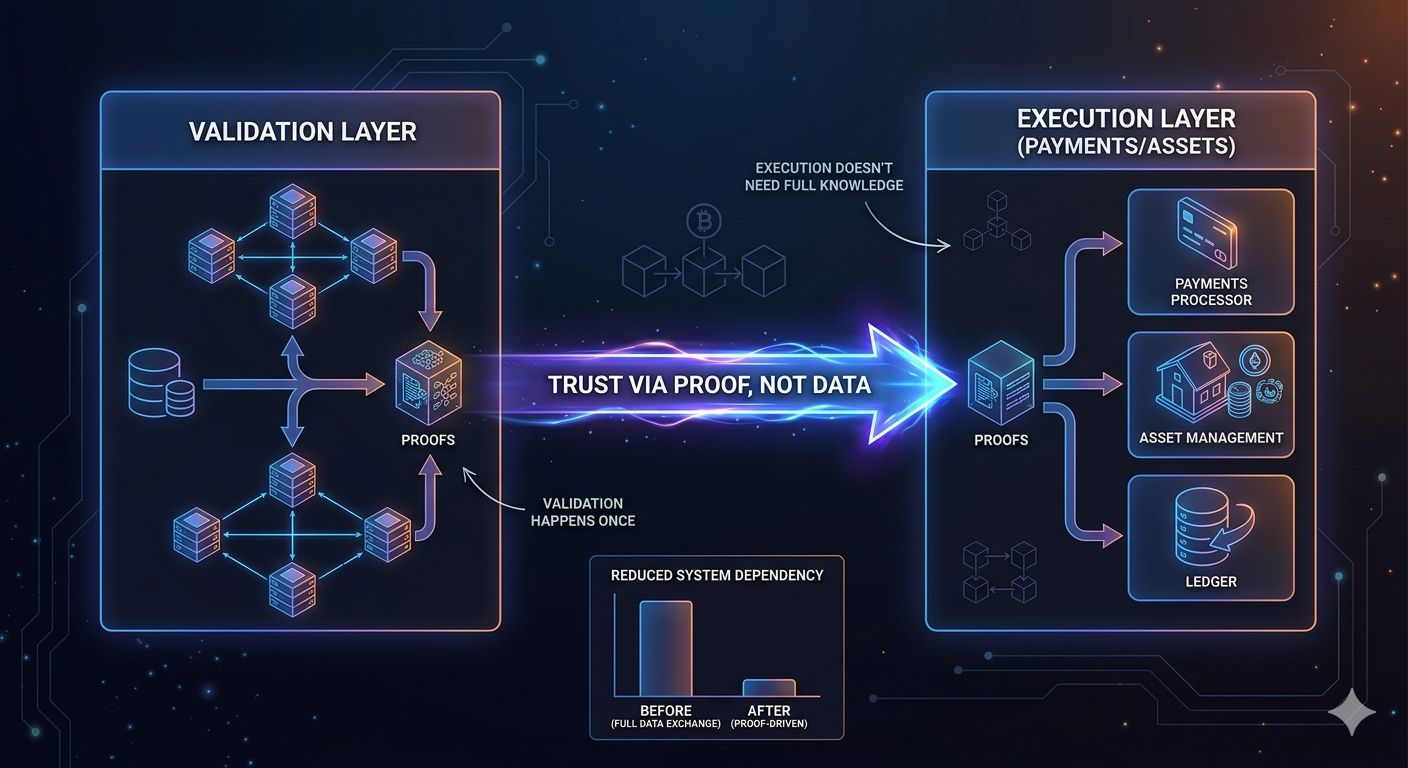
When you bring money and assets into the mix, it gets even more practical. Payments don’t just move because someone triggered them; they move because a condition was proven earlier. The payment system doesn't need to be a know it all it just needs to trust that the validation happened. This separation is subtle, but it means each system needs to know much less about the others to work together. Assets then inherit this logic, carrying their ownership and compliance rules with them as they move.
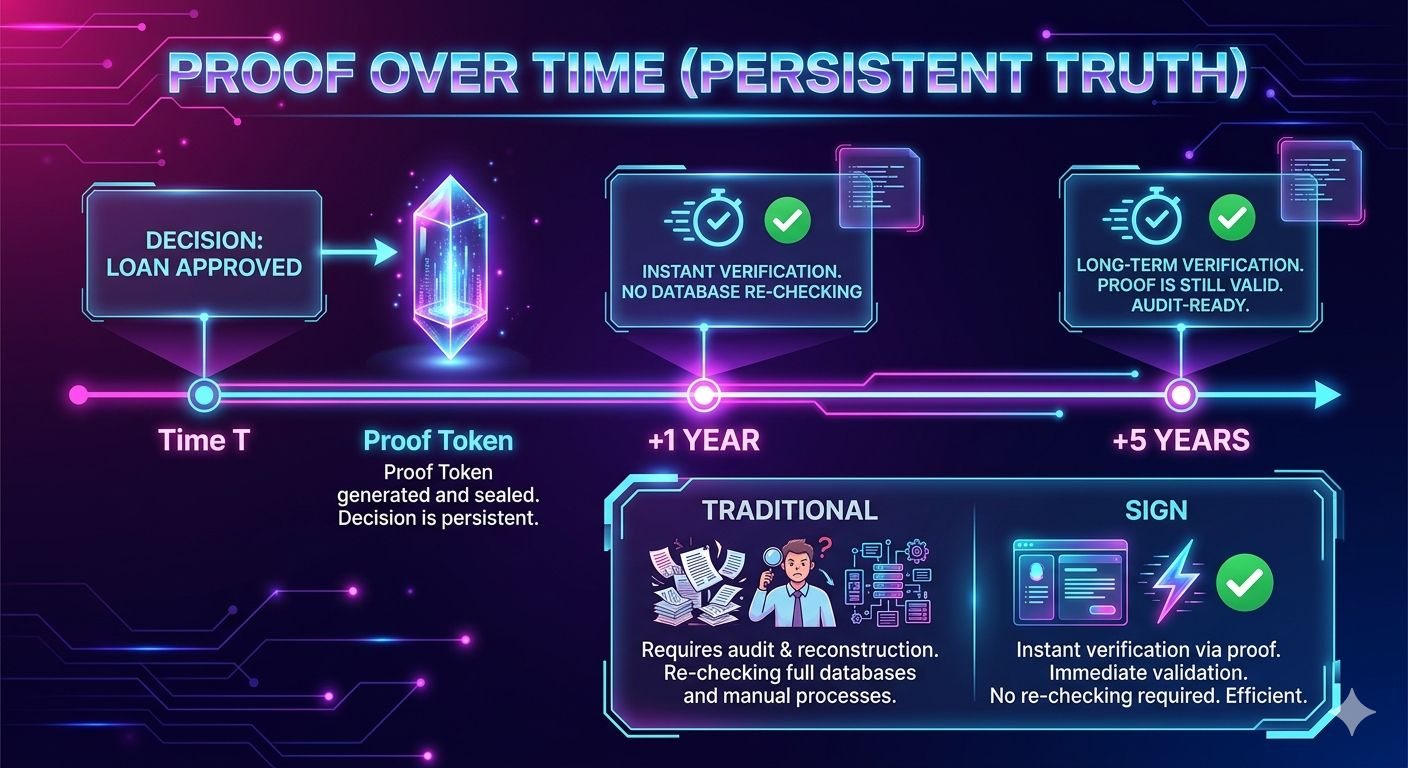
Ultimately, this moves trust away from institutions and toward the structure that connects them. It’s an incredibly efficient way to run things, but it also means the logic itself becomes the most critical part of the puzzle. If the rules are weak, the whole house of cards inherits that weakness. It isn't just infrastructure; it’s a framework for how we agree on what is true and how we ensure that truth lasts. The problem was never that systems couldn't make decisions it was that they couldn't hold onto them in a way others could trust. SIGN is trying to make sure every decision leaves behind something that can actually stand on its own.
#SignDigitalSovereignInfra $SIGN
