

#signdigitalsovereigninfra $SIGN Coin, the native utility token of the Sign ecosystem, has emerged as a crucial player in the intersection of blockchain technology and real-world digital identity. Formed from a strategic evolution, including a significant rebrand from EthSign, the project focuses on two primary pillars: 'Sign Protocol,' an omni-chain attestation layer, and 'TokenTable,' a comprehensive smart contract suite for token distribution, vesting, and airdrops. The SIGN token itself acts as the economic backbone, powering all on-chain transactions, governance, staking, and community rewards. A robust fundamental analysis reveals a project with considerable ambition, validated by significant investment from major industry players like Sequoia and Binance, raising over $30 million to date.
From a fundamental perspective, SIGN's value proposition is its direct address of critical needs in the expanding digital landscape: tamper-proof identity and transparent, secure token management. In an era where information integrity is paramount, Sign Protocol provides a decentralized way to issue and verify any data—from credentials and certifications to legal agreements—across multiple blockchains without intermediaries. This functionality, combined with privacy-enhancing features like zero-knowledge proofs, positions Sign as a foundational infrastructure layer. Furthermore, TokenTable's solution simplifies a historically complex and error-prone process for other projects and institutions, reducing friction and enhancing trust in the entire ecosystem. Its competitive advantage lies in this singular focus on verifiable claims and its ability to act as a sovereign database for decentralized and public organizations.
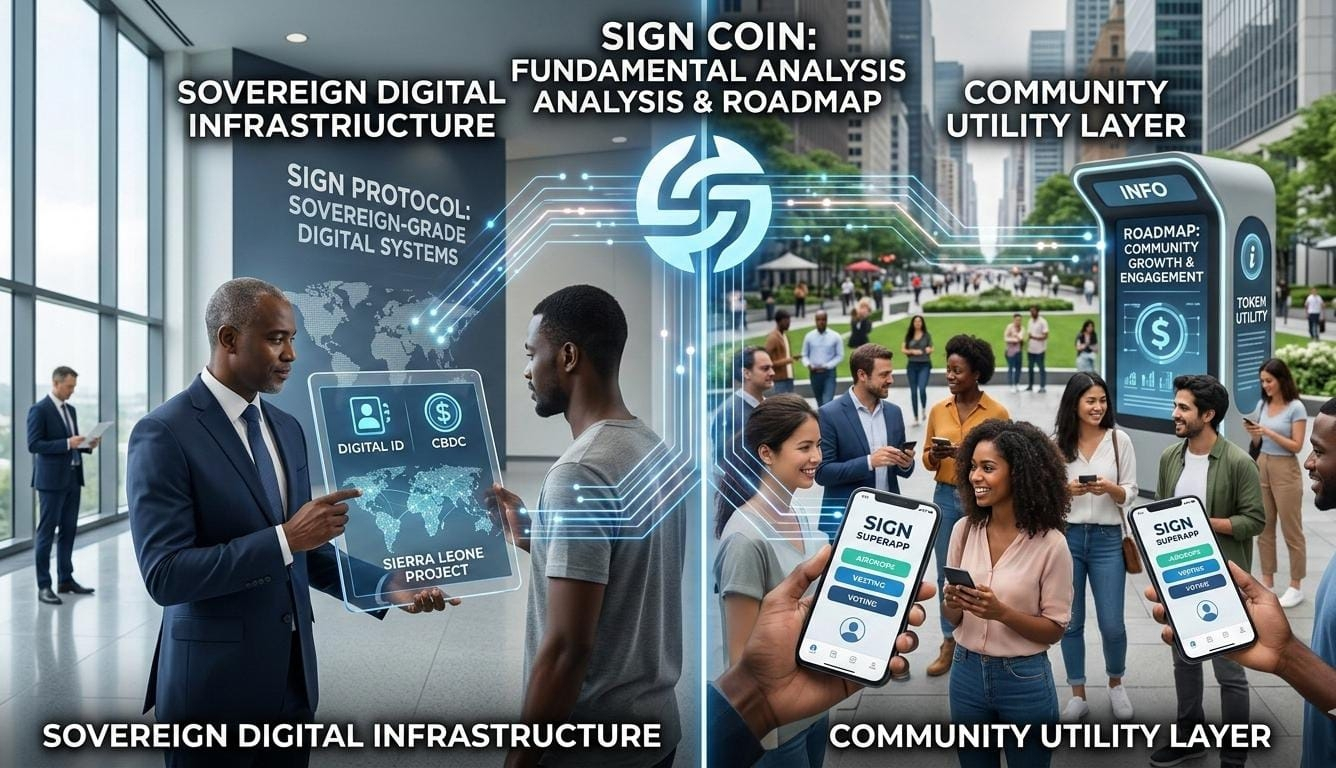
A cornerstone of the SIGN project is its bold and visionary roadmap, which splits into two parallel tracks, targeting state-level adoption and community-driven growth. The first track focuses on Sovereign Digital Infrastructure. Following a strategic funding round, Sign is actively expanding its deals with national governments. Partnerships, such as those with the Government of Sierra Leone and the National Bank of the Kyrgyz Republic, validate the protocol's utility. The roadmap details the deployment of sovereign-grade systems for digital identity, Central Bank Digital Currencies (CBDCs), and verifiable public records. This 'digital lifeboat' strategy aims to ensure financial access and administrative continuity for nations. The project is hiring local teams to customize these deployments, a move that could lead to significant, recurring on-chain activity.
The second track focuses on community and grassroots engagement through the 'Sign SuperApp.' Codenamed 'Orange Dynasty' during development, this application is set for a public launch, introducing a complete suite of integrated features. Moving beyond the core B2B tools, the SuperApp will offer a comprehensive environment for individual users, linking them with airdrops, vesting schedules, voting, and a wider range of community-driven dApps. The roadmap envisions a seamless interface that drives substantial user engagement, creating new utility-driven demand for the SIGN token within the broader community. This dual-track approach successfully balances the slow, regulatory-heavy government contracts with a parallel push for immediate user utility, aiming to capture a diverse ecosystem of stakeholders. The successful execution of this roadmap could solidify SIGN's position as a truly essential utility.SIGN Coin has emerged as a crucial player in the intersection of blockchain technology and real-world digital identity. The project focuses on two primary pillars: 'Sign Protocol,' an omni-chain attestation layer, and 'TokenTable,' a comprehensive smart contract suite for token distribution, vesting, and airdrops. The SIGN token itself acts as the economic backbone, powering all on-chain transactions, governance, staking, and community rewards. A robust fundamental analysis reveals a project with considerable ambition, validated by significant investment from major industry players like Sequoia and Binance, raising over $30 million to date.
From a fundamental perspective, SIGN's value proposition is its direct address of critical needs in the expanding digital landscape: tamper-proof identity and transparent, secure token management. In an era where information integrity is paramount, Sign Protocol provides a decentralized way to issue and verify any data—from credentials and certifications to legal agreements—across multiple blockchains without intermediaries. This functionality, combined with privacy-enhancing features like zero-knowledge proofs, positions Sign as a foundational infrastructure layer. Furthermore, TokenTable's solution simplifies a historically complex and error-prone process for other projects and institutions, reducing friction and enhancing trust in the entire ecosystem. Its competitive advantage lies in this singular focus on verifiable claims and its ability to act as a sovereign database for decentralized and public organizations.
A cornerstone of the SIGN project is its bold and visionary roadmap, which splits into two parallel tracks, targeting state-level adoption and community-driven growth. The first track focuses on Sovereign Digital Infrastructure. Following a strategic funding round, Sign is actively expanding its deals with national governments. Partnerships, such as those with the Government of Sierra Leone and the National Bank of the Kyrgyz Republic, validate the protocol's utility. The roadmap details the deployment of sovereign-grade systems for digital identity, Central Bank Digital Currencies (CBDCs), and verifiable public records. This 'digital lifeboat' strategy aims to ensure financial access and administrative continuity for nations. The project is hiring local teams to customize these deployments, a move that could lead to significant, recurring on-chain activity.
The second track focuses on community and grassroots engagement through the 'Sign SuperApp.' Codenamed 'Orange Dynasty' during development, this application is set for a public launch, introducing a complete suite of integrated features. Moving beyond the core B2B tools, the SuperApp will offer a comprehensive environment for individual users, linking them with airdrops, vesting schedules, voting, and a wider range of community-driven dApps. The roadmap envisions a seamless interface that drives substantial user engagement, creating new utility-driven demand for the SIGN token within the broader community. This dual-track approach successfully balances the slow, regulatory-heavy government contracts with a parallel push for immediate user utility, aiming to capture a diverse ecosystem of stakeholders. The successful execution of this roadmap could solidify SIGN's position as a truly essential utilities