
I didn’t expect $SIGN o make me stop and think this much. At first glance, Sign Protocol felt different from the usual infrastructure narratives. Not just another “we fix identity” pitch with polished slides and vague promises. When I saw the angle around governments, real institutions, actual deployments… I’ll admit, it felt more grounded than most.
For a moment, it made sense. A country gets better digital rails, verifiable credentials, cleaner systems. Less friction, more transparency. And the word “sovereignty” fits nicely into that picture. It sounds like control is staying where it should be.
But then I sat with it a bit longer.
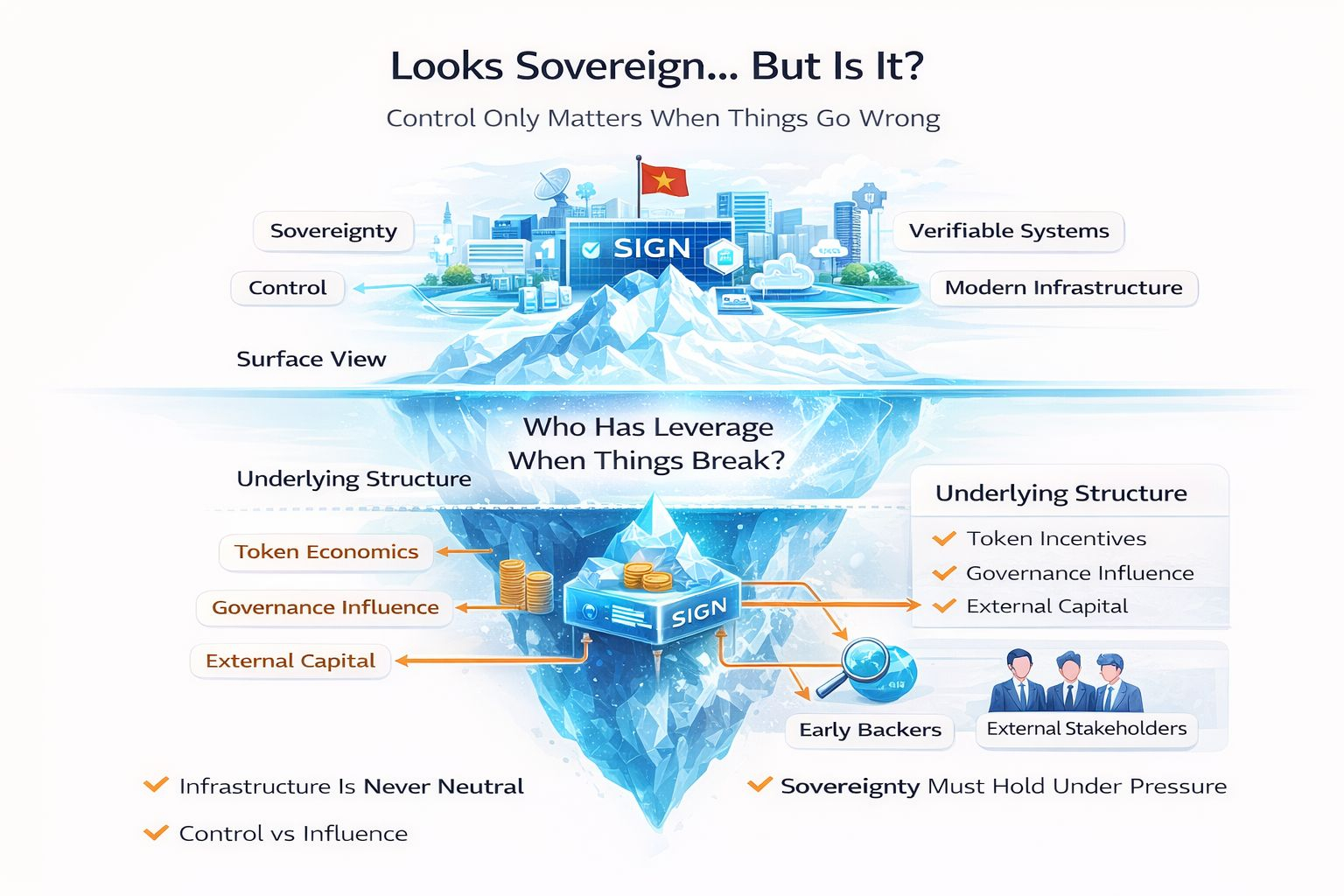
Because there’s something about that word that feels… easy to say, harder to prove. Technical sovereignty, maybe. The system is open, auditable, modern. But actual sovereignty? I’m not sure it’s that straightforward.
I keep coming back to this idea that infrastructure is never just infrastructure. If a country builds on top of a protocol like this, it’s not just choosing better software. It’s entering a relationship. And relationships come with influence, even if it’s not obvious at the start.
What makes me hesitate is the layer underneath. The token, the incentives, the early backers, the usual capital structure we see across crypto. None of that is unique to SIGN, but when sovereignty is part of the narrative, it starts to matter more. Because then the question isn’t just “does it work?” It becomes “who really has leverage when things don’t?”
And that’s the part I don’t see talked about enough.
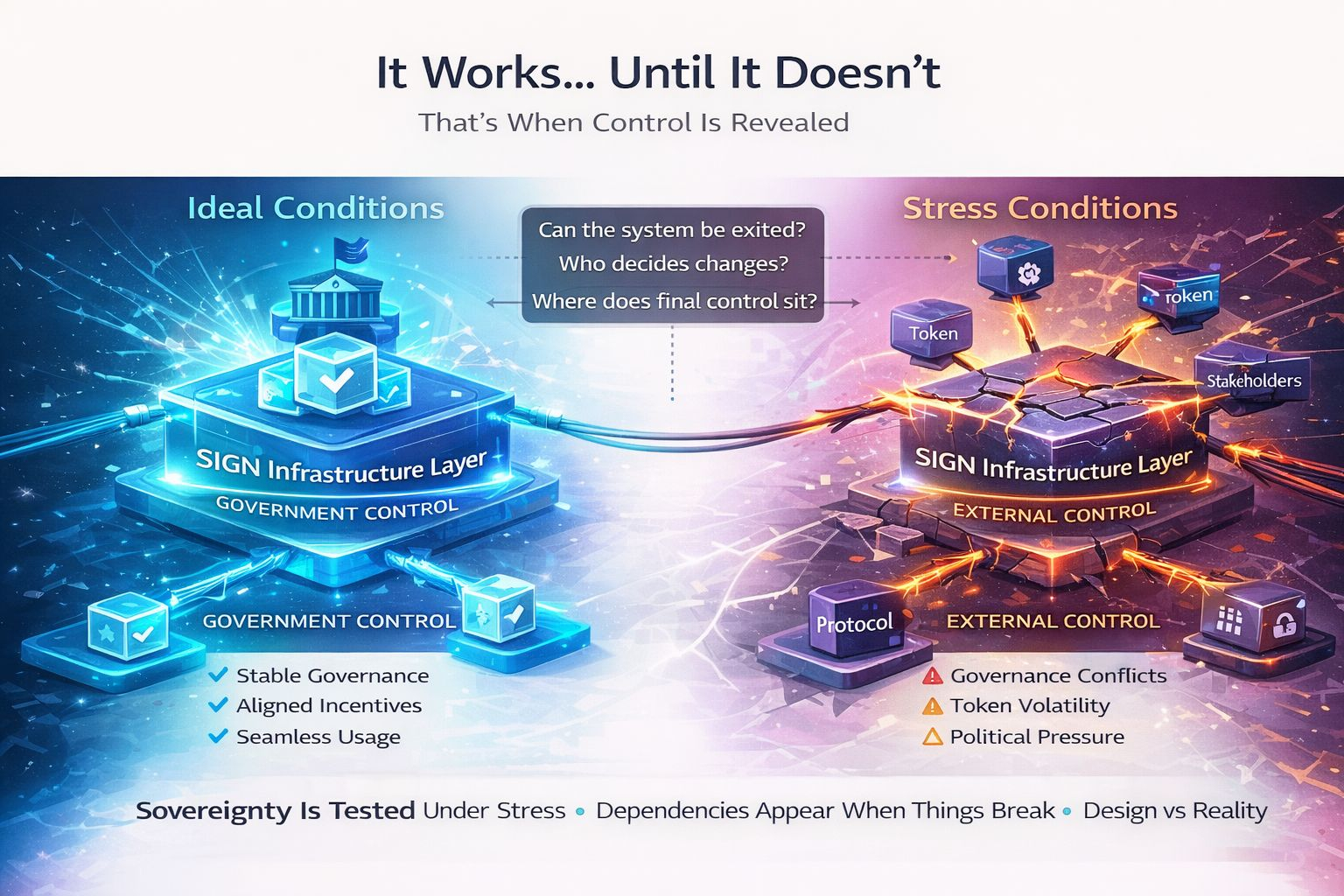
When everything runs smoothly, it’s easy to say a nation is in control. But if there’s volatility, governance issues, or even political disagreement, where does the real power sit? Can a country walk away cleanly? Can it keep the system but remove the external dependencies? Or does it stay tied in ways that only become visible later?
I’m not saying SIGN is doing anything wrong. Actually, that’s what makes this more interesting. The project looks competent. The idea has weight. It’s not some empty narrative.
But maybe that’s exactly why the questions matter more.
Because sometimes in crypto, we talk about removing dependence… and end up just reshaping it into something harder to see. Cleaner interface, same underlying tension.
I’m still watching this. I don’t think the story is fake. But I’m not fully sold on the sovereignty angle yet. Not without clearer answers to what happens when things stop being ideal.
Maybe it works. Maybe it really does give countries better tools without hidden trade-offs.
But right now, it feels less like a solved idea… and more like an open question.