

Most people are still focused on what a project promises. I’ve been paying more attention to when it actually starts proving it.
The moment a network moves from building to operating is where things usually change. That’s the part I care about more than announcements or roadmaps. It’s where ideas stop sounding good and start getting tested.
That’s how I started looking at Midnight’s Kūkolu Phase. @MidnightNetwork
Web3 has a pattern I keep noticing. A lot of attention goes into early narratives, architecture, and promises. But the real test doesn’t happen during development. It happens when a network starts transitioning into actual usage. That’s usually where projects either start gaining real traction or quietly lose momentum.
There’s always been a gap between building and operating. $NIGHT
On one side, you have infrastructure designed around strong ideas like privacy, scalability, or decentralization. On the other side, you have real users, real demand, and real behavior. Bridging those two isn’t automatic. In fact, that’s where many projects start to struggle.
That’s why phases like Kūkolu matter more than they seem at first.
Midnight Network has been positioning itself as a privacy-focused infrastructure layer, built around confidential computation and protected data. The idea is fairly simple. Instead of exposing everything on-chain, the network allows transactions and computations to be verified without revealing sensitive information.
The way I think about it is straightforward. You can prove something is valid without showing everything behind it.
But until a system reaches this stage, it mostly exists as design and intention.
That’s where the Kūkolu Phase comes in. Expected in Q1 2026, it represents a shift where Midnight moves closer to active deployment. It’s less about theory and more about execution. That shift matters because it introduces real variables. Usage, participation, and network activity begin to replace assumptions.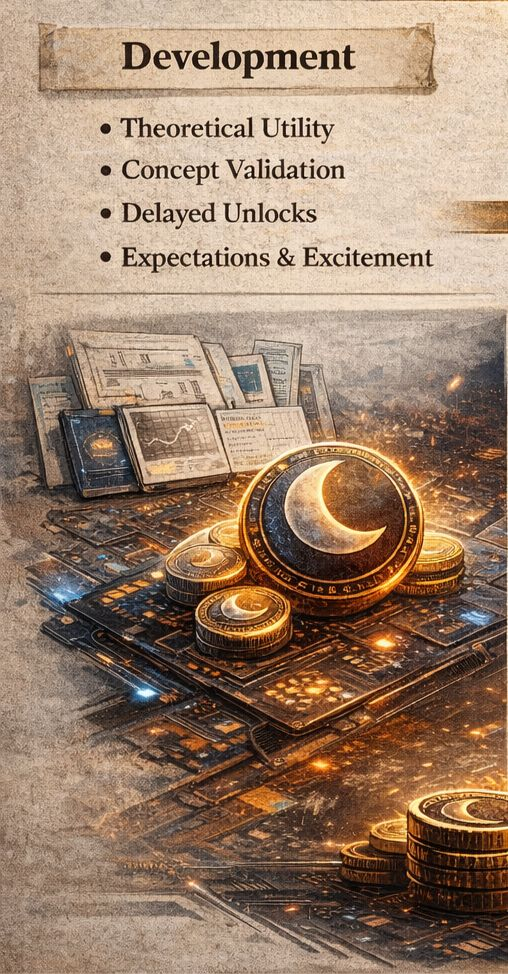
And that directly connects to the NIGHT token.
Up to now, the token has largely been tied to expectations around future utility. But as the network moves into a more active phase, the role of the token becomes more visible. It starts to reflect not just what the network plans to do, but how it actually performs.
There’s also the broader design to consider. Midnight separates parts of its system, with mechanisms like DUST handling operational aspects of confidential computation. To me, that suggests the architecture is trying to prevent usage from being directly affected by token pressure.
From a trader’s perspective, that detail matters more than it seems.
Looking at the current market context, as of early 2026, Midnight is still in a stage where most of the narrative is driven by potential. The Kūkolu Phase begins to change that. It introduces a point where expectations start meeting real activity.
That doesn’t guarantee success, but it changes how the market interprets the project.
The bull case is tied to that transition. If the Kūkolu Phase leads to real network activity, developer engagement, and early applications, the NIGHT token could begin shifting from narrative-driven interest to actual demand. That’s usually where longer-term value starts forming.
In that case, this phase isn’t just a milestone. It becomes a starting point.
The bear case is just as important. If the transition into this phase doesn’t bring meaningful adoption, or if the network struggles to attract developers and users, the narrative can weaken quickly. Moving from development to launch exposes everything to real conditions, and not every design holds up.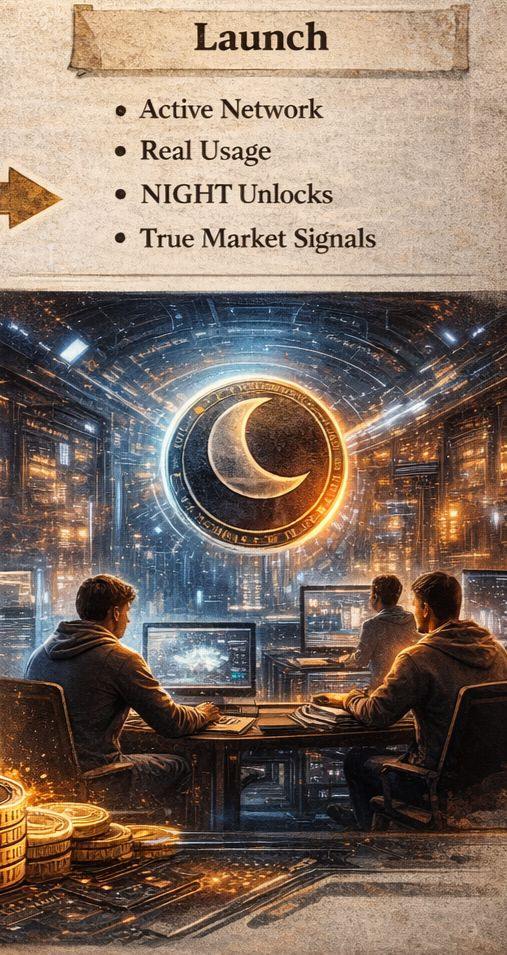
There’s also the risk that expectations move faster than reality.
For me, the signals are fairly clear. If the Kūkolu Phase gets delayed, if activity stays low, or if developer momentum doesn’t build, that would challenge the thesis. At that point, the transition wouldn’t be as meaningful as it looks on paper.
On the other hand, if usage starts appearing, if applications begin forming, and if participation grows steadily, that would reinforce the case.
What keeps me watching Midnight isn’t just the idea of privacy infrastructure. It’s how these transition points reshape everything. A project can look strong during development, but phases like this are where assumptions get tested.
Because in the end, Web3 doesn’t reward plans. It rewards execution.