
@SignOfficial #SignDigitalSovereignInfra $SIGN
There is a particular kind of silence that shows up in crypto conversations before people trust something new. It is not loud skepticism, and it is not enthusiasm either. It is the pause after a screenshot is posted, the extra minute spent checking who else is repeating the same claim, the way a comment thread gets shorter when a project touches anything related to identity or eligibility. I notice that pause more than I notice the announcements.
It tends to happen when a system asks for something people usually hand-wave away: proof. Proof of identity, proof of ownership, proof that an address actually belongs to the person claiming it, proof that a distribution was done according to rules instead of vibes. SIGN sits in that awkward but interesting part of the market where the story is less about price first and more about whether the machinery underneath actually changes how people behave. According to Binance Research, Sign is building global infrastructure for credential verification and token distribution through two core pieces: Sign Protocol, an omni-chain attestation protocol, and TokenTable, a smart-contract-based distribution platform for airdrops, vesting, and unlocks.
What stands out to me is not the framing itself, but the behavior it is trying to shape. In crypto, a lot of activity still happens in the gap between what can be claimed and what can be verified. That gap creates a familiar kind of market noise: people gaming eligibility, communities arguing over fairness, teams trying to distribute tokens without creating ten new layers of confusion, and ordinary users trying to tell the difference between a real opportunity and a very polished funnel. A protocol built around attestations and distribution is trying to narrow that gap. Sign’s documentation describes a credential layer based on verifiable credentials and decentralized identifiers, with selective disclosure, issuer trust registries, revocation checks, and offline presentation patterns such as QR or NFC where needed.
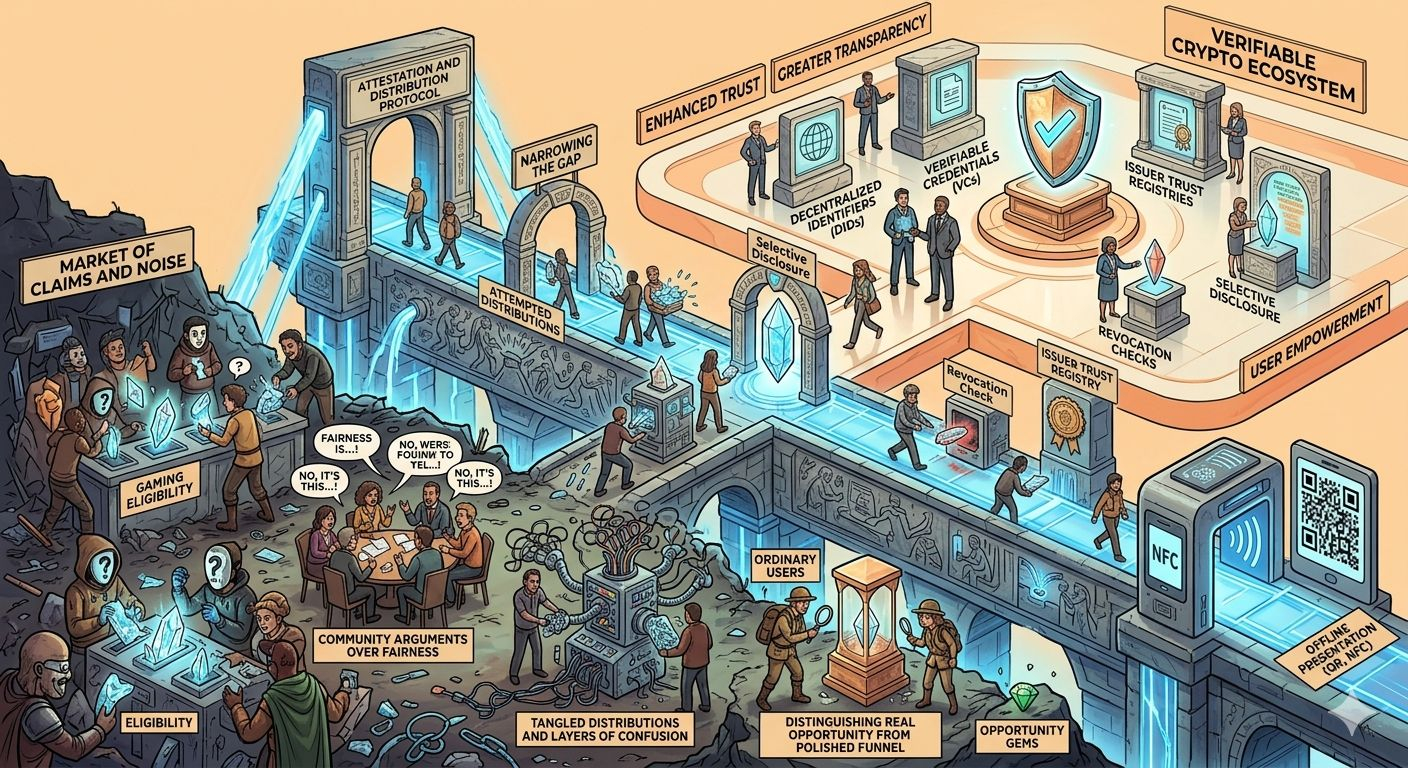
That matters because infrastructure changes incentives before it changes narratives. If verification becomes easier to reuse, then users do not have to start from zero every time. If eligibility can be checked more cleanly, then projects may spend less energy on fraud control and more on actual design. If distribution can be enforced through contracts rather than ad hoc spreadsheets and manual review, then some of the old ambiguity disappears. But ambiguity never disappears completely; it just moves somewhere else. It moves into who is trusted to issue credentials, how revocation is handled, how much data is exposed, and whether the convenience of a system quietly creates new forms of dependence. Those are not dramatic problems, but they are the ones that decide whether people keep using something after the first wave of curiosity fades.
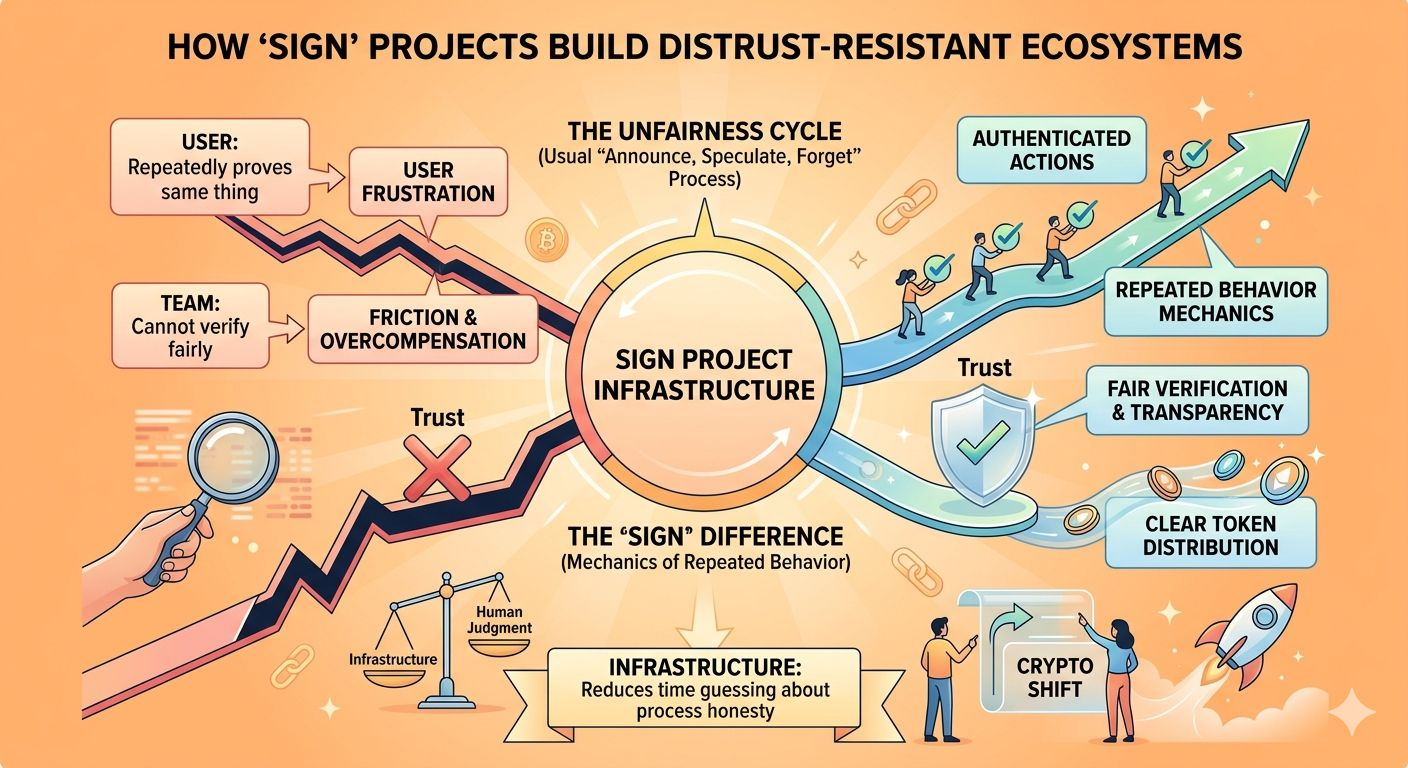
I think that is why projects like SIGN feel different from the usual cycle of “announce, speculate, forget.” They do not live only in the language of upside. They live in the mechanics of repeated behavior. A user who has to prove the same thing again and again may stop engaging. A team that cannot verify fairly may overcompensate with friction. A community that sees token distribution as opaque will eventually price that distrust into everything else it reads. Infrastructure cannot remove human judgment, but it can reduce the amount of time people spend guessing whether the process itself was honest. And in crypto, that is a meaningful shift even when it happens quietly.
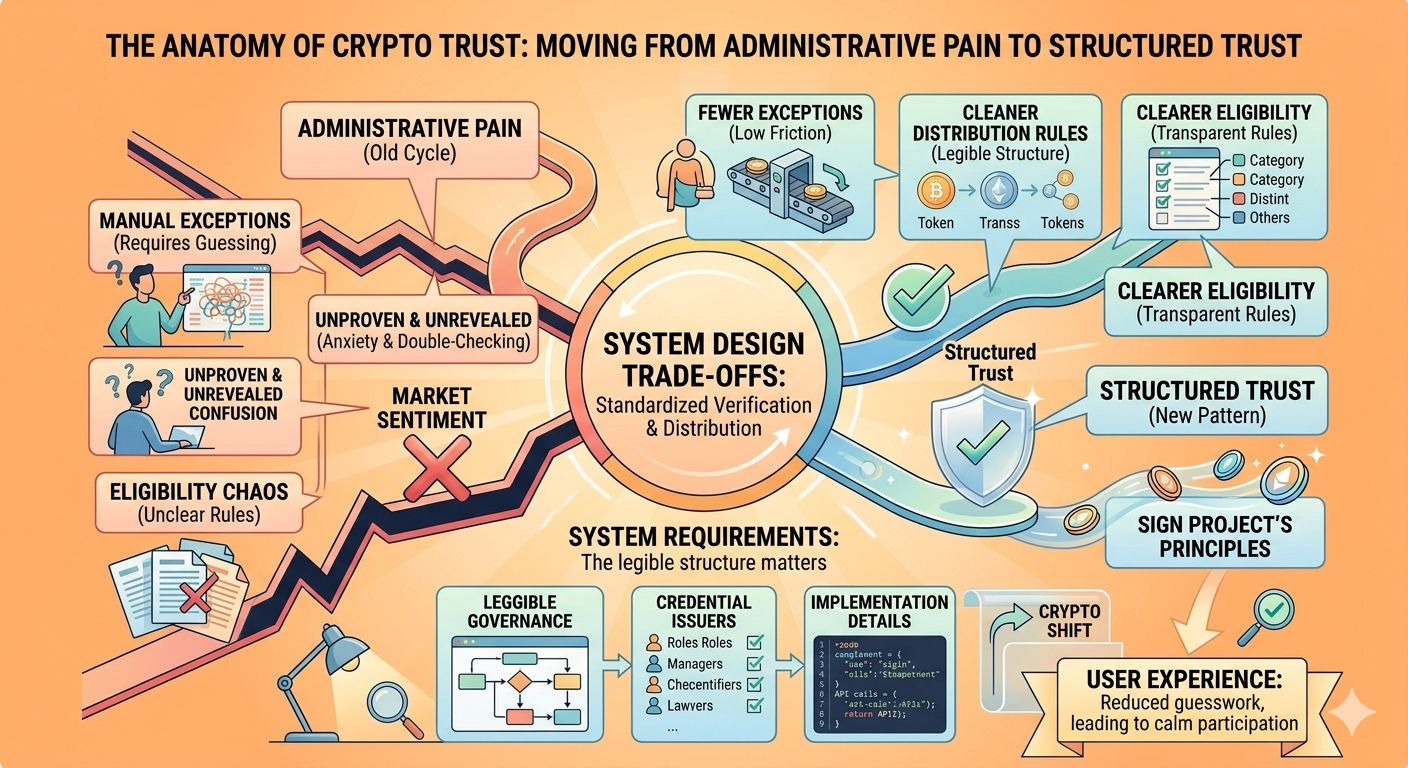
What I find most useful about watching a project like this is that it reminds me how much market sentiment is really about administrative pain. People often describe trust as if it were a feeling, but in practice it is usually built from a series of small reductions in friction. Fewer manual exceptions. Clearer eligibility. Less confusion over what is being proven and what is being revealed. Better revocation handling. Cleaner distribution rules. None of that sounds exciting in isolation, yet these are the things that determine whether users feel calm enough to participate without constantly double-checking every step. SIGN’s design points in that direction, and the trade-off is obvious: the more a system tries to standardize verification and distribution, the more its governance, credential issuers, and implementation details matter. The trust does not vanish; it becomes more structured, which is helpful only if the structure itself is legible.
So when I see people slowly move from curiosity to tentative acceptance, I do not think they are reacting to a slogan. I think they are reacting to the possibility that a common source of confusion in crypto might become a little less chaotic. That does not make the topic glamorous. It makes it practical. And for everyday users, practical usually matters more over time. Better verification means fewer bad assumptions. Better distribution means fewer surprises. Better structure means better judgment, at least most of the time. In a market where uncertainty is never going away, that kind of clarity is worth paying attention to.
