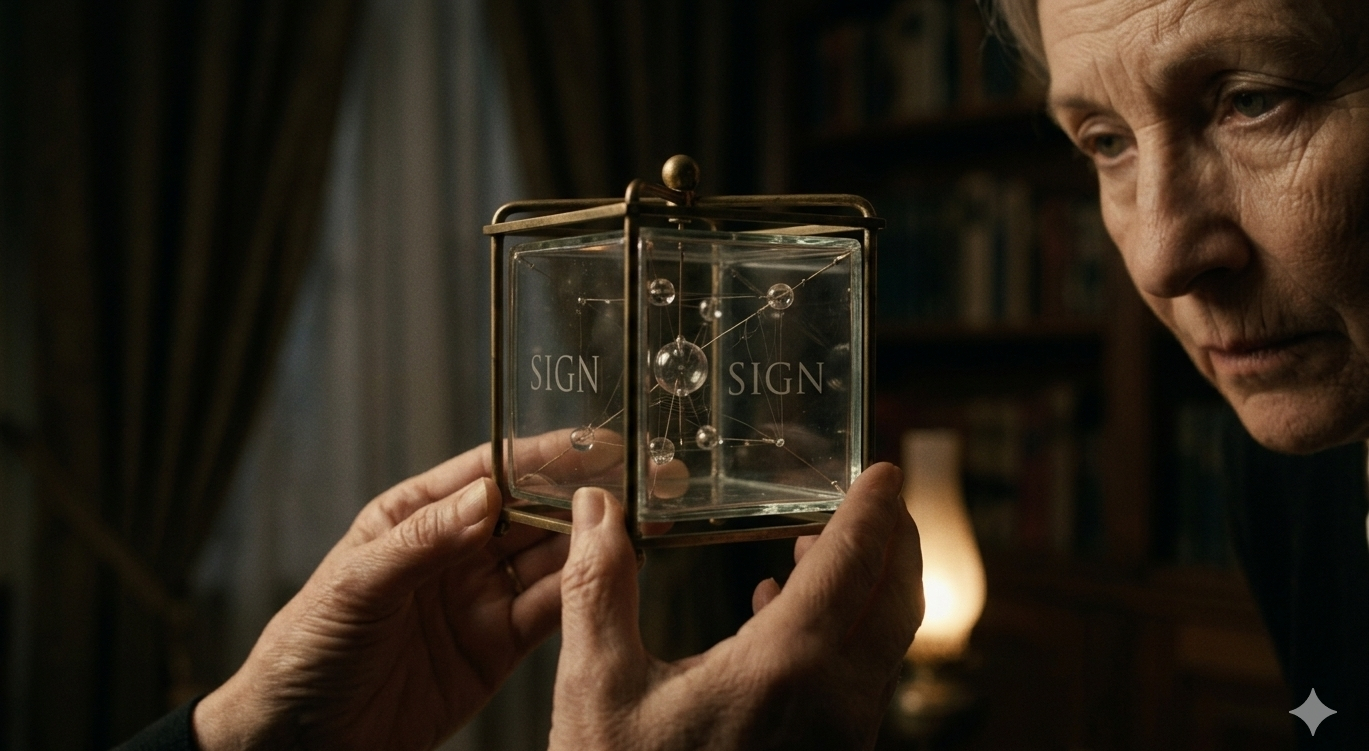
I keep coming back to the same thought whenever I sit with ideas like SIGN, and it’s not excitement anymore, it’s more like a quiet pause. I’ve been around long enough to notice how the same narratives just keep circling back in different forms. Every few months, something is framed as a breakthrough, but when I look closer, it feels like I’ve already seen it before, just repackaged with better wording. With SIGN, I catch myself wondering if this time it’s actually different, or if I’m just reacting to another familiar pattern that hasn’t really solved anything underneath.
What keeps bothering me is how I’m constantly pushed to accept a trade-off that doesn’t feel necessary. It’s always transparency or privacy, never both in a way that feels natural. I’ve watched systems lean so heavily into openness that it almost feels invasive, like exposure became normal without anyone questioning where the line should be. And then on the other side, I see “privacy-focused” approaches that go so far they become hard to use or hard to trust. When I think about SIGN in this context, I’m not thinking about what it promises, I’m thinking about whether it can exist in that narrow space where things actually feel balanced, because that space is where most ideas quietly fail.
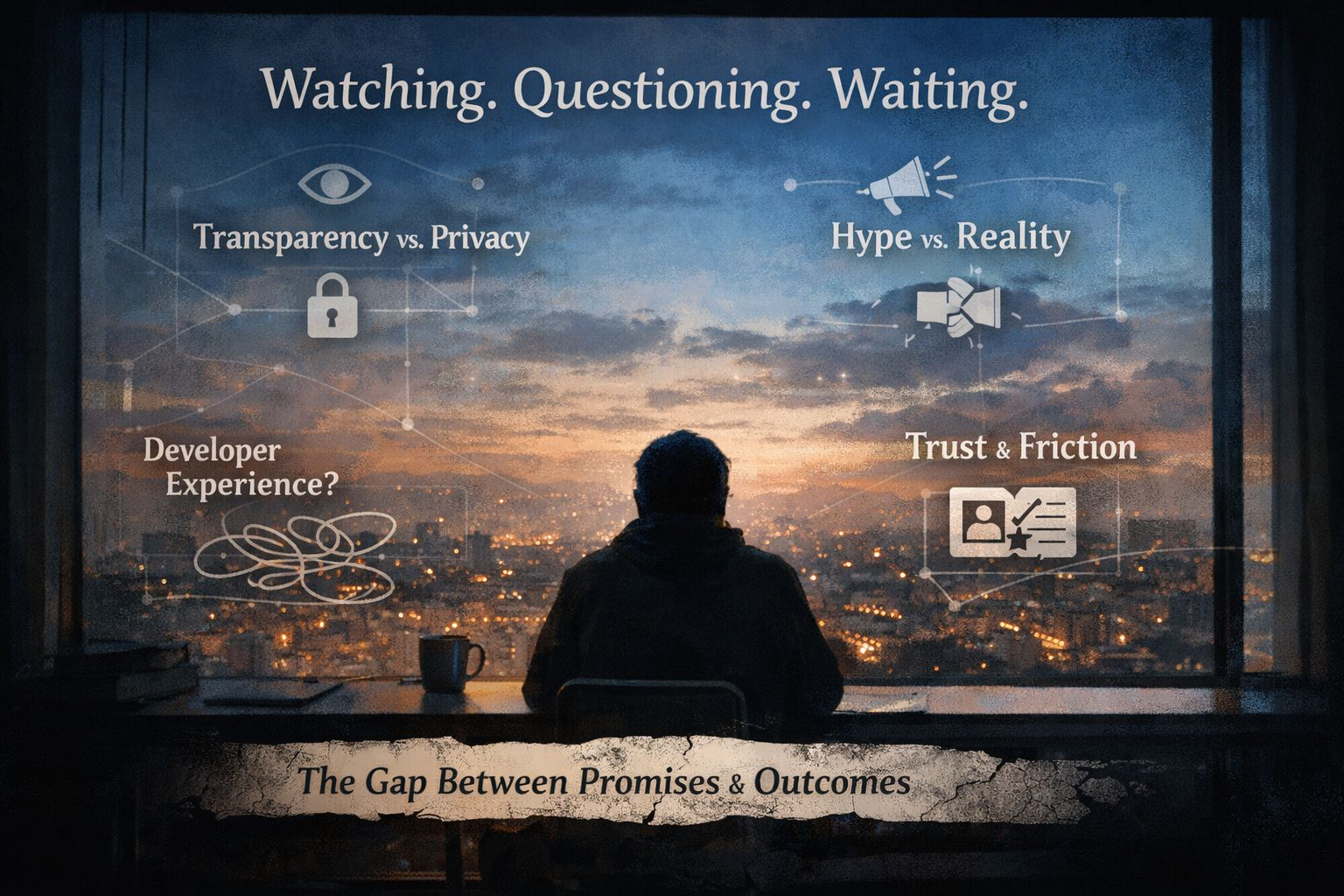
There’s also this growing fatigue I can’t ignore. I’ve seen too many projects built around storytelling instead of real use. They sound convincing, they look polished, but when pressure hits, they don’t hold up. Infrastructure, especially, always sounds solid in theory, but reality has a way of exposing weak points quickly. With SIGN, I find myself not asking what it says it can do, but what happens when it’s actually tested in messy, unpredictable conditions. Because that’s where most of these systems start to unravel, and that’s usually when the narrative fades and the gaps become visible.
Another thing I keep noticing is how little attention gets paid to the people actually building on top of these systems. Developer experience is treated like a secondary detail, even though it quietly determines whether anything gets adopted at all. I’ve seen good ideas die simply because they were too frustrating to work with. So when I think about SIGN, I’m not thinking about its ambition as much as I’m thinking about whether it respects the people who have to interact with it daily. If that part is ignored, everything else tends to collapse slowly, even if it looks fine from the outside.
Then there’s the issue of tokens, which has started to feel almost forced in a lot of cases. I’ve lost count of how many times I’ve seen designs that exist more for appearance than necessity. It makes me question intent more than anything else. With SIGN, I can’t help but look at it through that same lens, asking myself if the design choices come from real need or if they’re just part of a pattern the market expects. Because when something is added without a clear reason, it usually ends up complicating things instead of improving them.
Verification, identity, trust… these are still messy, no matter how many times they’re reintroduced as “solved.” I’ve watched systems try to clean this up, but the results often feel incomplete or fragile. Trust isn’t something that forms because a system claims it should, it builds slowly, and it breaks quickly. So when I think about SIGN, I’m not assuming it fixes anything. I’m more interested in whether it acknowledges how complicated this actually is, or if it simplifies the problem just enough to make it sound manageable.
What really stays with me, though, is the gap. The space between what something aims to be and what it actually becomes. I’ve seen that gap so many times that it’s hard not to expect it now. Big ideas often act like camouflage, covering up execution that doesn’t quite hold together. And the market doesn’t help, it tends to reward whatever is loudest, not what’s most reliable. That’s probably why I’ve stopped trusting polished narratives. With SIGN, like everything else, I’m not looking for a perfect story anymore. I’m waiting to see where it breaks, because that usually tells me more than anything it claims upfront.
I guess that’s where I am now. Not dismissing things completely, but not buying into them either. Just watching, questioning, and trying to see past the surface. SIGN, to me, isn’t something I accept or reject right away. It’s something I observe over time, the same way I’ve learned to do with everything else. Because after a while, patterns don’t just repeat, they reveal themselves. And once you start seeing them clearly, it becomes harder to ignore what’s actually there.