
I didn’t expect $SIGN to make me pause like this. Most of the time, crypto infrastructure projects all kind of sound the same to me. Big words, polished narratives, everything framed like it’s already inevitable. But when I first looked into Sign Protocol and saw the angle with governments and real institutions, I’ll admit it felt different. Less noise, more substance. At least on the surface.
For a moment, it actually made sense. A country gets modern digital rails, verifiable credentials, cleaner systems for identity and distribution. It sounds like an upgrade that keeps control at the national level while improving how things run underneath. That’s where the sovereignty narrative comes in, and honestly, it’s a compelling one.
But then I kept thinking about it, and that’s where things started to feel a bit less clear.
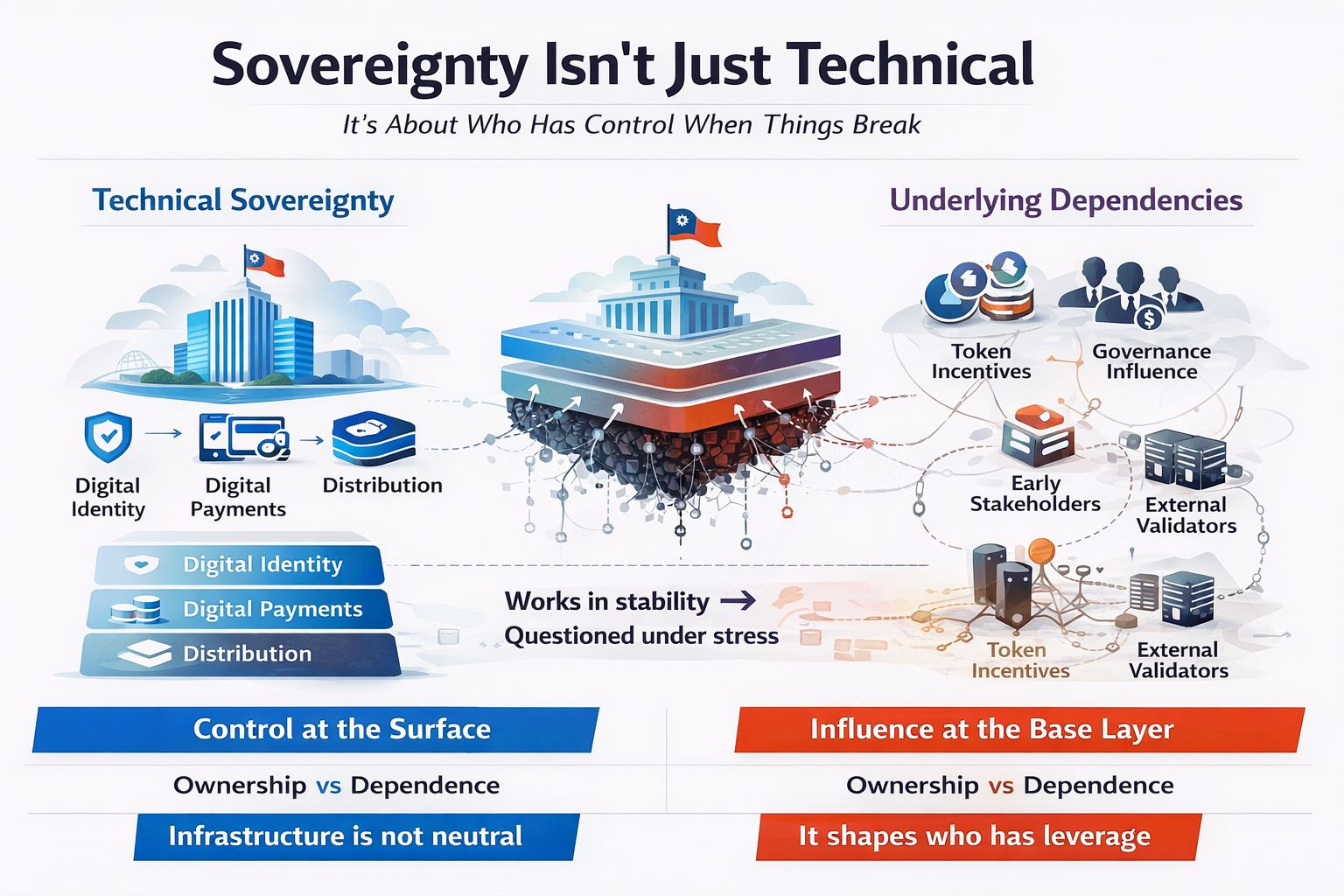
Because the more I look at it, the more I feel like there’s a gap between technical sovereignty and actual sovereignty. The system can be open, auditable, even well-designed. But if the economic layer underneath is shaped by token dynamics, early investors, and external incentives, then I’m not sure control is as straightforward as it sounds.
I keep coming back to this idea that choosing infrastructure like this isn’t just a technical decision. It’s a long-term relationship. And relationships in crypto usually come with invisible strings. Not in an obvious or malicious way, just structurally. Incentives, governance, token distribution… those things don’t disappear just because the use case is “nation-level.”
That’s where it gets uncomfortable, at least for me.
Because if a country builds critical systems on top of something like this, then the real question isn’t whether it works when everything is fine. It’s what happens when things aren’t. If there’s a bug, a governance dispute, or even just market pressure affecting the token, who actually has leverage in that moment? Who decides how things get fixed, and how fast?
It’s easy to talk about sovereignty when the system is stable. Much harder when there’s stress.
And I’m not saying Sign is doing anything wrong. If anything, the project seems competent, which is why these questions matter more. This isn’t some random narrative play. It looks like something that could actually be used, which means the trade-offs are real too.
I’ve seen this pattern before where infrastructure gets framed as empowerment. It promises efficiency, modernization, more control. And sometimes it delivers that. But over time, the dependency shows up in quieter ways. Through standards, through incentives, through the fact that once you build on top of something, leaving it isn’t as simple as it sounded at the beginning.
Maybe that’s just how all systems evolve. Or maybe it’s something we’re still underestimating in crypto.
I’m still interested in what SIGN is building. I think the use case has weight, and the direction isn’t random. But I’m not fully convinced that better infrastructure automatically means more sovereignty.
Sometimes it does.
Sometimes it just feels like it does.
I guess what I’m really watching for now is not the tech itself, but how much control actually exists when things stop being ideal. That’s where the narrative either holds up or starts to fall apart.
And until that’s clearer, I’ll keep looking at this whole “nation-first infrastructure” idea with a bit of hesitation.