

i thought about it from an infrastructure angle.
distributed systems paper last day professor asked us to design a system that works across ten independent networks with no shared state between them i spent two hours on it the technical connection part was not the hard part the hard part is the trust assumption if you bridge data between chains, who guarantees the data was not modified in transit.
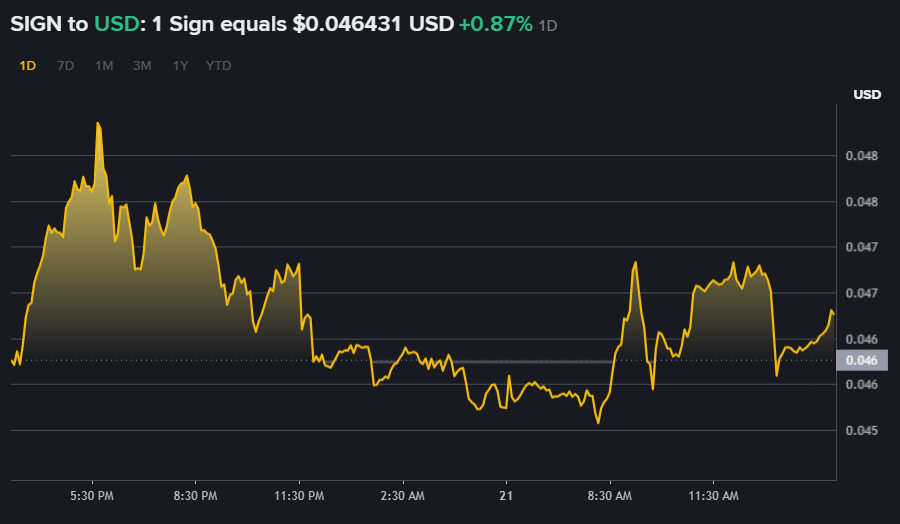
$SIGN is at $0.047 today, market cap $77M 1.64B circulating out of 10B max,63% below ATH, Date: today March 21, 2026.Sign Price all details

Sign Protocol is not a single-chain tool that added other chains later as an afterthought the schema registry and attestation logic are deployed natively on each supported network no bridge in the verification path an attestation issued on Ethereum is verifiable on Ethereum against the Ethereum deployment an attestation on BNB Chain is verifiable on BNB Chain the verifier does not need to trust a cross-chain message they query the native deployment on the chain they are already using.
for governments this matters more than most people writing about SIGN acknowledge a country deploying national ID infrastructre can not commit parmantly to one chain policy changes chain governance chang validatar sets chang if the identity system is lock to one chain and of government in herits that chain's governance decisions. omni-chain design it mean the deployment can be migrate or run across the chains network simultaneously without changing the attestation schemas or the verification logic work.
same princple as writing to the stand enterface instead of specific implementation and the attestation interface working the same way regardless of which chain is underneath.
the part i have not found in the docs. 30 plus chains means 30 plus deployments to maintain schema updates need to propagate across all supported network and it if one chains deployment falls behind the canonical registry of verification break on that chain with out any obvious warrning. how schema versioning and cross-chain consistency are handled operationally is not clearly document but search whitepaper and explain this topice 30 plus chain.
date 2026/04/15 ,unlock token 401,111,111.11111110,SIGN Max Supply (4.01%).
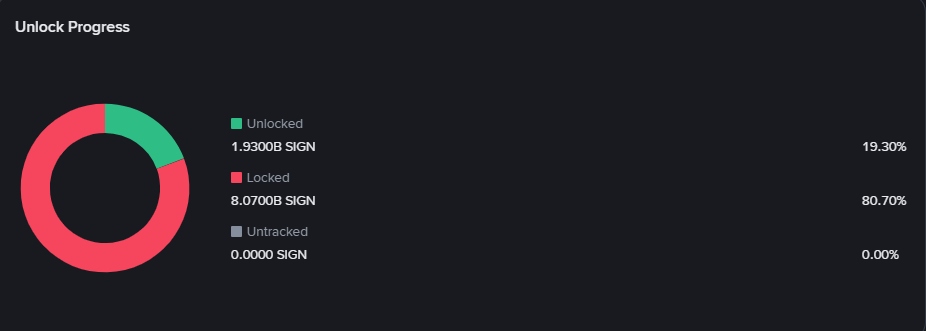
Sign be come standard attestatison layer and it layer five or more chain top in work by T V L make and evidence layer structural $0.30 to $500M omni-chain maintence complexty slow adoption put it work of $0.017 to $0.025 on unlocked pressure.
attestation count per chain on SignScan and schema versioning documentation are what i am waiting to see.
which chain do you thing drive the most Sign Protocol attestation volume in 2026? tell me comments.