
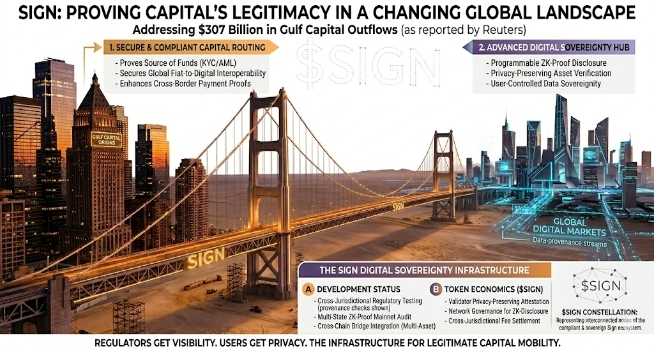
There's a number floating around that doesn't make headlines. Reuters reported Gulf deposit outflows could reach $307 billion .
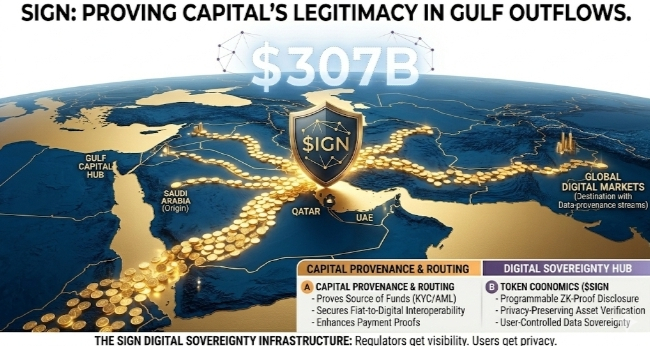
Capital moving is nothing new. What's different is where it's going—and how it proves itself when it arrives.
This is the quiet problem Sign is solving.
The Trust Deficit Nobody Talks About
Money moves fast. Compliance doesn't.
When capital flows into Dubai or Abu Dhabi from unsettled regions, the same question comes up: who are you? Traditional banks want proof. Regulators want oversight. New arrivals want privacy. Those three needs rarely align.
The UAE has issued crypto licenses, built free zones, and positioned itself as a digital hub. But behind the scenes, regulators face a real problem—too many entities moving too fast to track risk in real time . And newcomers face the opposite problem: proving they're legitimate without dumping their entire financial history on a public ledger.
This is the gap Sign is designed to fill.
What Sign Actually Does
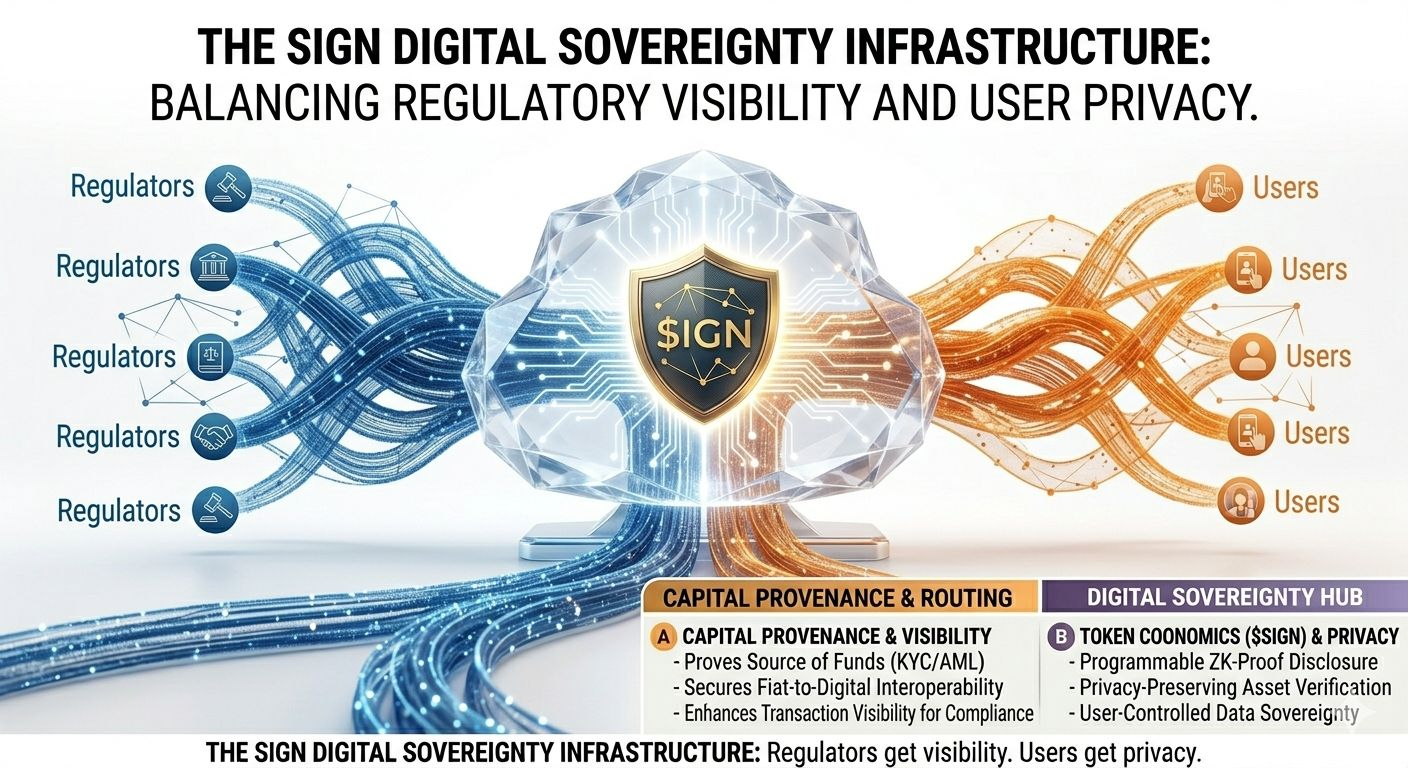
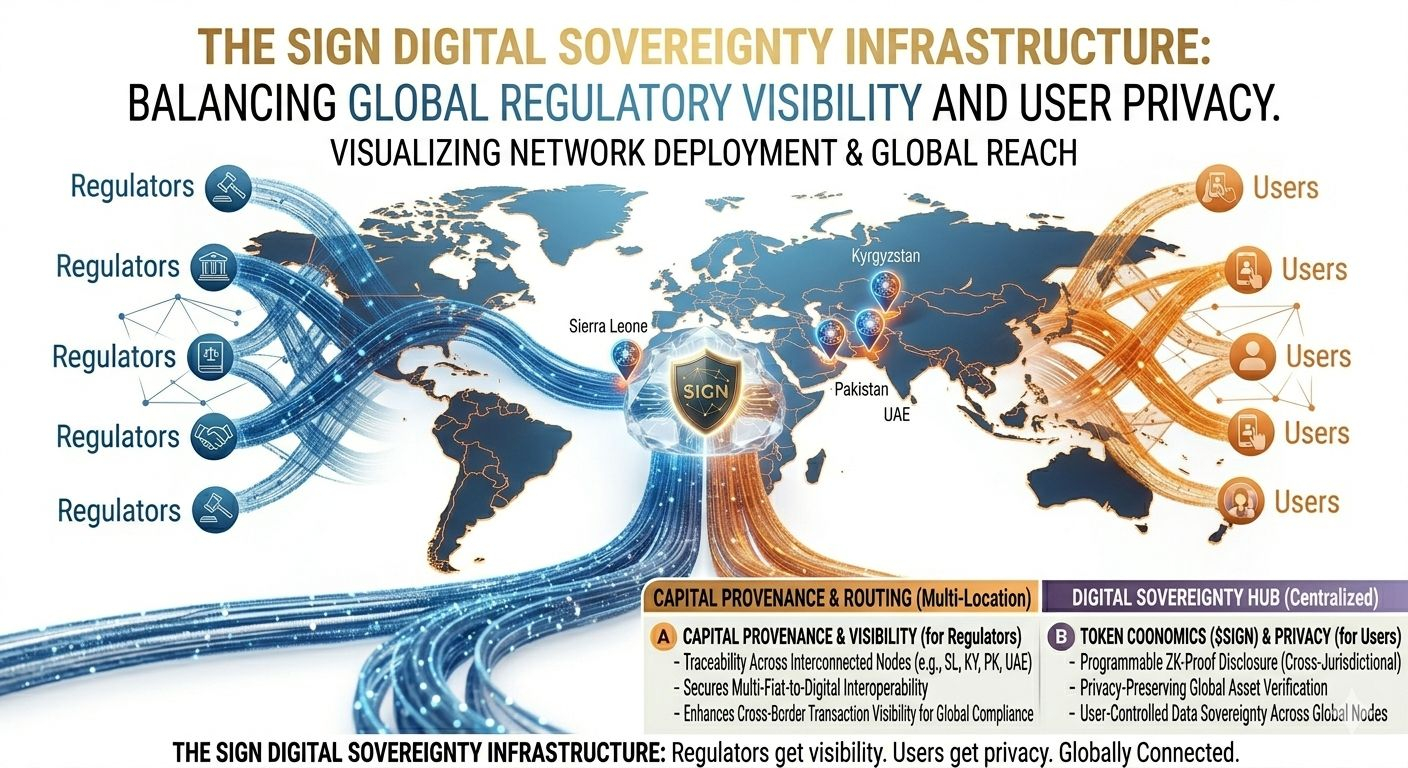
Sign isn't another identity protocol. It's what one analyst called a "trust router" . The platform handles verification in a way that satisfies both sides. Regulators get visibility. Users get privacy. And the Sign token gets consumed every time someone uses the network .
The numbers are already real. In 2024 alone, Sign processed over 6 million attestations, distributed more than $4 billion in digital assets, and covered over 40 million wallets . The TokenTable product alone generated $15 million in annual revenue . Two hundred projects use the stack. Over $4 billion in assets managed.
These aren't roadmap promises. They're existing metrics.
The Sovereign Infrastructure Angle
Sign founder Xin Yan was recently interviewed by Saudi TV. His message wasn't the usual crypto optimism. He said he's bearish on the near-term Middle East situation, that geopolitical crisis has just begun, and that significant capital is already fleeing .
In that context, Sign surged over 90% in a week and 131.5% over two weeks . Markets don't move like that on speculation alone.
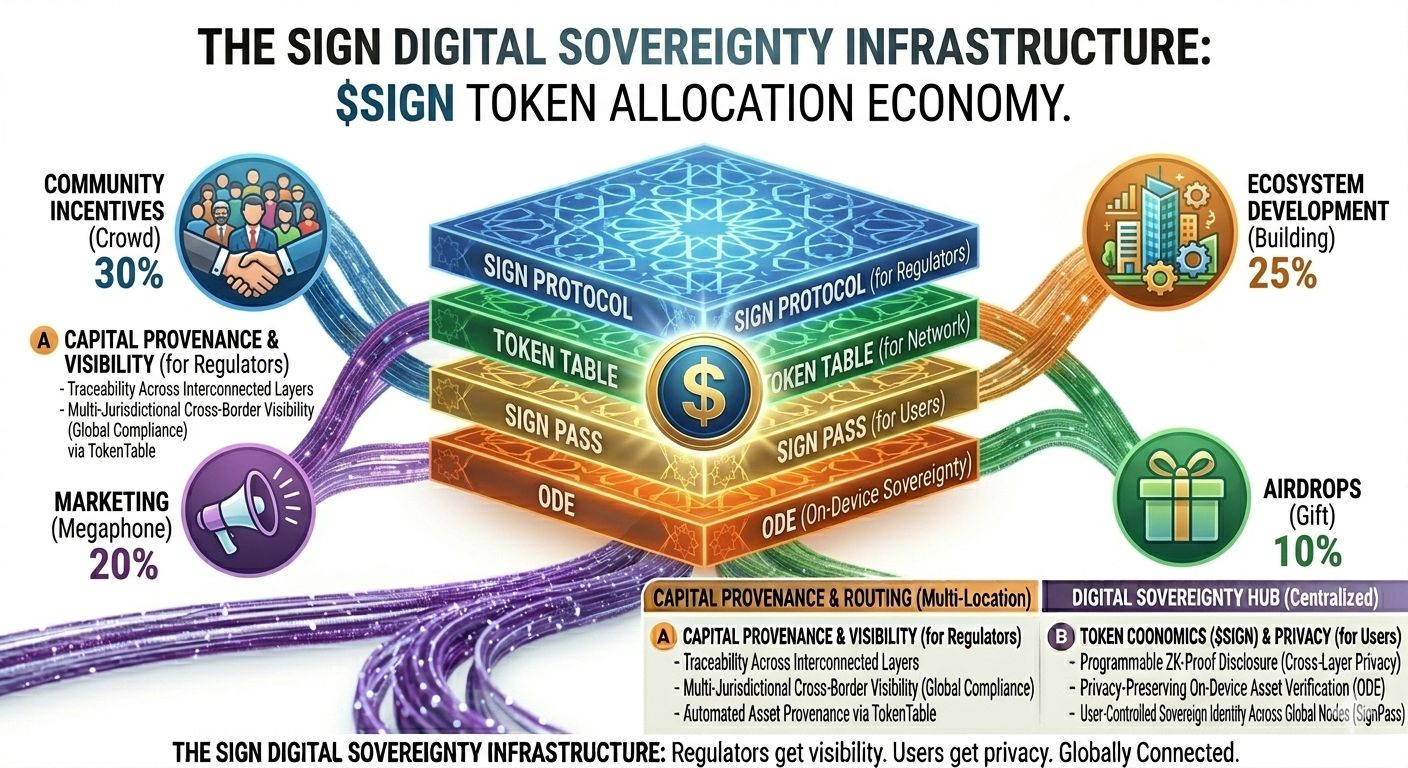
What Sign offers isn't escape from regulation. It's infrastructure that makes regulation work across borders. The stack includes:
· Sign Protocol – the verification layer
· TokenTable – compliant asset distribution
· SignPass – portable digital identity
· ODE – dispute resolution engine
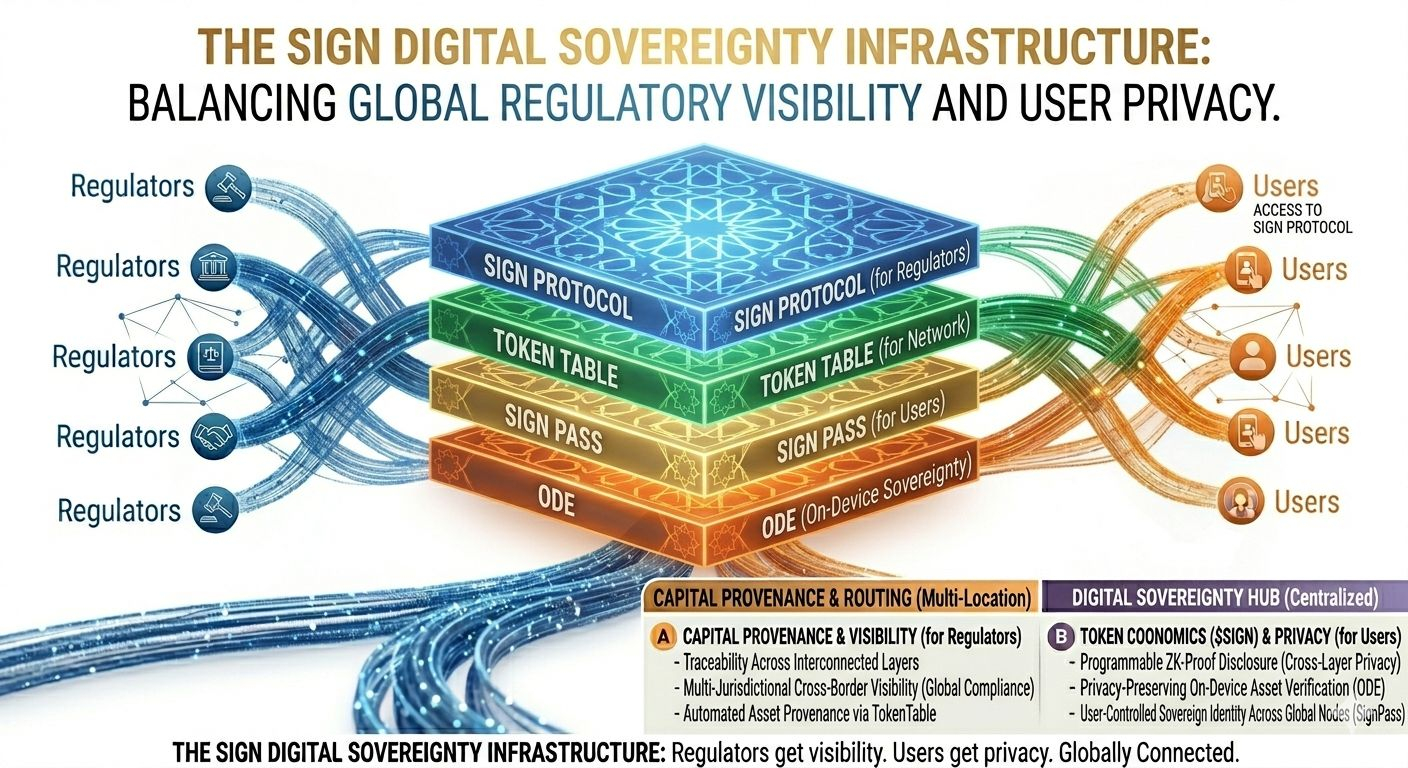
Together, they form what the company calls "sovereign infrastructure"—systems governments can adopt without surrendering control .
Real Deployments, Not Press Releases
In Sierra Leone, Sign is running a national ID system . In Kyrgyzstan, it partnered with the National Bank on CBDC infrastructure . In Pakistan, it's working with the Digital Communication Department . In the UAE, it's partnered with the Blockchain Centre Abu Dhabi .
Twenty countries are reportedly in the pipeline .Each deployment makes the next one easier. Each government using Sign becomes a reference point for the next.
The $SIGN Token Economy
The token model is straightforward. Total supply is fixed at 10 billion Sign with no inflation . Initial circulating supply is low at 12%. Team tokens lock for three years—no early exits .
Forty percent goes to community incentives, released slowly to avoid dumping. The rest splits between ecosystem development, marketing, and airdrops .
The utility is what matters. Every attestation, every verification, every identity issued consumes $SIGN . More users, more demand. More countries adopting, more consumption. The flywheel is simple: adoption drives value, value enables more adoption.
What I'm Watching
Three things over the next year:
1. The Abu Dhabi office – Sign is opening a physical presence in the region in 2026 . Remote partnerships are one thing. Boots on the ground is another.
2. Which use cases scale – Identity is the entry point. Tokenized assets and cross-border payments come next. The "trust router" thesis works if multiple use cases stack.
3. The geopolitical window – Xin Yan's Saudi TV interview was blunt. Capital flight is real. The question is whether Sign captures enough of the infrastructure layer before larger players move in.
Bottom Line
I don't know if Sign becomes the default infrastructure for the Gulf's digital transformation. That depends on execution, adoption, and a thousand variables no one can predict.
But the pattern is clear. Traditional finance systems are hitting walls. Regulators need visibility. Users need privacy. Capital needs proof of legitimacy that travels.
Sign is building the bridge. Whether the bridge holds under pressure is what I'm watching.