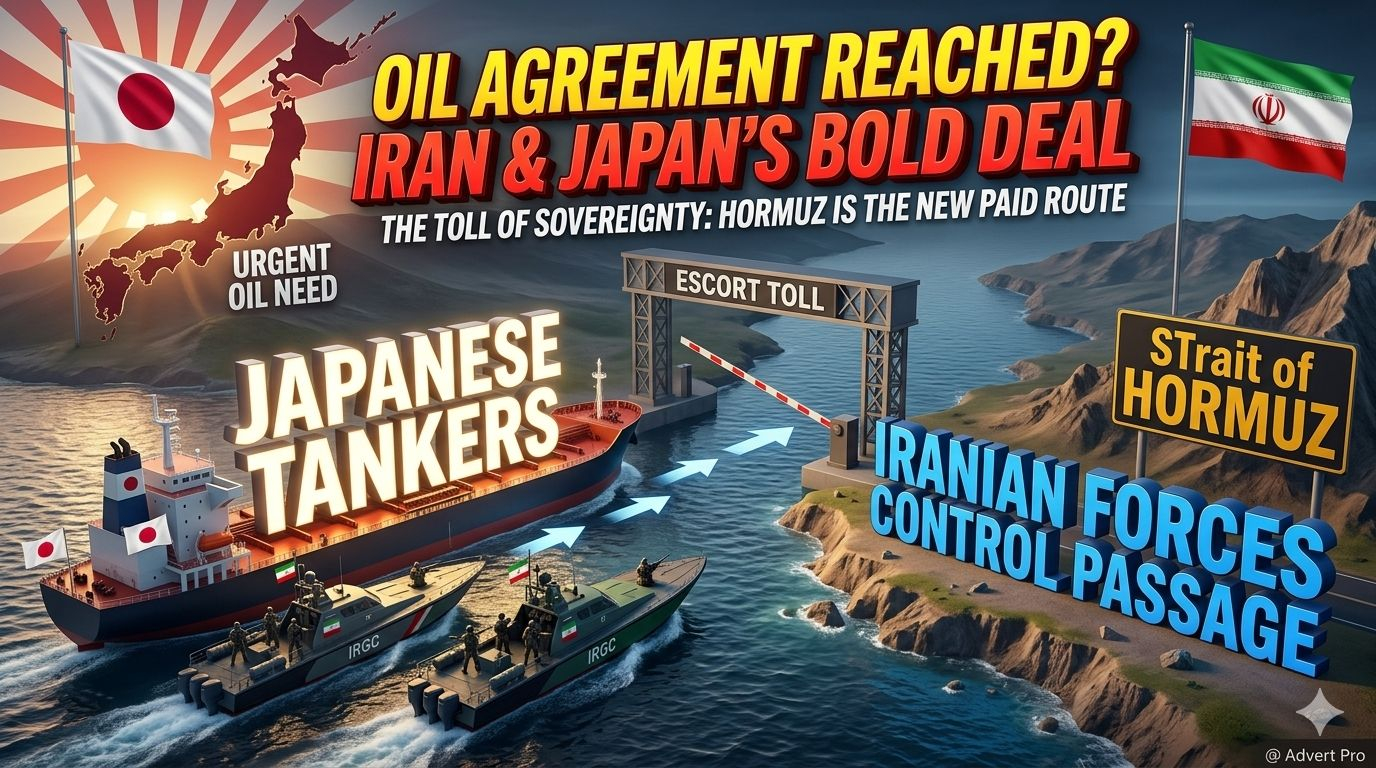
Dies ist eine geopolitische Entwicklung mit hohen Einsätzen. Sanae Takaichi, Japans Premierministerin, und Abbas Araghchi, Irans Außenminister.
Die Situation spiegelt einen grundlegenden Wandel in der maritimen Macht wider: Iran wechselt von einer Strategie des "Schließens" der Straße von Hormuz zu einer "Monetarisierung" durch ein selektives Überprüfungs- und Begleitsystem. Für Japan, das zu über 90 % auf den Nahen Osten für sein Öl angewiesen ist, ist dies ein existenzielles Dilemma.
Das geopolitische Spielbuch wird in Echtzeit neu geschrieben. Was wir erleben, ist nicht nur eine regionale Auseinandersetzung; es ist die Waffe der Geografie.
Indem Teheran ein "bewaffnetes Eskorte"- und Transitgebührenmodell vorschlägt, erklärt es effektiv die Straße von Hormuz zu einer privaten Mautstraße. Für Japan ist die Wahl qualvoll binär: die "Sicherheitsteuer" zahlen und riskieren, seinen US-Verbündeten zu entfremden, oder ablehnen und zusehen, wie seine nationalen Energiereserven—bereits von Premierminister Takaichi angezapft—schwindeln.
Der strategische Zusammenbruch
* Die "Selektive Blockade": Iran droht nicht mehr nur, den Hahn zuzudrehen. Indem sie "freundlichen" oder "genehmigten" Nationen wie Indien und möglicherweise Japan gegen eine Gebühr erlauben, durchzulassen, schaffen sie eine zweistufige globale Wirtschaft.
* Japans Verfassungs-Balanceakt: Premierminister Takaichi steht zwischen den Forderungen von Präsident Trump nach einer multinationalen Marineeskorte und der Realität, dass Japans Wirtschaft einen längeren Energiestillstand nicht überstehen kann.
* Der $800B Hebel: Wenn dieses Transitgebührenmodell zur "neuen Norm" wird, gewinnt Iran einen permanenten, milliardenschweren Einnahmenstrom, der traditionelle westliche Sanktionen vollständig umgeht.
Die Quintessenz: Wir treten in eine Ära ein, in der "Freiheit der Navigation" durch "Abonnement-basierte Sicherheit" ersetzt wird. Die Kosten für Öl betreffen nicht mehr nur das Fass; es geht um den Preis des Durchgangs.
#HormuzCrisis #EnergySecurity #JapanIranRelations #Geopolitics2026 #OilMarkets
JETZT HANDELN