

 An omnichain attestation layer that lets structured claims move freely across Ethereum, Solana, TON, Bitcoin layers, and beyond—making trust portable instead of locked inside one chain's silo. In crypto's fragmented landscape, where every network still feels like its own isolated realm with unique standards and quirks, the idea of verifiable, cross-ecosystem proofs isn't just nice-to-have; it's genuinely forward-thinking.
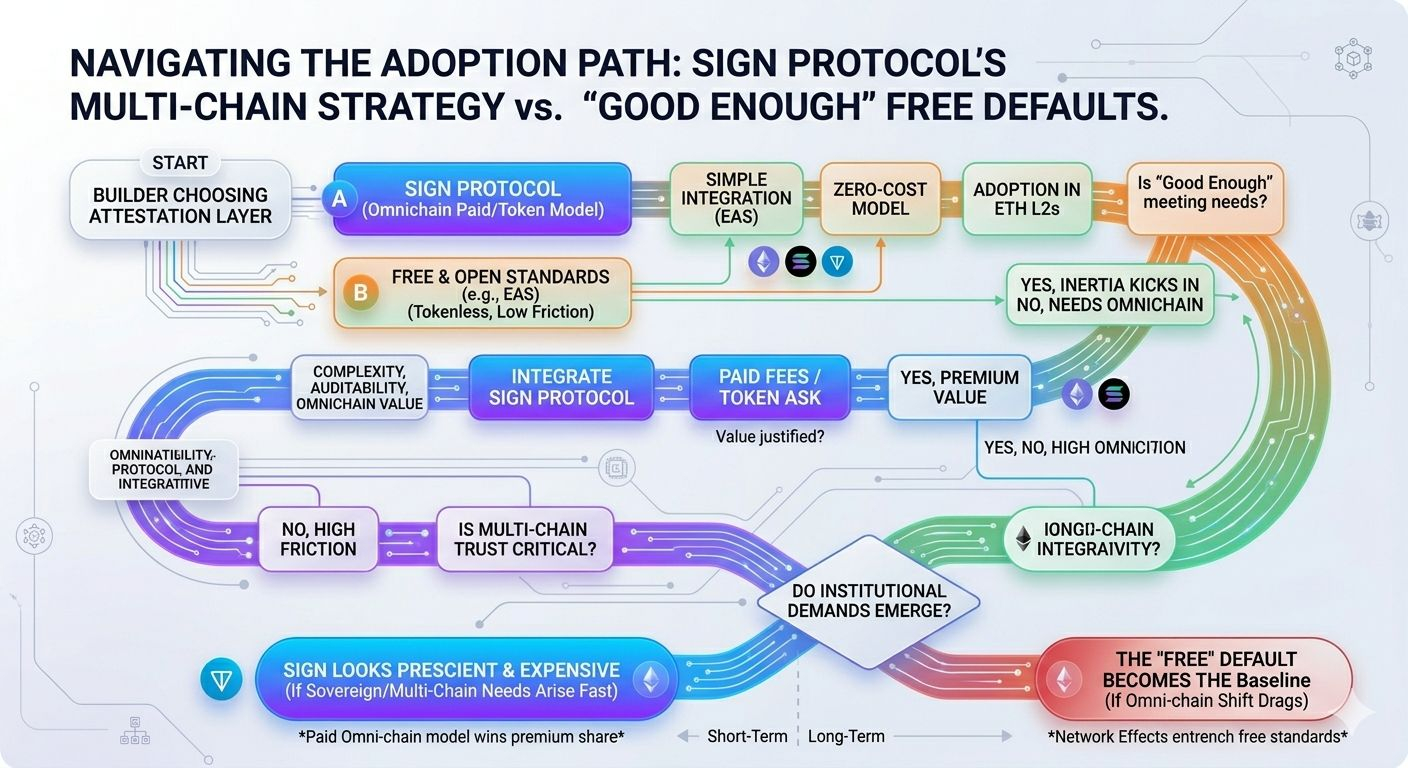
But the deeper I sit with it, the more the real hurdle feels less about the code and more about human behavior and economics. Usefulness doesn't guarantee uptake, and uptake doesn't guarantee anyone pays. Sign isn't stepping into an empty field—it's entering one where Ethereum Attestation Service (EAS) already exists as a solid, open, tokenless, essentially free alternative that's gaining real traction, especially in Ethereum-centric and L2 worlds.
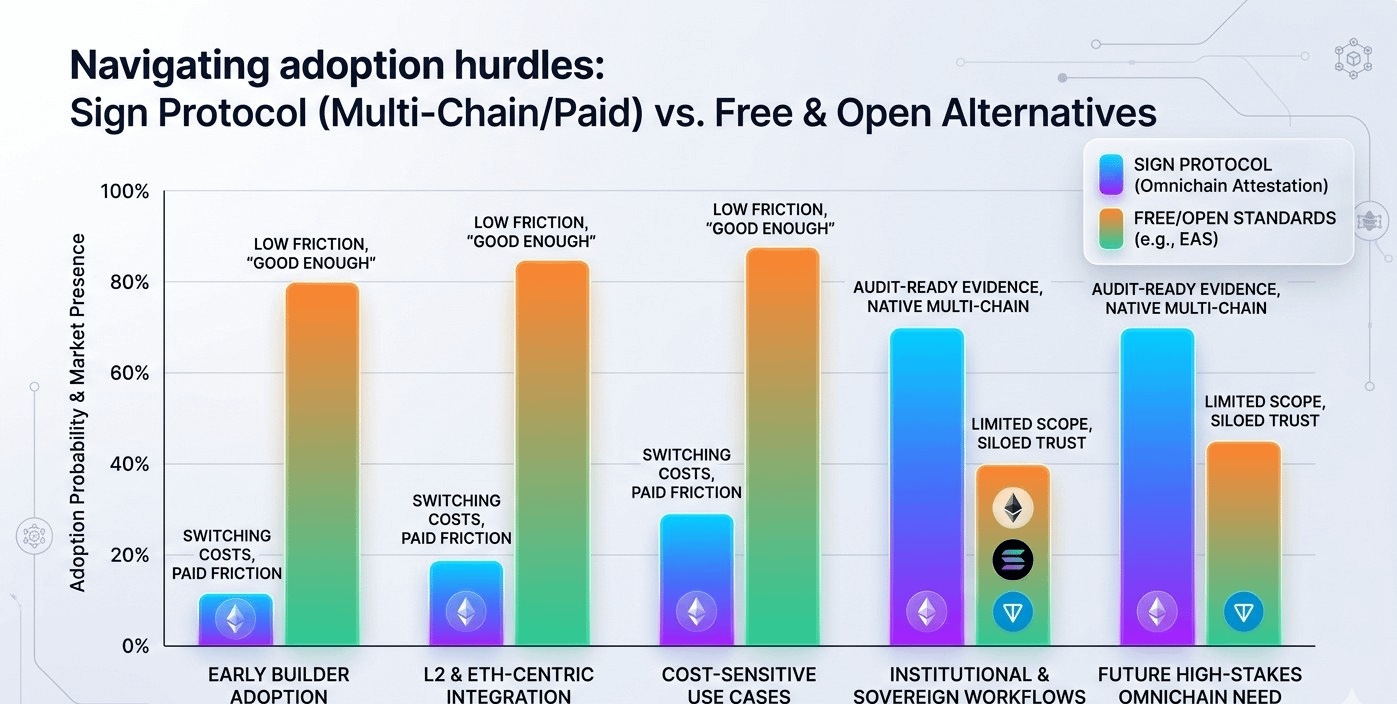
In crypto especially, "free" carries almost ideological weight. Builders will endure messy docs, gas quirks, limited scope, anything—as long as there's no upfront paywall or token commitment when they're just trying to ship. EAS hits that sweet spot: simple enough to integrate quickly, credible enough for serious projects (Coinbase Verifications being a high-profile example), and zero-cost at the entry level. Once teams start wiring their attestation logic around it, inertia kicks in hard. Switching costs aren't just technical; they're emotional and political. Nobody wants the extra meetings to justify migrating to something "better later" when the current thing is already "good enough now."
So Sign's challenge boils down to answering one brutal question for developers and institutions: why pay—whether through tokens, fees, or whatever gating mechanism—when a free path already delivers most of what you need today?
It's not that Sign's vision is flawed. The omnichain portability, flexible storage/privacy options, potential for more formal verification layers—these could shine in places EAS doesn't reach as naturally: sovereign systems, government-level coordination, institutional workflows spanning multiple chains where "Ethereum-only" feels too narrow, or where audit-ready, cross-border evidence matters more than quick experimentation.
But that's a longer timeline bet. You're counting on tomorrow's highest-stakes users valuing true multi-chain coordination enough to accept a paid/premium model, while today's builders mostly just want low-friction defaults that don't trigger compliance flags or extra budget lines.
And psychology plays a huge role here. Free feels neutral, open, low-risk. Adding any economic layer—even a thoughtful one—suddenly demands explanation, buy-in, sometimes belief in a token or governance story. In a space that's been burned before, that extra ask can feel like friction developers instinctively avoid.
I don't doubt the ambition or the architecture. What gives me pause is the sequence. Can Sign pull enough mindshare and usage early enough to compound network effects before EAS (or something similar) becomes too entrenched as the baseline standard? Because in infrastructure, the tool that gets there first with "good enough + free" often shapes the future more than the one with the grander thesis arrives a bit later.
Sometimes the simple, chain-focused, open option wins the early wave, and then a second wave—with more chains, heavier institutional demands, real sovereign use cases—creates room for something broader. If that shift happens fast, Sign could look prescient instead of expensive. If it drags, the free default might quietly become the only default.
That's what makes this setup so fascinating. It's less a pure tech contest and more a question of when (or if) the market decides portable, omnichain trust is worth paying for—before "already works and costs nothing" wins by default.
"Good enough" might be the fiercest competitor any ambitious protocol will ever face. Sign sees a bigger picture, and I respect that. I just think the path to proving the value arrives early enough to matter is steeper than the pitch sometimes lets on.
 @SignOfficial #SignDigitalSovereignInfra
