
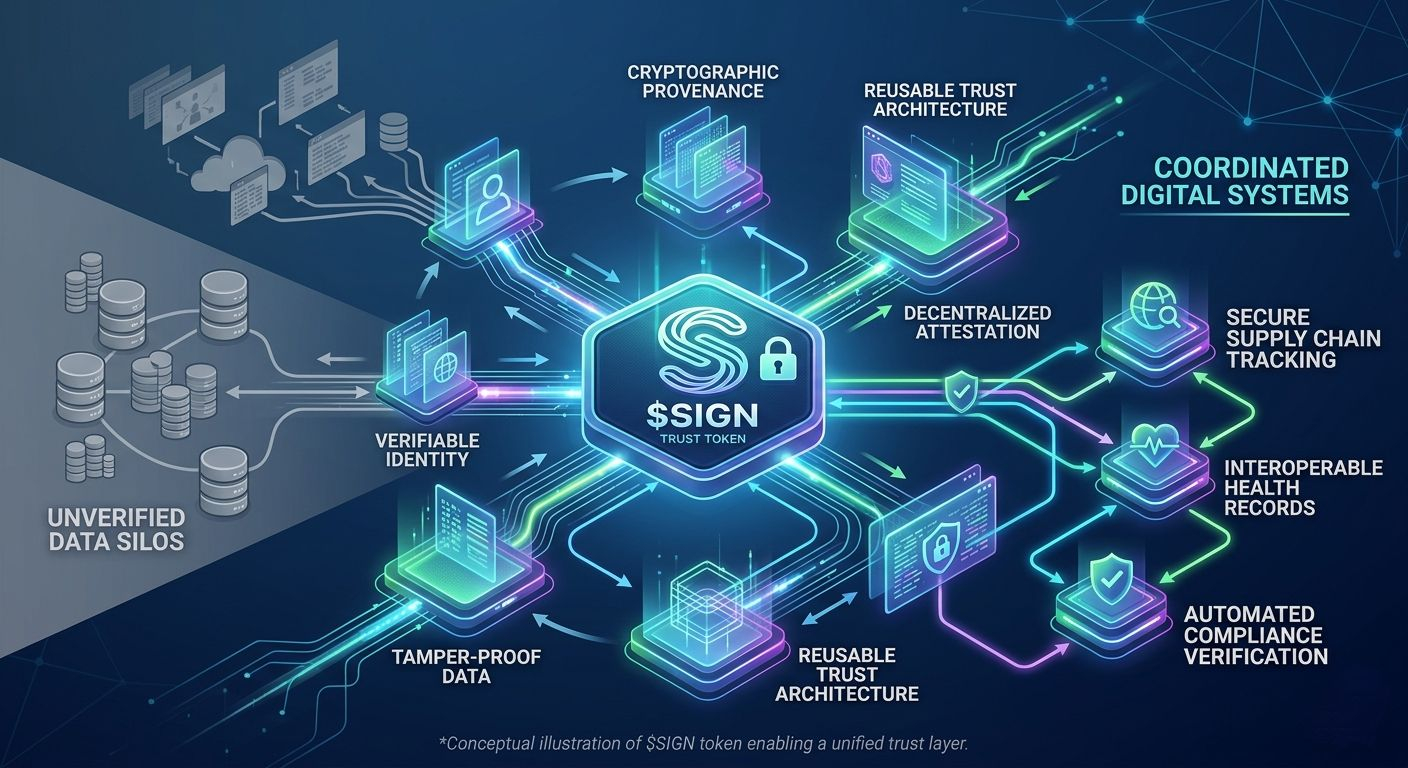
In most digital environments today, data exists in silos, forcing systems to repeatedly verify the same information. This not only creates inefficiencies but also limits the ability to build meaningful connections between different data points. Sign introduces a new paradigm where attestations become reusable trust layers, enabling data to evolve beyond isolated records into interconnected systems.
At the core of this approach is the concept of composability. Instead of treating each piece of information as independent, Sign allows attestations to be linked, referenced, and expanded upon. A single verified claim can serve as the foundation for multiple higher-level interactions, reducing duplication and enhancing reliability. This transforms static data into a dynamic network of trust.
Through structured schemas, each attestation maintains a consistent format, ensuring it can be easily interpreted and reused across different applications. Developers can build systems where identity, reputation, and transactional data are interconnected, allowing for richer and more intelligent interactions. This consistency also ensures that data retains its meaning and integrity, even when used in new contexts.
The protocol’s design ensures that all attestations remain verifiable, regardless of how they are combined. Cryptographic validation guarantees authenticity, allowing applications to confidently build on existing data without requiring additional verification steps. This significantly improves efficiency while maintaining strong security guarantees.
Another important aspect is interoperability. By enabling attestations to function across different environments, Sign ensures that data is not confined to a single platform or ecosystem. This allows diverse systems to collaborate using shared trust layers, unlocking new possibilities for cross-platform coordination and integration.
This model is particularly powerful for real-world use cases where trust must accumulate over time. Whether it is identity systems, reputation tracking, or financial interactions, the ability to reuse and build upon verified data creates more efficient and scalable solutions. It enables systems to move from repetitive validation to continuous trust evolution.
By turning data into reusable and composable trust layers, Sign is redefining how digital ecosystems operate. It enables a shift from isolated verification processes to interconnected systems where trust compounds over time, supporting more advanced coordination and real-world adoption at scale.
