
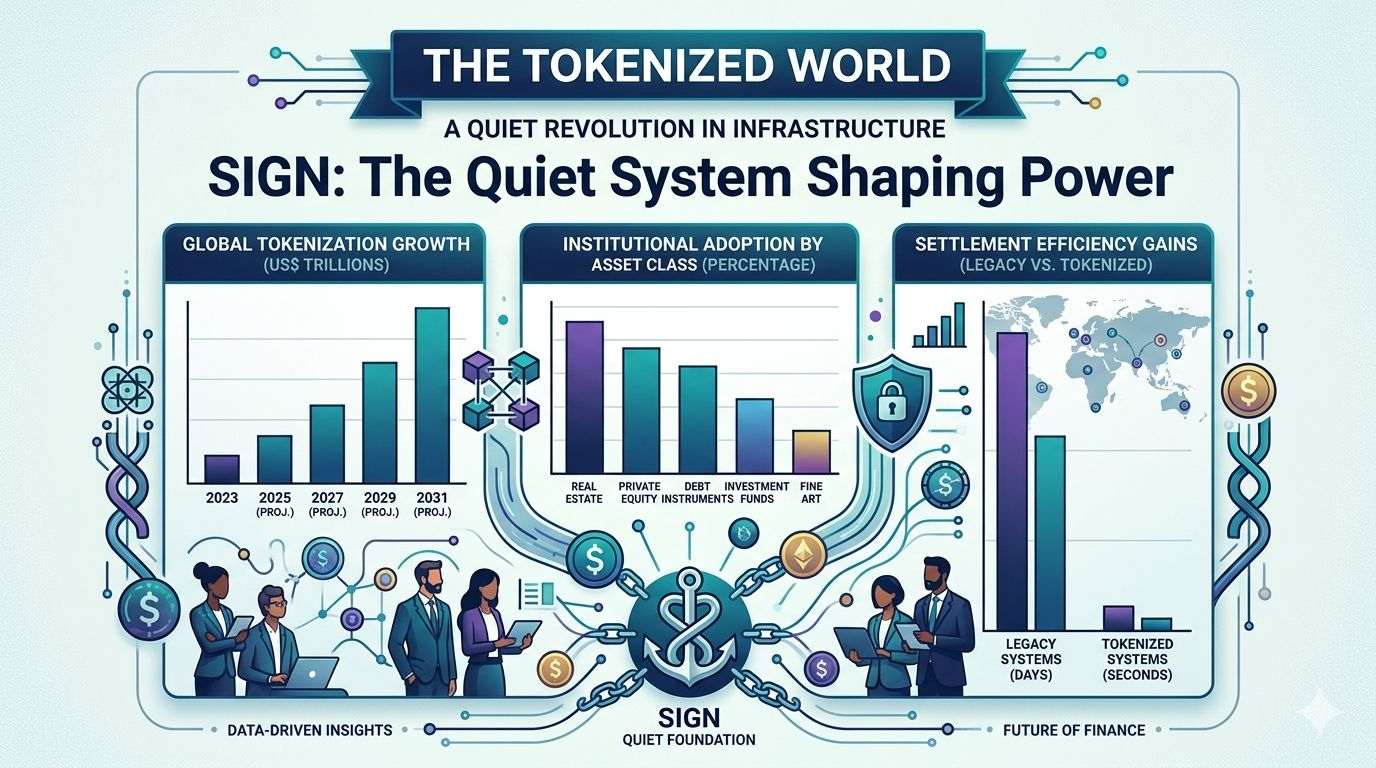

I’ve spent enough time in this space to recognize when something is being ignored not because it lacks importance, but because it lacks immediate excitement. Credential verification and token distribution sit in that category for me. They don’t trigger urgency. They don’t create hype cycles. But the more I look at them, the more I feel like they quietly decide everything that comes later.
Most people I’ve observed are still focused on the visible layer — price action, narratives, speed claims. I get it. That’s what moves fast and feels real in the moment. But I’ve started to feel a kind of fatigue with that surface-level loop. Because underneath it, there’s a deeper question that rarely gets asked seriously:
How does a system decide who deserves access, value, or influence — without trusting anyone?
That’s where this whole idea begins for me.
I Don’t See Tokens as Distribution — I See Them as Assumptions
When I look at most token distributions today, I don’t see fairness mechanisms. I see assumptions.
Assumptions about who contributed.
Assumptions about who is “real.”
Assumptions about who will stay.
Airdrops, incentives, liquidity rewards — they all try to simulate alignment. But from what I’ve seen, they’re often operating with incomplete information. The system doesn’t really know the participants. It just reacts to patterns — wallet activity, transaction counts, timing.
And people adapt quickly. I’ve watched it happen over and over. The moment a system defines a rule, someone finds a way to mimic it without embodying its intent.
So I don’t think the core problem is distribution itself. I think the problem is that distribution lacks context.
That’s where credential verification starts to matter.
I Had to Rethink What a “Credential” Even Means
At first, I used to think of credentials in the traditional sense — degrees, IDs, certifications. Institutional artifacts.
But the longer I stayed in decentralized environments, the more that definition felt outdated.
Now I see a credential as something simpler, almost stripped down:
A verifiable claim about behavior or state.
Not who I am in a personal sense — but what I’ve done, how I’ve interacted, what patterns I’ve left behind.
And that shift changed how I think about everything.
Because once credentials become programmable and verifiable without relying on a central authority, they stop being static documents. They become dynamic signals.
Signals that can feed directly into how value is distributed.
I’ve Started to Care Less About Identity, More About Proof
Identity feels heavy. It comes with exposure, risk, and a kind of permanence that doesn’t always belong in open systems.
Proof feels lighter.
I don’t need to reveal everything about myself to demonstrate something specific:
I can prove I participated
I can prove I’m unique
I can prove I’ve built or contributed
I can prove consistency over time
That separation matters to me.
Because it allows systems to operate on relevance instead of exposure.
And once I think about token distribution in that context, it starts to feel less like a blind allocation process and more like a conditional system.
Not “everyone gets something,” but “specific proofs unlock specific outcomes.”
That’s a different architecture entirely.
But I Don’t Trust It Either — Not Fully
Here’s where I get conflicted.
Every time a system becomes more precise, it also becomes more gameable in a different way.
I’ve seen people farm airdrops with hundreds of wallets.
I’ve seen engagement loops manufactured just to meet criteria.
I’ve seen “reputation” built artificially because the system defined it poorly.
So when I think about global credential infrastructure, I don’t imagine a clean solution. I imagine a more complex battlefield.
Because if credentials start carrying real value, people will optimize for them. Not necessarily in bad faith — just in predictable human ways.
And then the system has to respond.
So I don’t ask, “Can this be perfect?”
I ask, “Can this survive being attacked?”
That’s a very different standard.
I Keep Thinking About History — And It Makes Me Cautious
We’ve tried to standardize trust before.
Credit systems tried to reduce human behavior into scores.
Institutions tried to formalize reputation into credentials.
Financial systems tried to abstract risk into models.
And each time, something subtle happened.
The system started shaping behavior instead of just measuring it.
People didn’t just have credit scores — they started living in ways that optimized for them.
That’s what concerns me here.
If access to tokens, governance, or opportunities depends on certain credentials, then I know what will happen. People — including me — will start adjusting behavior to fit those signals.
And over time, the system will quietly define what “valuable participation” looks like.
Not explicitly. But effectively.
I Think the Real Power Is Hidden in the Criteria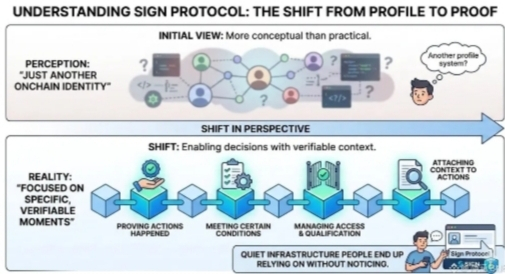
Most discussions I see focus on the mechanics — how credentials are verified, how tokens are distributed.
But I keep coming back to something else:
Who defines the criteria?
What counts as meaningful contribution?
What behaviors are rewarded?
What signals are ignored?
These decisions don’t feel technical to me. They feel philosophical.
And once they’re encoded into infrastructure, they become hard to question.
That’s where I think the real power sits — not in the distribution itself, but in the invisible rules behind it.
I Can See Where This Is Going — And It’s Not Simple
If I project forward, I don’t think we’re just building better airdrops or cleaner onboarding systems.
I think we’re moving toward something deeper — what I’d call conditional participation.
Where my access to different parts of the ecosystem depends on what I can prove, not who I claim to be.
My credentials become a kind of living layer:
constantly evolving
partially private
context-dependent
And that unlocks new possibilities. Systems become more adaptive. Incentives become more targeted. Coordination becomes more efficient.
But at the same time, I can’t ignore the risks.
What happens if I’m misclassified?
What if early behavior defines me too strongly later?
What if certain contributions are undervalued because they’re hard to measure?
These aren’t edge cases to me. They feel inevitable.
I Don’t See This as a Solution — I See It as a Shift
I don’t think global credential verification and token distribution infrastructure will “fix” the system.
That framing feels too clean.
What I see instead is a shift in how systems make decisions.
From:
broad assumptions → granular proofs
open access → conditional access
static identity → dynamic signals
That shift will reduce some problems. But it will also introduce new ones — more subtle, harder to detect.
And maybe that’s what makes it worth paying attention to.
I Keep Coming Back to One Thought
The part that stays with me isn’t technical.
It’s this:
Even in decentralized systems, something always decides.
If not people, then rules.
If not institutions, then incentives.
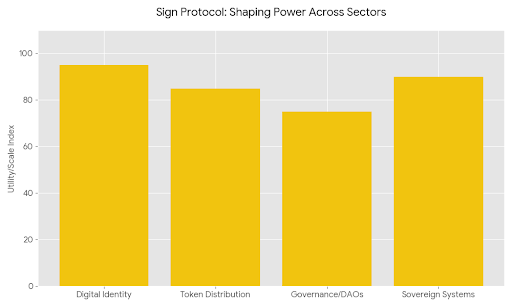
And this infrastructure — credential verification tied to token distribution — feels like one of those quiet layers where decisions get made without appearing obvious.
@SignOfficial $SIGN #SignDigitalSovereignInfra
