

I didn’t arrive at zero-knowledge blockchains with excitement. If anything, I approached them with a kind of fatigue — the same fatigue that builds after watching cycle after cycle of loud promises collapse under their own weight. In this space, innovation is often announced before it is understood, and narratives travel faster than truth. So when I first encountered the idea of a blockchain that could offer real utility without exposing underlying data, I didn’t immediately believe it. I paused. And over time, that pause turned into something more interesting than excitement — it became respect.
Because beneath all the abstraction, zero-knowledge technology is confronting something most systems conveniently ignore: the tension between participation and exposure.
Traditional blockchains are built on radical transparency. Every action is visible, every transaction traceable. At first glance, this feels like progress — a rejection of opaque financial systems and hidden manipulation. But the longer I observed, the more I noticed a contradiction. Humans don’t behave naturally under constant observation. When everything is public, actions become performative. Decisions are shaped not just by intent, but by how they will be perceived. Transparency, in excess, distorts behavior.
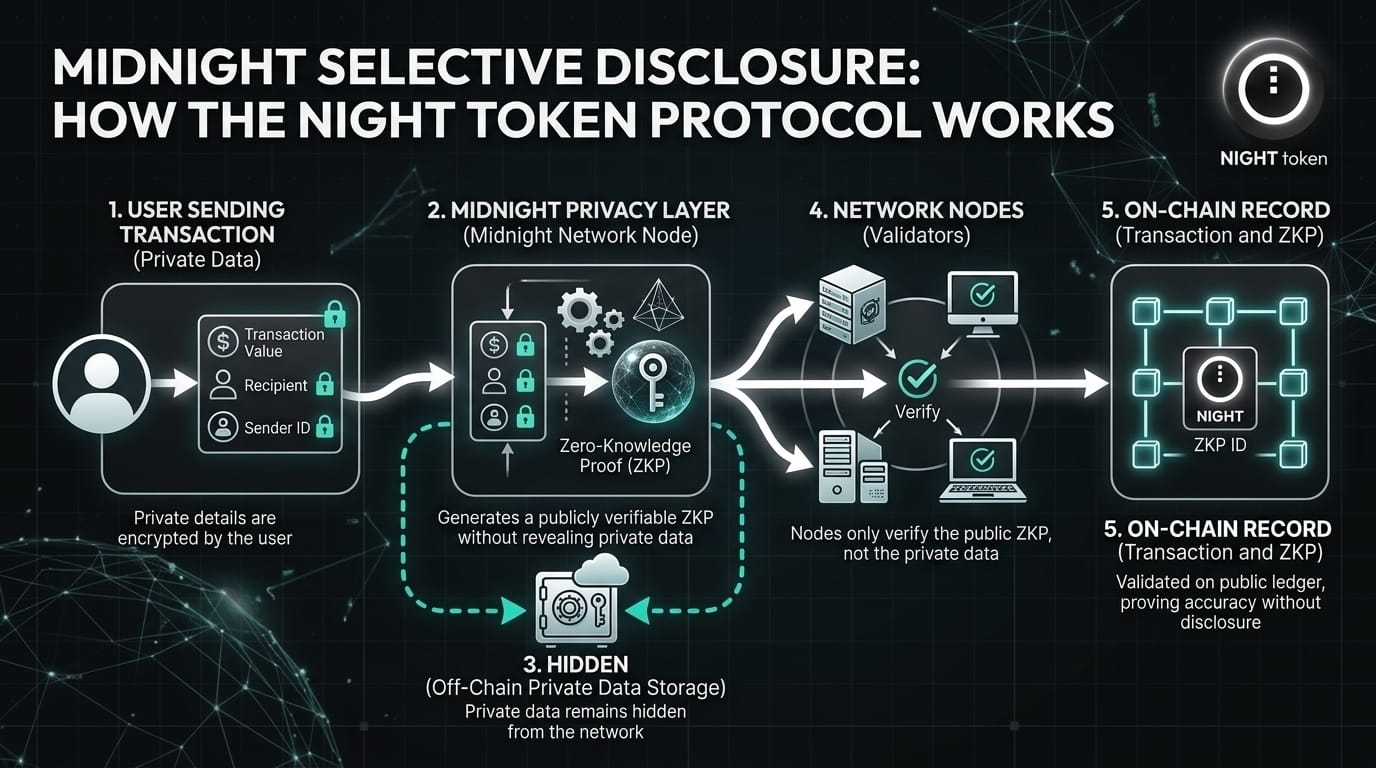
This is where zero-knowledge systems feel different. They don’t reject transparency outright — they redefine it. Instead of asking users to reveal everything, they allow users to prove something specific without exposing everything else. That shift sounds technical, but I’ve come to see it as deeply philosophical. It acknowledges that truth and visibility are not the same thing.
I think about it in simple terms: in the real world, I don’t hand over my entire identity just to prove I’m eligible for something. I show only what’s necessary. Age, qualification, ownership — these are selective disclosures. Zero-knowledge proofs bring that same principle into digital systems. They allow me to say, “I meet the requirement,” without explaining why in full detail. And for the first time, that statement can be trusted without needing blind faith.
But the deeper I go, the more I realize this isn’t just about privacy. It’s about control — not in the abstract sense, but in a very real, operational way. When data remains in my possession, when exposure becomes a choice rather than a default, the power dynamics shift. Platforms can no longer extract value as easily. Systems can no longer assume ownership over user information. And suddenly, participation becomes less about surrender and more about intention.
Still, I don’t romanticize it. Zero-knowledge systems are not some perfect answer waiting to fix everything. In fact, they introduce their own complexities. The computational cost alone is enough to remind me that elegance in theory doesn’t always translate to efficiency in practice. Generating proofs takes time, resources, and careful design. Developers have to think differently — not just about what a system does, but about what it reveals in the process.
There’s also a subtle risk that I’ve learned to pay attention to: the illusion of absolute privacy. Just because the core data is hidden doesn’t mean everything is invisible. Patterns still exist. Timing still leaks information. Behavior can still be analyzed. In other words, zero-knowledge reduces exposure, but it doesn’t eliminate it. And anyone who believes otherwise is falling into the same trap this industry has seen too many times — mistaking a powerful tool for a complete solution.
What interests me more is how this technology reshapes incentives.
When visibility is no longer guaranteed, the entire structure of interaction begins to change. In traditional blockchain environments, there’s an unspoken pressure to signal — to show activity, to demonstrate holdings, to participate loudly. It’s a system that rewards attention as much as it rewards utility. But in a zero-knowledge environment, that pressure weakens. I can act without broadcasting. I can participate without performing. And that changes how decisions are made.
It introduces a kind of quiet discipline.
I’ve noticed that systems built around zero-knowledge tend to favor intention over impulse. When actions aren’t immediately visible, there’s less incentive to chase short-term validation. This doesn’t mean speculation disappears — it never does — but it does mean the environment becomes less reactive. And over time, that subtle shift could matter more than any headline metric.
There’s also a broader implication that I don’t think gets enough attention. If data becomes something that individuals can truly control, then the entire economic model of the internet starts to look unstable. Right now, value is often extracted through visibility — through tracking, profiling, and analyzing behavior at scale. But if that visibility is reduced, if users can prove what’s necessary without exposing everything else, then the flow of value changes direction.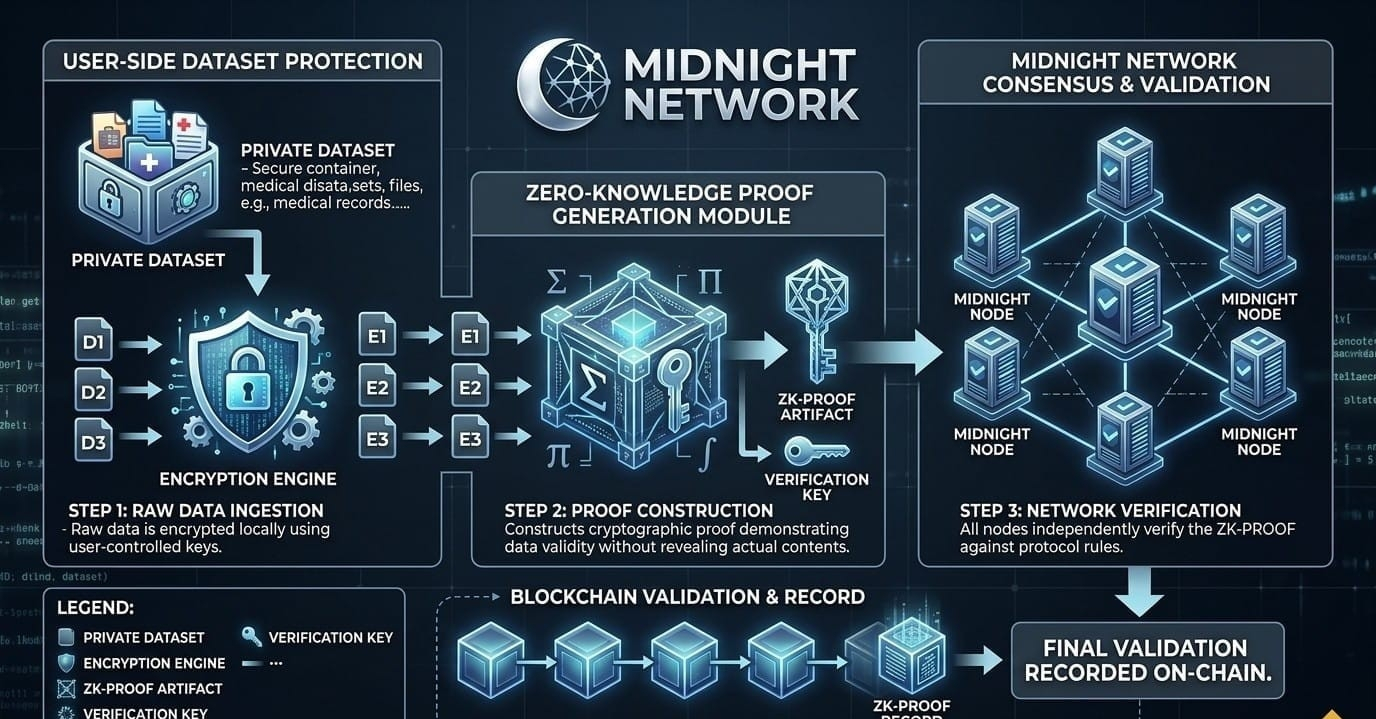
It becomes harder to exploit, and easier to negotiate.
And that’s where things get interesting, because technology doesn’t exist in isolation. It shapes and is shaped by power structures. A system that limits data exposure isn’t just a technical improvement — it’s a structural challenge to existing models. Institutions may adopt it for efficiency, but they will also resist it where it threatens control. Users may appreciate the privacy, but they will also struggle with the responsibility that comes with it. Because control isn’t just empowering — it’s demanding.
I find myself sitting in that tension.
On one hand, I see the potential clearly. A world where I can interact digitally without constantly trading away pieces of myself. A system where trust is built through verification, not exposure. A network where ownership is not just a concept, but an enforced reality.
On the other hand, I recognize how early this still is. The infrastructure is evolving. The understanding is uneven. And the narratives — as always — are ahead of the substance. I’ve learned not to confuse direction with completion. Just because something points toward a better system doesn’t mean it has arrived there.
And maybe that’s the most honest way to look at zero-knowledge blockchains.
Not as a finished solution, but as a shift in perspective.
They force me to question assumptions I didn’t even realize I had — that transparency is always good, that visibility equals trust, that exposure is the price of participation. They remind me that systems can be designed differently, that incentives can be restructured, that behavior can evolve when the environment changes.
I don’t know exactly how this will play out. I’ve seen too many promising ideas fade when they met reality. But I also know that the most important changes rarely arrive with noise. They move slowly, quietly, almost unnoticed — until suddenly, the old way of doing things feels outdated.
@MidnightNetwork #night $NIGHT
