
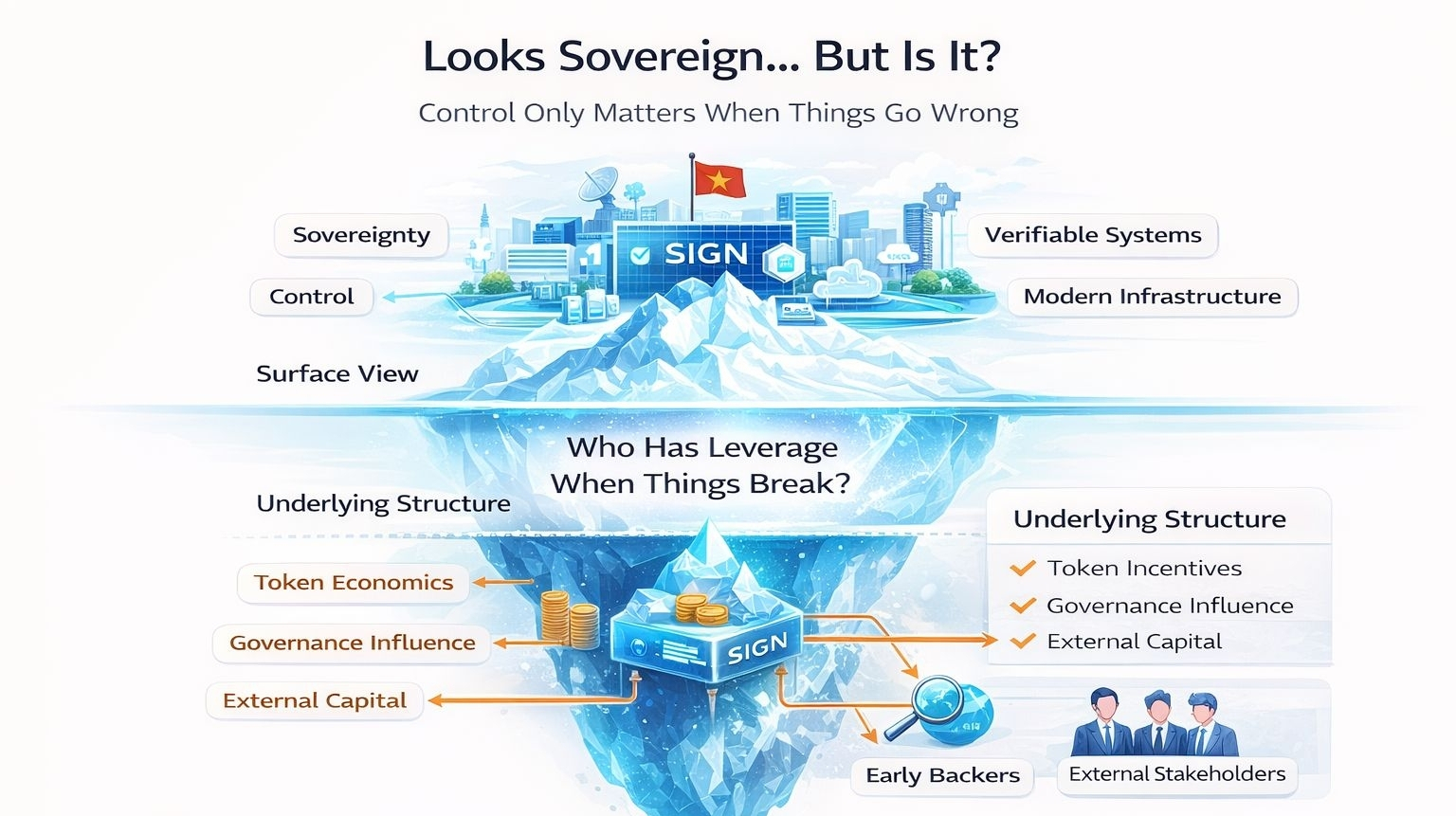
I still remember the first time I started thinking seriously about digital identity in crypto, it felt like one of those ideas that should have already taken over the world, because on the surface it just made sense, if I can hold my own identity instead of giving it away to every platform I use, then everything should become easier, safer, and more fair, and for a while I genuinely believed that this idea alone would be enough to drive adoption, like people would naturally move toward it once they understood it, but over time I started noticing something different, not in the idea itself but in how it actually behaved when people tried to use it, because things that feel simple in theory often become complicated the moment they touch real life.
What I began to see again and again was that many identity systems either quietly depended on some form of central control or they became too technical for normal people to engage with comfortably, and in both cases something important was missing, because true ownership is not just about having control, it is about being able to use that control without friction, without confusion, and without constantly thinking about it, and that is where most projects start to feel heavy instead of helpful, and when something feels heavy, people slowly stop using it no matter how powerful the idea behind it is.
When I look at Sign, what stands out to me is not that it is talking about identity, but that it is trying to make identity behave more like something we naturally understand, something flexible, something we carry with us instead of something we repeatedly submit, because in real life we do not reveal everything about ourselves all the time, we share just enough depending on the situation, and that is exactly the kind of experience this system is trying to recreate in a digital way, where identity becomes a set of proofs that you can show when needed instead of a fixed profile that gets copied everywhere.
There is something very human about that approach, because it respects the idea that privacy and trust are not opposites, they can exist together if the system is designed carefully, and instead of forcing you to trust a single place with all your data, it allows different pieces of information to exist separately as verifiable claims, so you can prove something specific without exposing everything else, and that small change makes a big emotional difference, because it starts to feel like you are in control without being overwhelmed by that responsibility.
At the same time, what makes this feel more real is that it is not only about identity in isolation, it connects identity with how things actually move in the world, like access, rewards, agreements, and decisions, because in the end identity is not just about who you are, it is about what you can do and what systems allow you to do, and when those processes become clearer and more transparent, trust begins to feel less like a guess and more like something you can quietly rely on.
But even with all of this, I think the most important part is something much simpler, and maybe even a little uncomfortable to admit, because no system becomes meaningful just because it is well designed, it only becomes meaningful when people keep using it, not once or twice, but again and again, until it becomes part of their routine, and that is where most ideas struggle, not because they are wrong, but because they never reach that point where usage becomes natural.
I think about it like this, the strongest systems in our lives are the ones we rarely notice, we do not think about them, we do not question them, we just use them, and they quietly support everything we do, and maybe that is what digital sovereignty actually needs to become, not a concept that people talk about or debate, but something that simply works in the background, something that removes friction instead of adding new layers of thinking.
If Sign manages to reach that point, it will not feel like a sudden success story, it will feel calm, almost invisible, like something that was always there helping things run smoothly, and maybe that is the most honest way to measure whether something truly works, not by how loud it is in the beginning, but by how quietly it stays useful over time, because in the end people do not hold on to ideas, they hold on to experiences that make their lives easier, and if a system can become part of that experience without getting in the way, then it stops being just technology and starts becoming something people trust without even realizing it.