
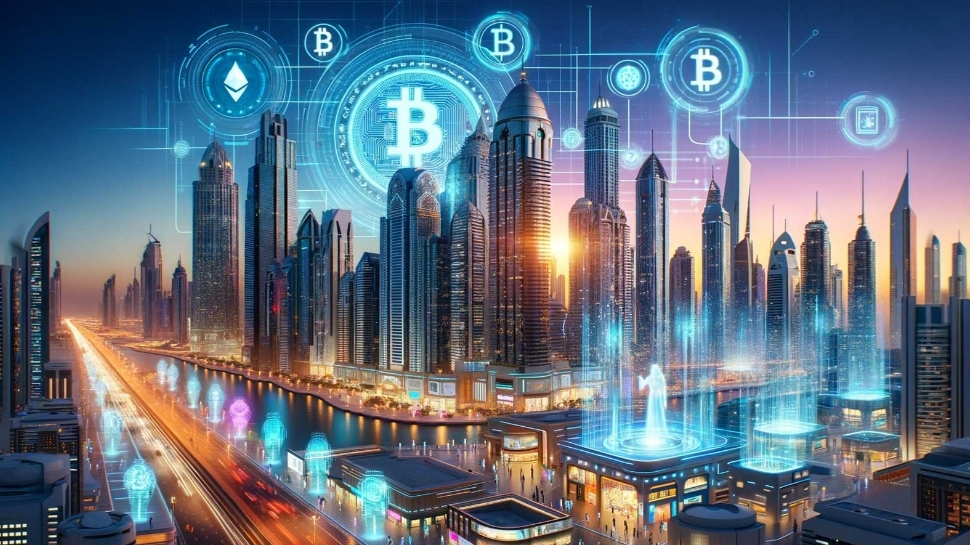
Vor kurzem bin ich auf einen viralen Trend auf Douyin gestoßen, der mich sprachlos gemacht hat: Ein saudi-arabischer Prinz, der sich als Cyberpunk-Boss verkleidet hat, ruft auf der Baustelle von Neom in die Kamera: „Öl? Überholt! Ich erkenne jetzt nur noch die souveräne Blockchain!“, und kippt dann direkt einen Eimer virtuellen Öls in ein leuchtendes Blockchain-Mining-Pool. Der Voiceover sagt: „Vom Wüstensand zum Metaversum, ein Schritt zum Ziel“, und die Hintergrundmusik wechselt direkt zu elektronischem Bass. Der Kommentarbereich ist voll von „Prinz, wach auf, du träumst“, „Das ist wirklich die wahre Vision 2030“, „Der nächste reiche Mann ist der Blockchain-Prinz“... Die Aufrufzahlen überschreiten drei Milliarden, und ich musste lachen, als ich es gesehen habe. Ich dachte mir, dieser Trend ist zwar absurd, aber der Nahe Osten spielt tatsächlich so. Die Realität des Nahen Ostens zeigt jetzt diesen „Wandel von Öl zur Blockchain“ in vollem Gange: Saudi-Arabien steckt Hunderte von Milliarden in Neom und Vision 2030, spiegelnde Gebäude, null-CO2-Städte und schwebende Industriegebiete werden immer verrückter gebaut; die VAE positioniert Dubai direkt als globales Zentrum für Krypto und Web3 mit Steuervergünstigungen, Regulierungs-Sandboxen und vielen Institutionen; geopolitisch gibt es Krisen im Roten Meer, Preisschwankungen beim Öl und tägliche Konfrontationen zwischen Israel und dem Iran, die immer wieder in den Trends auftauchen. Aber diese Länder setzen nicht mehr auf Öl, um zu überleben; sie kämpfen um die „digitale Souveränität“ als Trumpfkarte – zentrale Daten fest in ihren Händen, globale Liquidität, DeFi und grenzüberschreitende Zahlungen dürfen keineswegs fehlen.@SignOfficial #Sign地缘政治基建 $SIGN
(the $SIGN-Token is precisely hitting this pain point. It’s not conceptual hype; it’s genuinely helping the government build controllable digital infrastructure: omni-chain attestation achieves on-chain identity that is both private and auditable by the state. TokenTable supports precise asset allocation and programmable trust, while zero-knowledge proofs lock sensitive data down tightly. The core logic is "the state as the leader, with global integration." The practical applications are highly sought after in the Middle East: supporting CBDC issuance—digital fiat currency that is secure, controllable, and can flow efficiently across borders; cross-border trade settlements on-chain, transparently preventing corruption by cutting out intermediaries; public services, financial inclusion, and precise subsidies all on-chain, dramatically increasing efficiency while preventing fraud. These aspects are essential for transformation pioneers like Saudi Arabia and the UAE. Abu Dhabi already has real government-level cooperation cases, and top institutions like Sequoia Capital and Binance Labs have been early supporters, with a total supply of over 10 billion + community incentives + buyback and burn mechanisms considered stable. With the acceleration of the digital transformation wave in the Middle East (Saudi budget in the hundreds of billions, Dubai aiming to become the crypto capital), $SIGN, as a foundational connector, has real growth potential—not just empty talk—transforming from regional infrastructure into a key bridge connecting geopolitical stability with the future of blockchain. In chaotic times, the need for "controllable digitization" increases, and the value of $SIGN soars. It’s possible that the future “digital oil” of the Middle East could be this. While the “on-chain prince” in Douyin may be exaggerated, the direction is correct. The Middle East is currently all in on this track. $SIGN is betting on the hardest core of it. If you've seen similar memes or are following on-chain + geopolitical matters in the Middle East, come to the comments and share your thoughts! Do you think $SIGN can help the Middle East achieve this glamorous transformation from “oil to on-chain”?