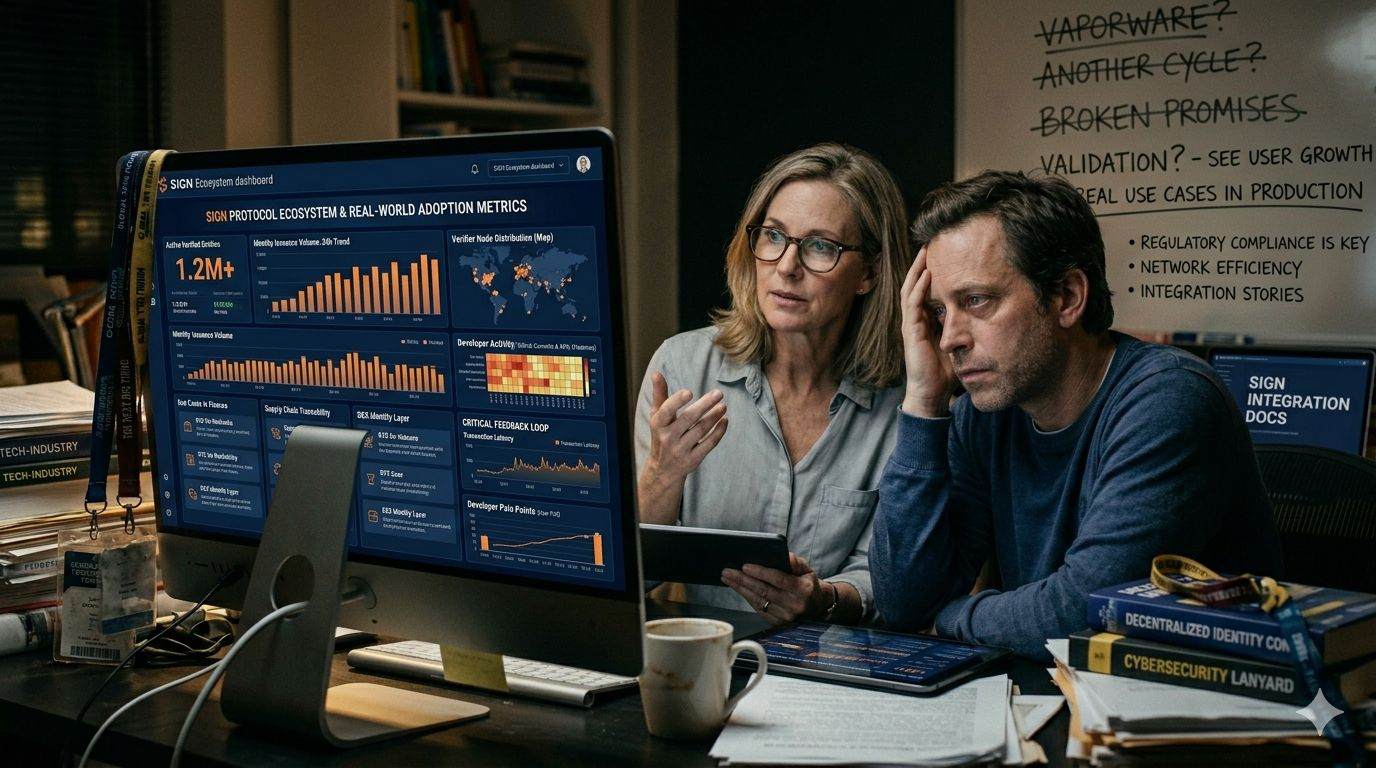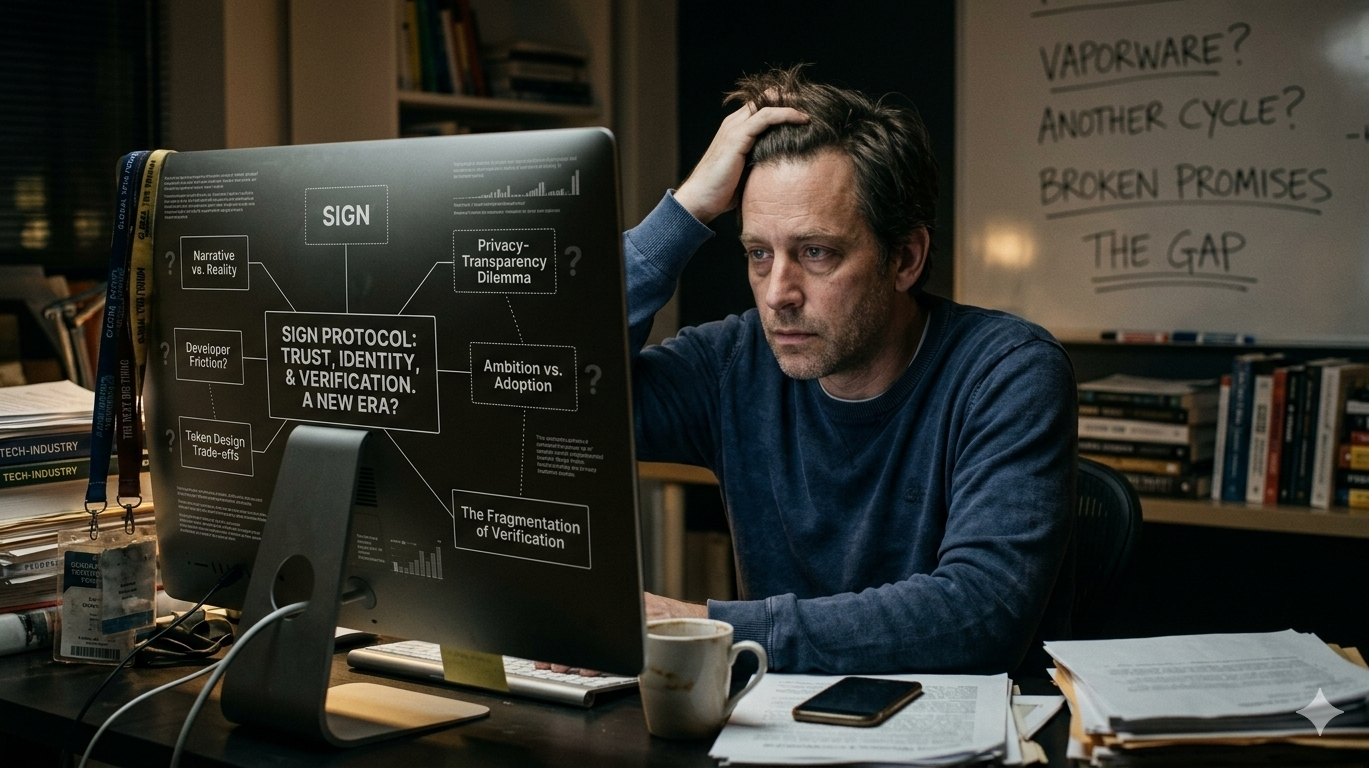
I keep coming back to the same thought every time I hear about something like SIGN. It sounds important, almost inevitable, like the kind of thing the world should already have figured out. And yet, when I sit with it for a minute, I realeze I’ve had this exact feeling before. Different names, different cycles, same promise. I tell myself this time might be different, but I can’t ignore how often I’ve said that before and watched it fade into the same pattern.
What wears me down isn’t the ambition behind SIGN, it’s how familiar the framing feels. I’ve seen narratives stretched and reused until they stop carrying weight. Words like infrastructure, verefication, trust, they start out meaningful, but after a while they feel like placeholders for something that never fully materializes. I catch myself questioning whether I’m actually seeing progress, or just better storytelling layered on top of the same unresolved problems.
I’ve spent a lot of time thinking about this tension between transparency and privacy, and SIGN sits right in the middle of that struggle. Every system seems to force a trade-off I’m not comfortable making. Either I expose more than I should, or I’m pushed into something so locked down that it stops being usable. What bothers me is how normal that compromise has become, like we’ve quietly accepted that balance isn’t really achievable.
And then there’s the other extreme I keep running into while thinking about SIGN. Privacy solutions that try so hard to protect that they end up breaking the very thing they’re supposed to support. It becomes difficult to trust, difficult to use, and eventually people just drift away from it. I’ve seen that happen enough times to know that good intentions don’t mean much if the system collapses under its own design.
When I look at SIGN through that lens, I can’t help but notice how often projects feel like they’re built for the narrative first. There’s always a strong story, something that sounds right, something that fits the moment. But when I try to imagine it under real pressure, with real users, messy behavior, unexpected edge cases, I struggle to see how it holds up. That gap between how it sounds and how it lives in the real world never really closes.
I think about developer experience more than I used to, especially when something like SIGN comes up. It’s rarely the headline, but it’s usually where things quietly fail. If the people building on top of something don’t enjoy using it, or can’t rely on it, everything else eventually stalls. It’s not dramatic, it just fades out, and most people never notice why.
Token design is another piece that always makes me pause when I think about SIGN. I’ve seen too many cases where it feels added because it’s expected, not because it’s necessary. And once that happens, everything else starts bending around it in ways that don’t feel natural. I keep asking myself whether the system would still make sense without it, and too often the answer feels unclear.
Verification, identity, trust, these are the hardest parts, and SIGN is stepping directly into that territory. What unsettles me is how messy these systems still are, despite years of iteration. I don’t see convergence, I see fragmentation. Different approaches, different assumptions, none of them fully convincing. It makes me question whether we’re actually getting closer to something stable, or just circling the problem.
There’s always this sense of ambition when I think about SIGN, and I don’t dismiss that. But I’ve learned to pay more attention to the gap between ambition and actual usage. That gap has a way of sticking around, no matter how compelling the idea sounds at the start. And once I notice it, it’s hard to unsee.
I’ve also become more skeptical of polished narratives around things like SIGN. They tend to smooth over the parts that matter most, the friction, the uncertainty, the points where systems break. I find myself looking for those breaking points instead, because they usually tell a more honest story than any presentation ever could.
What keeps me watching something like SIGN isn’t excitement in the usual sense. It’s more like a quiet curiosity. I’ve seen enough to know how these cycles play out, but I still want to see where it cracks, or if it somehow doesn’t. I don’t trust the surface anymore, but I haven’t completely stopped paying attention either.
#sign #signdigitalsovereigninfra $SIGN