

If Iran deliberately targeted undersea internet cables, especially in the Strait of Hormuz or nearby waters, the effects would be serious — but not a complete global internet shutdown.
📍 What would actually happen?
- Gulf countries (UAE, Saudi Arabia, Qatar, Bahrain, Kuwait, Iraq + parts of Iran itself) would suffer the most potentially near-total or very severe internet blackouts in those nations for weeks to months.
- India, Pakistan, parts of East Africa, and routes between Europe ↔ Asia would face major slowdowns, higher latency (delays), packet loss, and degraded service.
- Global internet would not collapse entirely — there are alternative routes (via Mediterranean, around Africa, Russia/northern paths, Pacific cables, satellite backups like Starlink), but they are more congested and slower.
- Financial markets, cloud services (AWS, Azure, Google in the region), AI training pipelines in Gulf data centers, stock exchanges, banking SWIFT traffic, shipping logistics, and hospitals relying on real-time data would take the hardest hits.
📍Why the Strait of Hormuz matters so much?
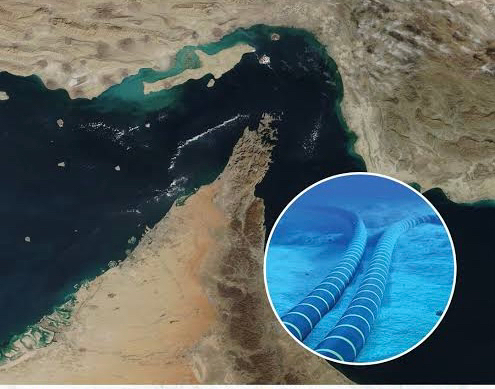
- Many key cables pass through or very near the Strait (e.g. segments of FALCON, Gulf Bridge International, newer 2Africa extensions, UAE–Iran links, etc.).
- Iran has landing points in Bandar Abbas, Bushehr, Chabahar, Jask — so cutting cables would hurt Iran too (they rely on the same infrastructure).
- Repair ships cannot safely enter a mined / actively contested strait → one damaged cable in 2024–2025 took ~5 months to fix; multiple would take far longer now.
Realistic scenarios in March 2026 context
1. Accidental / collateral damage (most likely so far)
- Mines, ship collisions, Houthi-style anchor-dragging, missile near-misses → already happened in Red Sea (2024–2025 incidents slowed Asia–Europe–Middle East traffic noticeably).
→ Result: regional slowdowns lasting weeks–months.
2. Deliberate Iranian sabotage (IRGC naval forces, proxies, or frogmen)
- Drag anchors across cables, use small charges, or target landing stations.
→ Gulf states go mostly offline.
→ Asia–Europe latency jumps dramatically (200–500+ ms extra).
→ Stock markets in Dubai / Riyadh halt or severely glitch → global ripple effects on oil pricing, derivatives, etc.
→ India sees major degradation (many cables land there from Gulf routes).
3. Worst-case (multiple cables + both Hormuz + Red Sea/Bab el-Mandeb blocked)
- Simultaneous choke-point closure = historically unprecedented digital crisis.
- Described by experts as "globally disruptive event" — not Armageddon, but very painful for:
- Low-latency finance & HFT trading
- Cloud / AI workloads in Gulf
- Real-time services (Zoom, gaming, remote surgery)
- Europe–Asia traffic reroutes via longer paths → noticeable everywhere (think 2011–2012 Egypt cable cuts ×10).
📍Bottom line (2026 reality)
Iran can seriously hurt regional and inter-continental connectivity — especially if they are willing to sacrifice their own internet in the process.
But no single actor can "turn off the global internet" with cables alone — the network has too much redundancy (though the Middle East route is one of the weakest links right now).
The ongoing US–Iran conflict has already frozen major new cable projects (like parts of 2Africa in the Gulf) and made repairs almost impossible. So even without active cutting, the risk window is already very high.
shooting cables would be a very painful asymmetric weapon — mostly against Gulf neighbors and global finance — but the rest of the world would stay online… just much slower and angrier. 😅


