
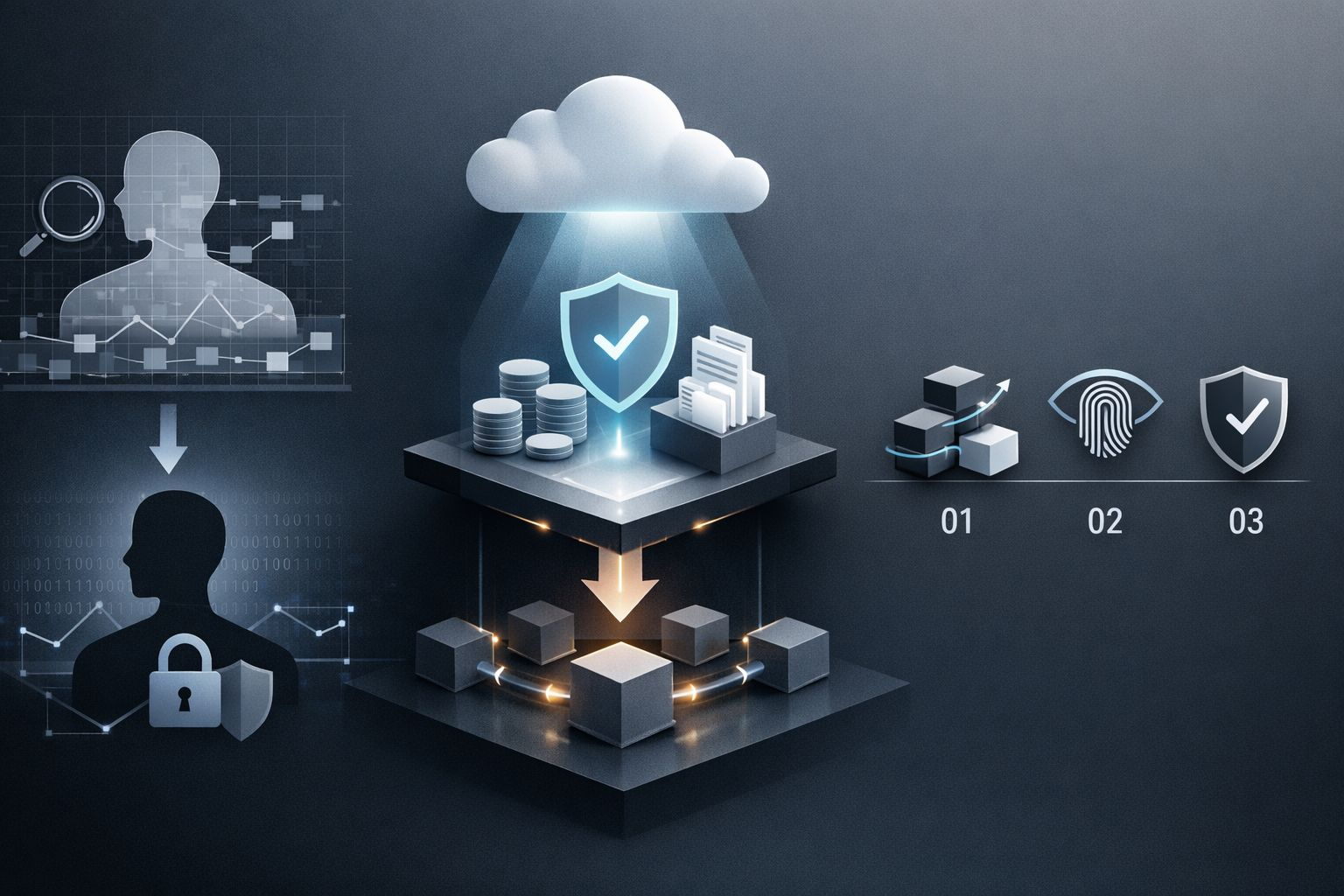
 Blockchain began with a promise that felt almost rebellious: a world where no one had to trust anyone, because everything was out in the open. At first, that kind of transparency felt liberating. No hidden ledgers. No quiet manipulation. Just truth, visible to anyone who cared to look.
But over time, something uncomfortable surfaced.
That same transparency started to feel like exposure. Every move, every transaction, every decision left a permanent trace. It was as if freedom came with a spotlight that never turned off. What was meant to empower people slowly began to strip away something deeply human the right to keep parts of your life your own.
This is where zero knowledge technology enters, not as a small upgrade, but almost like a quiet rebellion against that imbalance.
It introduces a strange but powerful idea. You can prove something is true without revealing why it is true. You can be trusted without being exposed. At first, it sounds almost too good to be real, like a magic trick. But it is grounded in mathematics, not illusion.
And emotionally, it touches something deeper than just technology. It restores a sense of dignity.
Imagine being able to say, I am eligible, I am valid, I am honest without having to hand over your entire identity, your history, your private details. That shift feels subtle, but it changes everything. It moves power back toward the individual, where it arguably always belonged.
Underneath, the system works in a way that feels almost poetic. Instead of laying everything bare, it creates a kind of compressed truth a proof that says everything checks out, without showing the raw details. The blockchain no longer needs to see your life. It only needs to be convinced that your actions are valid.
There is something deeply human about that. We do not demand that people reveal everything about themselves to be trusted in real life. We look for signals, consistency, integrity. Zero knowledge brings a similar philosophy into the digital world.
And suddenly, the possibilities expand.
Financial systems no longer have to expose your entire portfolio just to function. Identity no longer has to mean handing over personal data at every checkpoint. Even areas like gaming, artificial intelligence, and digital ownership start to feel different, more respectful, more balanced.
It feels like technology is finally learning restraint.
But if you look closer, the story is not purely hopeful. There is tension beneath the surface.
Creating these proofs is hard. It takes effort, resources, and specialized systems. And that introduces a quiet shift in power. While anyone can verify the truth easily, not everyone can produce that truth efficiently. Those who can generate proofs at scale begin to hold influence, even if it is not immediately visible.
It raises an uneasy thought. Are we truly decentralizing power, or just moving it somewhere harder to see?
There are also moments where the elegance of the math hides its fragility. These systems are complex in ways that most people will never fully grasp. If something goes wrong, it is not always obvious. It does not look like a break. It looks like everything is working, even when it is not. That kind of invisible risk carries its own weight.
And then there is the question that sits at the edge of all this progress.
What happens when systems become too private?
Privacy feels like freedom, but it can also make people nervous. Institutions, regulators, entire governments are built on visibility. They want to see, to inspect, to control. A system that says trust the proof, not the data challenges that instinct at its core.
So we are left in a strange emotional space.
On one side, there is hope. A future where you can exist digitally without feeling exposed. Where your data belongs to you, not to platforms or systems. Where trust does not require sacrifice.
On the other side, there is uncertainty. Who controls the systems that define what is true? Who builds the tools that generate these proofs? And what happens if those tools fall into the hands of a few powerful players?
Because even if your data is yours, the machinery that validates it might not be.
What is quietly happening here is bigger than just blockchain evolving. It is a shift in how trust itself is designed. We are moving from a world that says show me everything, to a world that says prove it without losing yourself in the process.
That idea carries emotional weight. It speaks to a deeper desire people have always had to be trusted without being stripped bare.
Zero knowledge is not just about privacy or scalability. It is about restoring a sense of balance between visibility and humanity. Between being seen and being respected.
And maybe that is why it feels so important right now.
Because in a world that has become increasingly transparent, sometimes what people really want is not to hide but simply to choose what they reveal.
