


Most people in crypto talk about trust identity and verification but they miss the real problem which shows up only when systems break in real usage not in theory
I used to think trust layers were solving the main issue in Web3 but over time it becomes clear the real pain is not proving things it is what happens when systems stop working for even a short time
When a database goes down when an indexer falls behind or when an explorer stops syncing for a few minutes everything starts to look uncertain
balances do not match
transactions look missing
dashboards freeze
users start questioning if funds are safe
and this is where trust actually breaks not during normal operation but during those small failure windows of five to ten minutes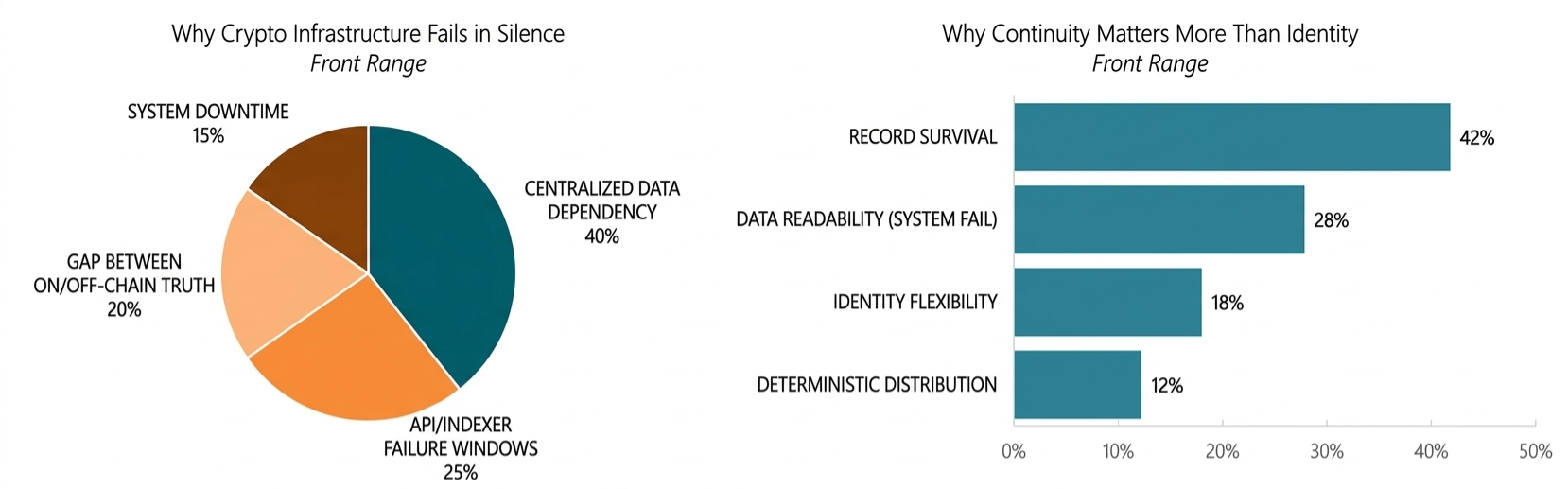
The hidden truth about Web3 data
Most blockchain apps are not fully on chain in practice they depend on centralized indexers APIs and external services to read and display data
so even if the chain is working perfectly the reading layer can fail and that creates confusion
this gap between on chain truth and off chain reading is one of the biggest infrastructure problems in crypto but it is rarely talked about
Why continuity is the real problem
The real issue is not just storing data or proving identity it is making sure information survives across failures systems and environments
data should not disappear or become unclear just because one layer is down
this is where the idea behind Sign becomes interesting because it focuses more on continuity of records rather than only identity or credentials
How Sign approaches the problem differently
Instead of putting all data in one place Sign treats information as something that must exist across multiple layers
this includes public blockchains for verification decentralized storage like Arweave for long term persistence and private deployments when needed
it is not a clean system but real world systems are never clean
this hybrid model of on chain anchors and off chain data is not a shortcut it is a requirement for scale cost control and privacy at the same time
many systems in crypto including those discussed in ecosystems like Binance already move in this direction because pure on chain systems cannot handle real world load alone
Identity is still broken in Web3
another major issue is identity fragmentation
people do not have one identity they have many
a wallet for crypto
a GitHub for code
a Discord for communities
a LinkedIn for real world profile
none of these connect naturally so every application tries to rebuild identity from scratch and usually fails
the common idea was to create one universal identity but that creates control problems like who owns it who verifies it and who can remove it
A different model using schemas and attestations
Sign avoids forcing one identity system instead it uses schemas which define what a claim means in a structured way
different identities can attach to these schemas
so instead of saying this is your identity it becomes this is a set of verified claims linked across your existing accounts
this makes identity more like a graph instead of a single profile
it also removes the need to migrate identity between platforms because you just prove connections instead of rebuilding everything
Why this matters for token distribution
token distribution and airdrops are one of the most broken areas in crypto today
bots farm rewards
sybil attacks are common
teams rely on weak signals like activity or wallet age
but all of this is guesswork not truth
Sign suggests a different approach where distribution is based on attestations instead of raw activity
for example instead of counting transactions you can check if a wallet has a verified developer credential or real contribution proof or participation record
this changes the quality of signal completely
From guessing to deterministic systems
with verified attestations distribution can become deterministic
that means rules are defined clearly and executed automatically without manual filtering or spreadsheets
for example a grant system can be built where eligibility depends on education proof contribution history and verified participation and once conditions are met distribution happens automatically through tools like TokenTable
this removes human bias and reduces errors but it also increases dependency on reliable attesters and shared schemas across chains
The real challenge behind all this
this idea sounds powerful but it is not simple
multi chain systems multi storage layers and multi identity sources are hard to maintain
one broken indexer one wrong schema update or one failed integration can create confusion across the whole system
this is the real risk in infrastructure design not just whether the idea is good but whether it can survive real production pressure
Final thought
crypto is not only about identity or verification
the real missing piece is continuity
systems must keep working even when parts fail
data must remain readable even when services go down
identity must stay usable even when platforms change
distribution must remain fair even when signals are noisy
Sign is trying to move in this direction by building a system where records survive across layers identity is flexible and distribution is based on verified truth instead of assumptions
it is still early and many things can break but the direction is clear
future infrastructure is not about perfect systems
it is about systems that do not collapse when reality gets messy